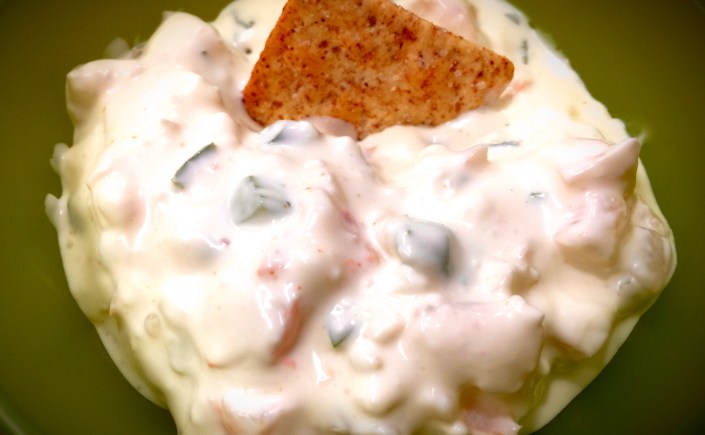
Shrimp Dip…

Graduation parties and summer cookouts boast of fun and food. And if you’re in the position to be hosting one, you’re probably thinking about what you can do that is delicious but easy to make. That way you can spend more time with your guests and less time in the kitchen.

This recipe fits the bill. It’s a really easy dip that takes no time to make and is loaded with flavor. Serve it with a combination of chips, pretzels and crackers for an appetizer that looks casual but tastes decadent.

So let’s talk shrimp dip…
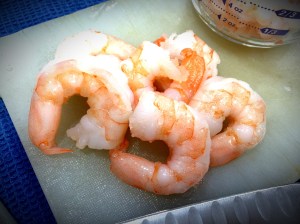
Lesson Learned 1 – Use LOTS of shrimp: I used a 12 oz. bag of frozen cooked and deveined shrimp. I thawed the shrimp in the refrigerator overnight and then chopped it up into small bite sized pieces. I kept a couple of shrimp to garnish the top of the dip (of course you don’t have to do that) and all the rest went into the dip. My point being this is a shrimp dip – the more shrimp the better.

If you’re lucky like I was you can catch the shrimp on sale. The twelve ounce bag only cost me $7.99 so I got a deal. Keep a look out for sales on the frozen shrimp if you’re looking to keep the cost down on this dip. I already had all the other ingredients in my refrigerator and pantry except the celery so I was able to splurge a little with the shrimp.

Lesson Learned 2 – If your celery stalks still have the green leaves on them use them as well: For this particular recipe all you really need is one medium sized celery stalk chopped. Normally you can buy individual stalks at the grocery store instead of buying a whole head of celery. When I only need a little celery I always try to buy a stalk that has some leaves on it. Those leaves chopped up and put into the dip add additional depth of flavor. So don’t be afraid to use them as well.
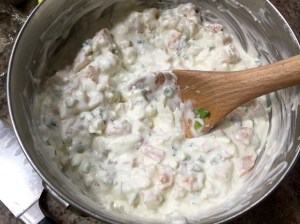
Lesson Learned 3 – If you can, make this recipe the day before: Like almost any dish, the more the ingredients are acquainted directly relates to upping the wow factor of the flavor. So it is with this dish. It is such an easy dish to make that it shouldn’t be too difficult to make it the day before and let it sit overnight in the refrigerator. But if you’re in a rush and need something quick, you can serve this the same day and it will still be very good.

The recipe itself is very straightforward so there’s not a lot of lessons learned to share with it. Just follow the directions, use some creativity in your presentation (you can dress it up with a combination of chips, pretzels and crackers) and watch it disappear. This one is a no brainer. Try it and tell me what you think.

Shrimp Dip...

  • Servings: Multiple
  • Difficulty: Easy
  • Print

INGREDIENTS:

1 – 8 oz. package of cream cheese, room temperature

1 – 12 oz. package of frozen cooked and deveined medium sized shrimp, thawed and chopped

1/2 cup mayonnaise

1/4 tsp. garlic fleur de sel (you can substitute garlic salt)

juice of 1/2 lemon

1 lemon slice for garnish, optional

1/4 cup celery, chopped (one medium sized stalk)

1/4 cup scallions, chopped

1/8 tsp. paprika, for garnish, optional (you can also use some sprigs of fresh herbs like thyme)

Crackers, potato chips and/or pretzels for serving

DIRECTIONS:

With an electric mixer, beat the cream cheese until fluffy. Add the mayo, lemon juice and fleur de sel. Mix to thoroughly combine. With a wooden spoon stir in the shrimp, celery and scallions.

Place mixture in a serving dish. Garnish with paprika and a lemon slice or some sprigs of lemon thyme. Serve with pretzels, chips and/or crackers. (If making the day before wait to garnish the dip until you’re ready to serve.)
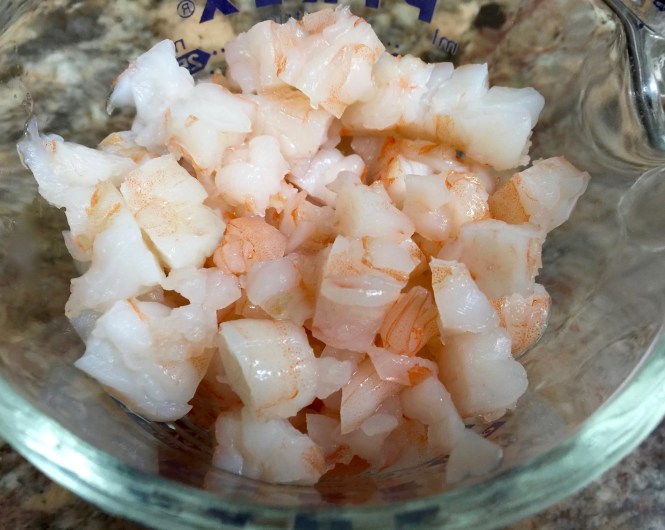
cut shrimp into small bite sized chunks
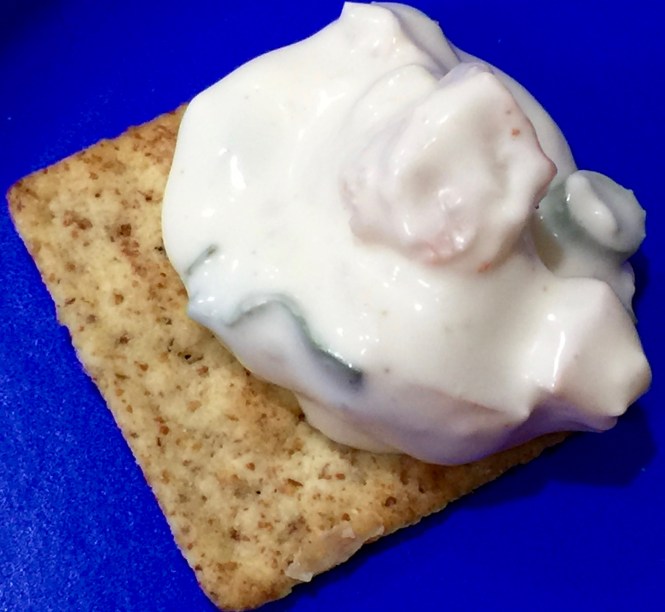
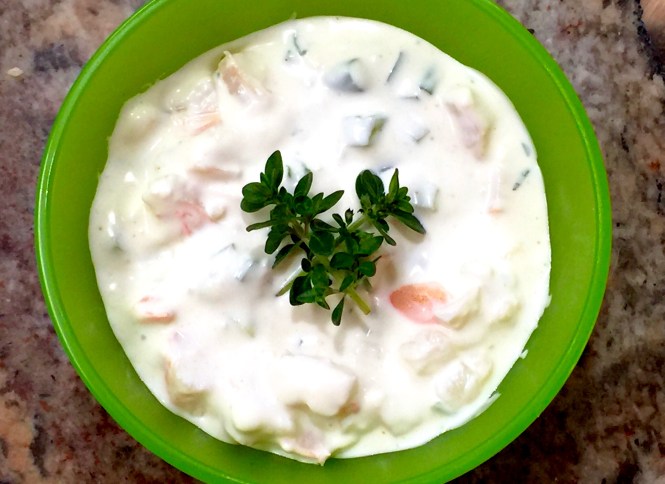
serving suggestion with fresh thyme sprigs as garnish



SaveSave

SaveSave

SaveSave

SaveSave

SaveSave

SaveSave

SaveSave

SaveSave

SaveSave

SaveSave

SaveSave

SaveSave

SaveSave

SaveSave

SaveSave

SaveSave

SaveSave

SaveSave

SaveSave

SaveSave

SaveSave

SaveSave

SaveSave

SaveSave

SaveSave

SaveSave

SaveSave

Skillet Irish Soda Bread…

There’s no doubt about it, the recipes that are handed down from generation to generation are the best. And sometimes that’s an impossible task as the old fashioned cooks would simply say, “Oh I just eyeballed what I needed and used a pinch of this and a little of that” leaving you to try to assimilate the exact ingredients to recreate the recipe.

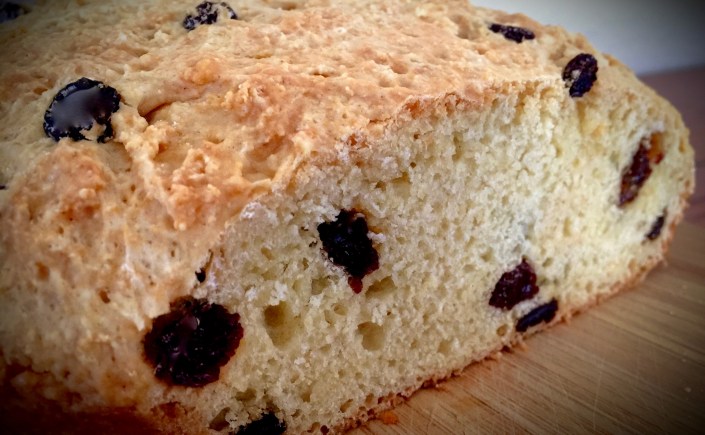
This recipe is one of those handed down gems. A neighbor of mine served it at her St. Patrick’s Day party and the rest is history. I remember looking at all the wonderful things she laid out on her table but only eating the soda bread with some fresh Irish butter. It was heaven. I found out later it was her Mother’s recipe and she had been making this for years!

I’ve tasted many iterations of soda bread over the years and, to be honest, most of them were less than stellar. There was only one other time that I can remember having fabulous soda bread. That was when I was working at the Chicago Park District and one of my co-workers, Carol Diver, brought some to work. Carol was Irish through and through with an infectious laugh and a heart as big as all outdoors. And her soda bread was to die for. Unfortunately Carol is not longer with us and I’d never asked her for her soda bread recipe. But from then on, her soda bread was the standard to which I held all others. As time went on none would ever compare, until now.
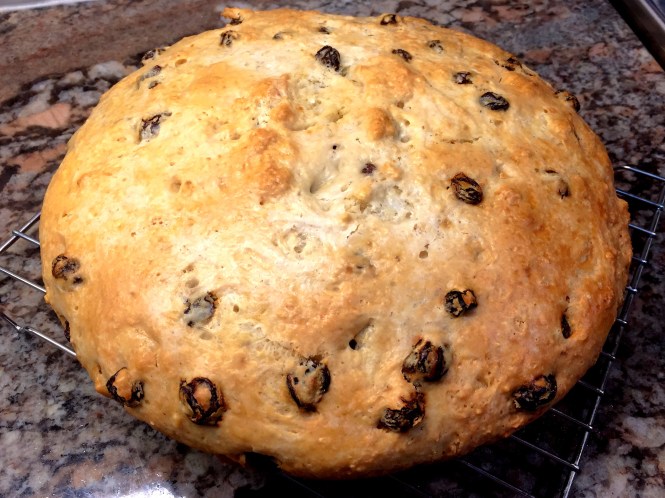
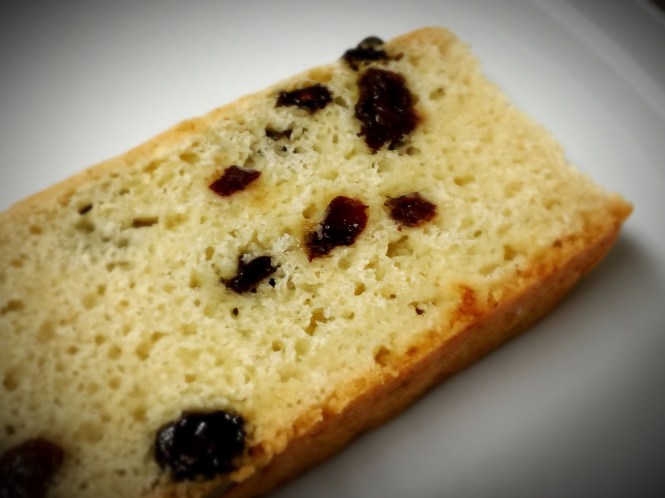
So this time I made sure to get the recipe and with permission I am sharing it with you. I made it the other night and it was just as fabulous as I remember, moist with just the right amount of sweetness. I hope you enjoy this recipe and make it often.

So let’s talk Irish Soda Bread…

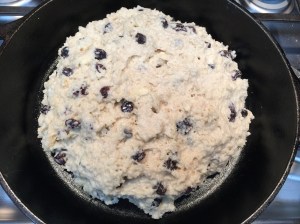
The dough did not reach the sides of a 10 inch skillet

Lesson Learned 1 – The size cast iron skillet you use is important:  The recipe I got said it made two loaves and my neighbor said she used a 10 inch skillet to bake the bread. But once I made the dough and put it in my 10 inch cast iron skillet I knew that couldn’t be the case. The only way there would be enough dough for two loaves is if you used a smaller cast iron skillet – probably an 8 inch skillet. With a 10 inch skillet there is only enough dough for one loaf.

With using a larger skillet it will take longer to cook, approximately 1 1/4 to 1 1/2 hours. If you use a smaller skillet I would begin checking it at 45 minutes. You want a nice gold brown on the top. Once you see that you know the bread is done.

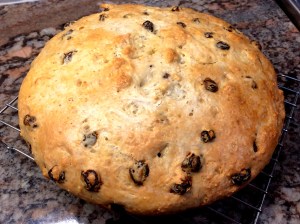
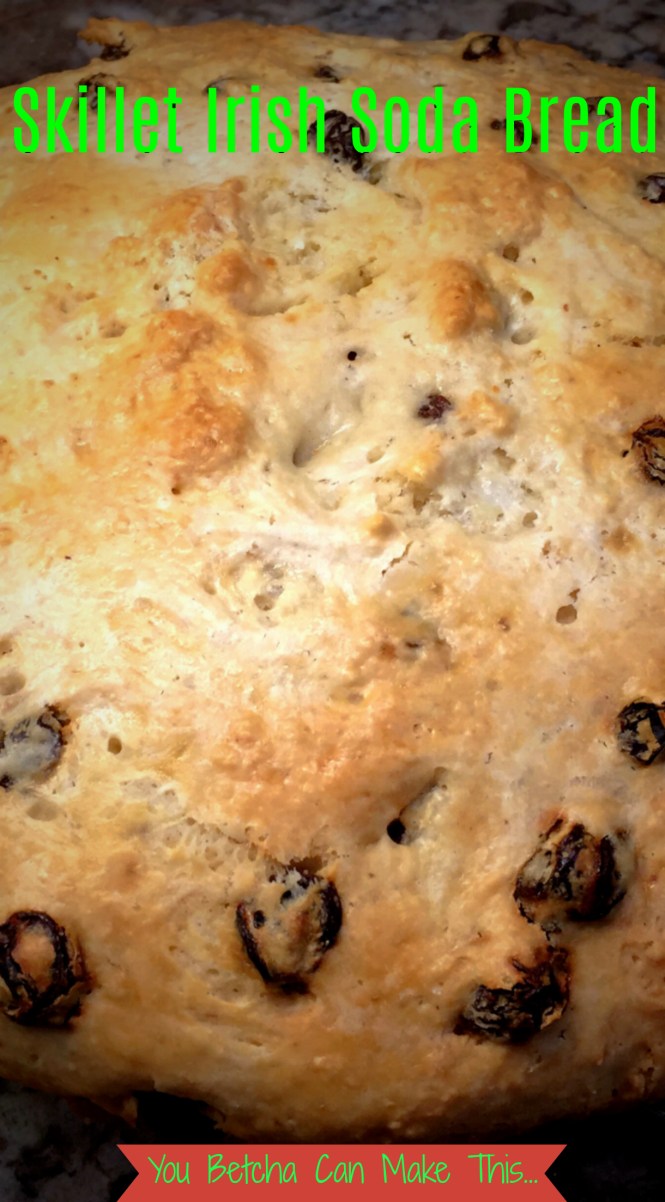
Don’t get me wrong, the bread turned out beautifully and was so delicious as you can see from the pictures in this blog.  I just think the directions I got were for a smaller pan than what I used.

Lesson Learned 2 – Do not use self rising flour in this recipe: The second time I made this I decided to experiment and use self rising flour – BIG MISTAKE! The bread did not rise and the top of it looked like a battle had been fought on it, all lumpy and messy looking. And although I baked it for the correct amount of time, it did not cook through and was gooey inside. So take a tip from me, stick with regular flour and you’ll be just fine.

That’s the only advice I have for making this as the recipe is pretty straightforward. And let me reiterate, this is the best Irish Soda bread I have ever tasted since I had my friend’s, Carol Diver’s, bread all those years ago. I know you will enjoy this one!

Skillet Irish Soda Bread...

  • Servings: 12-14
  • Difficulty: Easy
  • Print

INGREDIENTS:

4 cups all purpose flour

1 cup sugar

1 tsp. salt

1 tsp. baking soda

2 Tbs. cold butter

1 1/2 cup raisins

1 1/2 cup buttermilk (you may need to add a little more)

Shortening, to grease the skillet

DIRECTIONS:

Preheat oven to 325.

Whisk together the flour, sugar salt and baking soda until well combined. Cut in the butter. Add raisins and buttermilk and mix until moist. (You may need to add more buttermilk. I found I needed to add about a 1/4 cup more to get all the ingredients moist).

Lightly grease a cast iron skillet with shortening (use a 10 inch skillet for one large loaf or an 8 inch skillet for two loaves). Transfer dough to the skillet. Brush the top of the dough with a light coating of buttermilk. If desired, cut a cross on the dough.

Bake for 45 minutes for the smaller loaves and 75 minutes for a large loaf. Check the loaves at 45 minutes and 60 minutes respectively to see if you need to add extra time.

Let bread sit in skillet for about 5 minutes after taking it out of the oven. Remove the bread from the skillet and let it cool on a wire rack.

Serve with Irish butter for a delectable treat!

SaveSave

SaveSave

SaveSave

SaveSave

SaveSave

SaveSave

SaveSave

SaveSave

SaveSave

SaveSave

SaveSave

SaveSave

SaveSave

SaveSave

SaveSave

SaveSave

SaveSave

SaveSave

SaveSave

SaveSave

SaveSave

SaveSave

SaveSave

SaveSave

SaveSave

SaveSave

SaveSave

SaveSave

SaveSave

SaveSave

SaveSave

SaveSave

SaveSave

SaveSave

SaveSave

SaveSave

SaveSave

SaveSave

SaveSave

SaveSave

Easy Chocolate Ganache…

My husband has an incurable sweet tooth. The other day he informed me we had nothing sweet in the house to eat and I was not in the mood to whip up something from scratch. I looked in the pantry and found a box of Duncan Hines decadent chocolate cake mix and told him I would make that. Unfortunately I opened my mouth before carefully reading the outside of the box. Staring me right in the face in clear letters on the front of the box were the words “frosting not included”. Now what… Luckily I thought I might have the ingredients for making chocolate ganache (which I did) so I thought ok, now’s the time to tackle your fears and make it. I had not other choice.

I’m not quite sure why I was afraid to make ganache but I always thought it was difficult and tricky. To my surprise it was unbelievably easy. So I thought I would dedicate this blog to a very simple way of making ganache that turns out silky, luscious and ever so decadent looking, not to mention absolutely incredibly delicious.

So let’s talk making chocolate ganache…

Lesson Learned 1 – There are many ways to make ganache: I am going to share with you the simplest way. The ratio is easy to remember 1:1. Use as many ounces of heavy cream as semi-sweet chocolate. It couldn’t be easier.
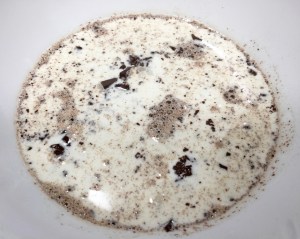
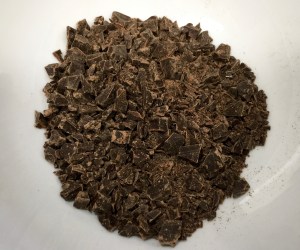
Lesson Learned 2 – Cut the chocolate squares into very small pieces: I used a 4 ounce box of Bakers semi-sweet chocolate. With my chef’s knife I cut off pieces and chopped them into small bits. If you decide to go the chip route, I would use the mini semi-sweet chips. You need the hot cream to melt the chocolate and if the pieces are too big that won’t happen.

Chocolate Covered In Hot Heavy Cream

Lesson Learned 2 – You can warm your heavy cream in the microwave: In order to get the desired consistency of the ganache, the cream has to melt the chocolate. So you have to get the cream hot enough to do that but you don’t want to scald the cream. That won’t work either.

Many recipes that I looked at recommended warming the cream on the stove. You can certainly do that especially since it gives you slightly more control in determining when the cream is hot enough. And you can certainly do that with this recipe, although I didn’t. I heated my cream (4 ounces) in the microwave for 45 seconds. After that time I found it still wasn’t hot enough. I heated it for an additional 15 seconds and it was bubbling. I was worried that I’d scalded the cream but I think what happened was the cream had just started to bubble, so I was still ok. The next time I think I’ll just nuke it for 50 seconds straight and go from there.

If you use a larger 1:1 ratio you will need to nuke the cream for a longer period of time. With this you’ll simply have to keep checking it. With 4 ounces I recommend 50 seconds. For larger amounts I would start checking at 1 minute and go from there.

Lesson Learned 3 – Let the chocolate and heavy cream sit for at least 3 minutes: Once you add the hot heavy cream you may be tempted to start whisking the mixture right away. Don’t. The cream has to melt the chocolate in order for you to get the desired consistency of the ganache. Be patient and let the cream do it’s work. I guarantee you it’s worth it.

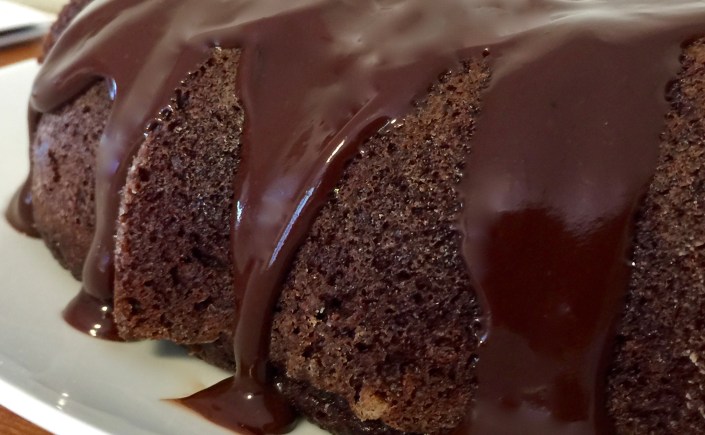
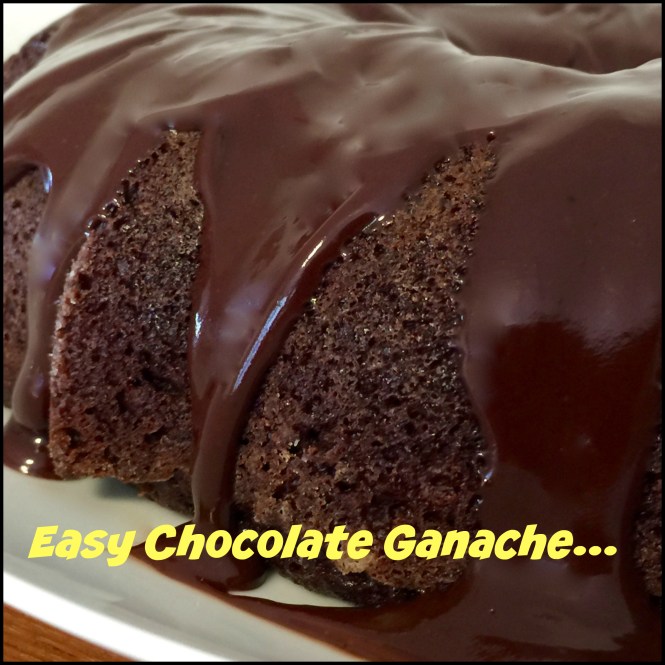
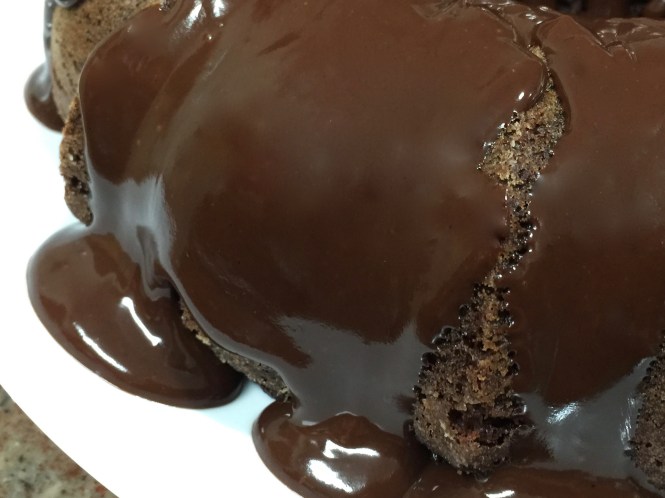
This recipe makes enough to generously frost one bundt cake, one 9 x 13 sheet cake or one 9 inch round layer cake. So next time you need some frosting try this instead of buying the canned stuff. It looks impressive and it tastes divine!

Easy Chocolate Ganache...

  • Servings: 1 Bundt Cake
  • Difficulty: Easy
  • Print

INGREDIENTS:

4 ounces semi-sweet chocolate squares cut into small pieces
4 ounces heavy cream, heated

DIRECTIONS

Chop up the chocolate into very small pieces. Heat the heavy cream in a microwave safe dish for approximately 50 seconds. Test with your finger to make sure it is sufficiently hot to melt the chocolate. If not, microwave at additional 5 second intervals until cream is hot but not scalded.

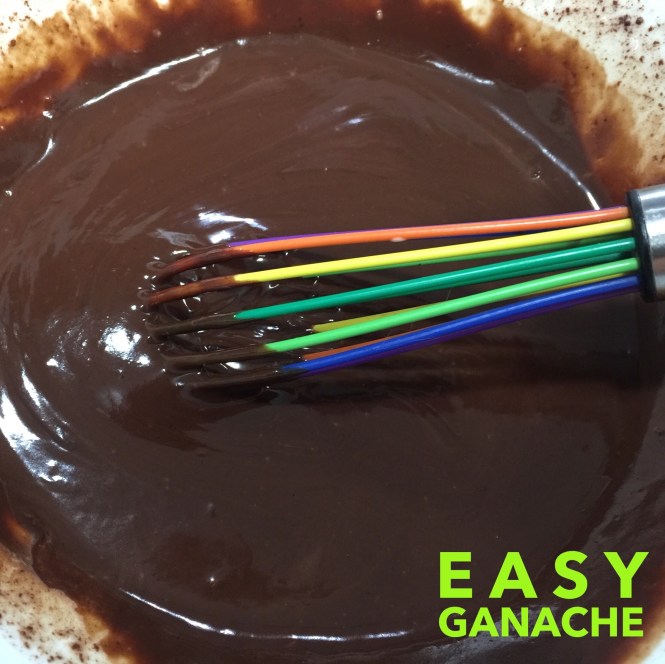
Pour cream over chocolate pieces. Let the hot mixture sit for at least 3 minutes. Whisk mixture until cream is incorporated and the chocolate is dark and smooth. Drizzle the chocolate over the top of your bundt cake. Let ganache set for at least 15 minutes before serving.


SaveSave

SaveSave

SaveSave

SaveSave

SaveSave

SaveSave

SaveSave

SaveSave

SaveSave

SaveSave

SaveSave

SaveSave

SaveSave

SaveSave

SaveSave

SaveSave

SaveSave

SaveSave

SaveSave

Home Fries…

I love my cast iron skillet. It only cost me about $20 and it’s one of the best skillets I have. But there’s a reason for that. Cast iron produces even, sustained heat and that’s the best for cooking just about anything. The only drawback to cast iron is it’s so darn heavy. But I just think of it as an upper body workout and move on from there.

This recipe uses the features of a cast iron skillet to produce the tastiest home fries. And making home fries is not all that complicated. The flavor of homemade sure beats the taste of the frozen kind.

So without further adieu, let’s talk home fries…

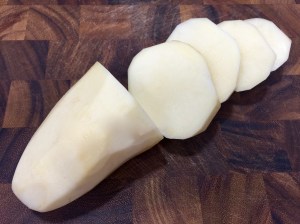
Lesson Learned 1 – Make sure to cut the potatoes to the correct size: For the purposes of this recipe you need to keep the pieces close in size (approx. 3/4 inch pieces). Here’s a little trick to help you achieve that. Using your chef’s knife cut a thin slice off of one of the longer sides of a peeled potato. Set the potato on the cut side and slice crosswise into even planks. Stack several planks and cut crosswise. Then rotate and cut crosswise again. This will give you evenly sliced potatoes.
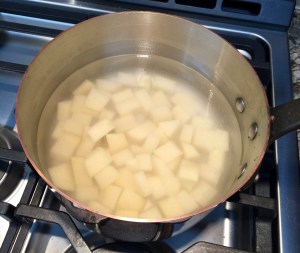
Lesson Learned 2 – You can cook the pieces of potatoes two different ways, on the stovetop or in the microwave: (I will include both methods in the recipe printout). I chose to cook them on the stove. The process is not much different than making mashed potatoes. The only difference is you want to monitor the potatoes as they boil to make sure they don’t get overly soft, otherwise they’ll break apart. You want them to hold their shape. I would boil them for about 7-10 minutes and check their consistency. If they are still hard, check every couple of minutes until they are just becoming fork tender.
Lesson Learned 3 – If you choose to boil your potatoes first, let them cool a little in the strainer so they are as dry as possible when you put them in the cast iron skillet: In order to get your potatoes nice and brown you want them to be as free from water as possible. I would boil the potatoes first, strain them and let them sit in the strainer while you saute the onions and garlic. That way most of the moisture will drain off before you put them in the skillet.

Lesson Learned 4 – Once you saute the onions and garlic remove them from the pan and set them aside. The first time I made this recipe I kept them in the cast iron pan while I was browning the potatoes. Big mistake! They didn’t stand up very well through the browning process and wound up getting burned. Once you saute the mixture remove it from the pan and add it back in at the last minute just to get it warmed through again. That way you won’t get browned potatoes and blackened onions and garlic. Lessons learned from the cook who never could…

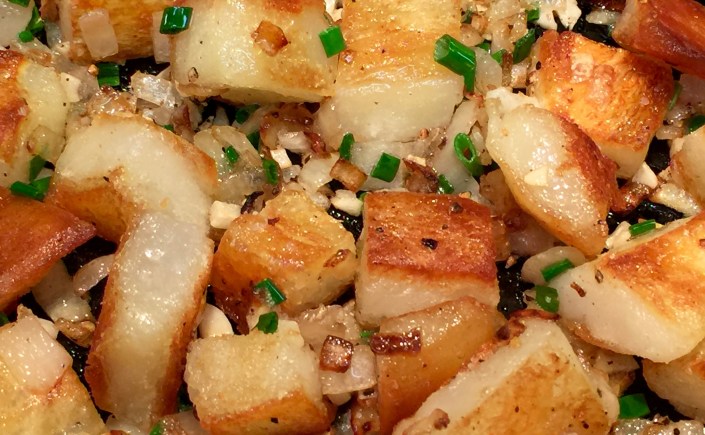
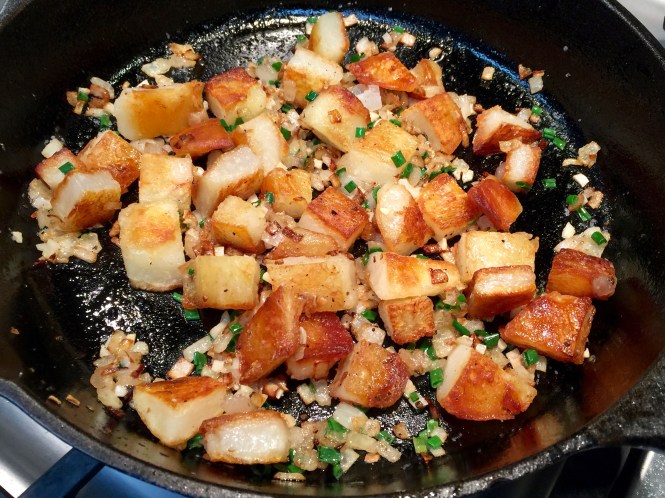
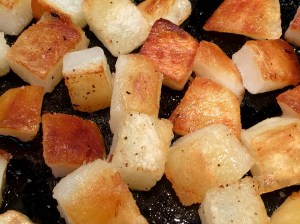
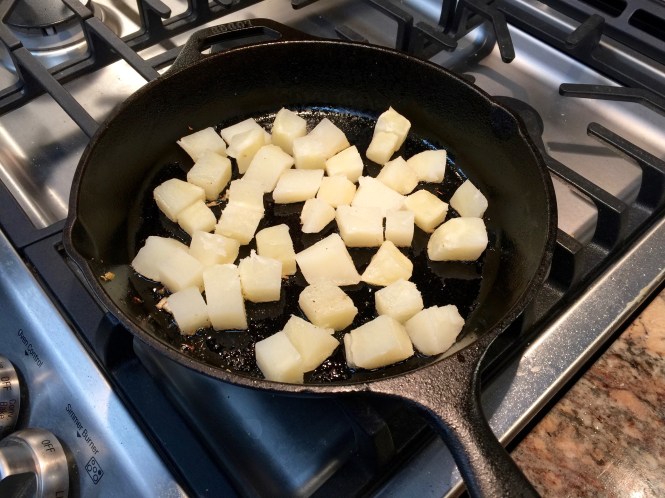
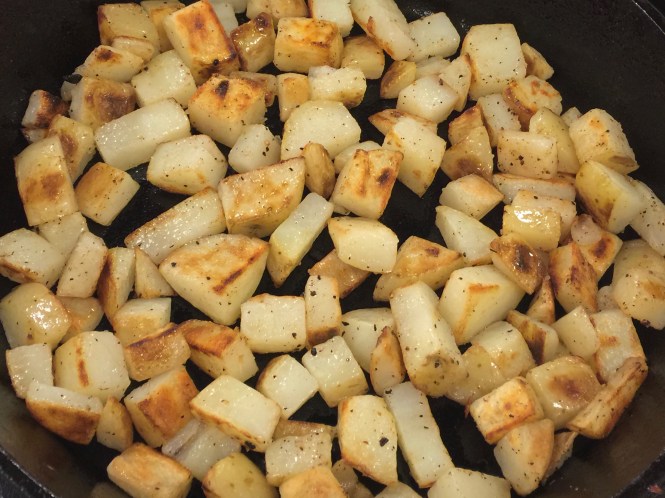
Lesson Learned 5 – Don’t continuously move the potatoes once they are in the skillet: In order to get the potatoes nice and brown you have to let them sit for a while in the skillet. The whole browning process can take about 20 minutes and you don’t want to be flipping the potatoes continuously during that time. If you want to check to see if they are ready to flip, turn one of the pieces or look on the sides of the pieces to see if the bottoms have started to to turn color. You’ll get a much better result if you are patient during the browning process.
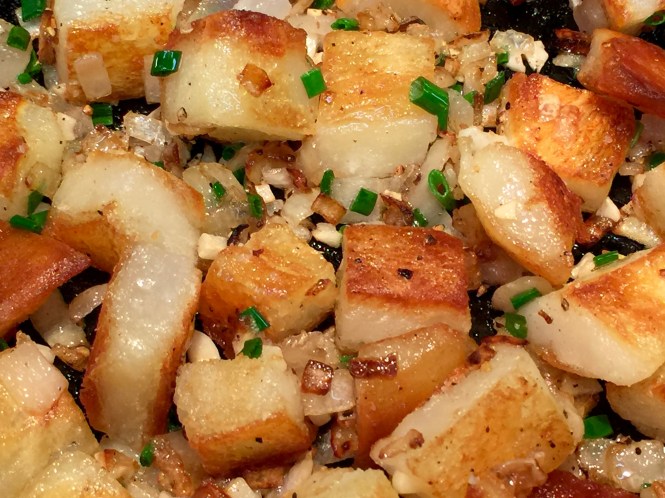

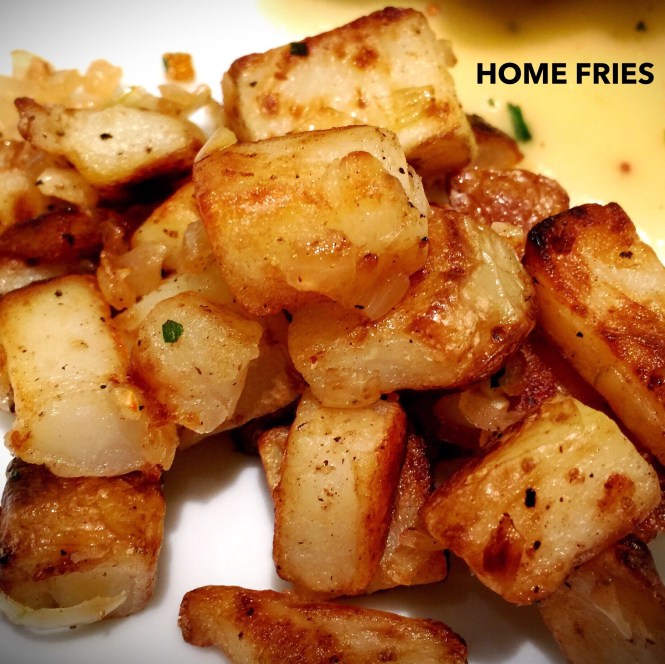
And that’s it, couldn’t be any easier. I like these so much better than the frozen kind. Try them and see if you agree!

Home Fries...

  • Servings: 4
  • Difficulty: Easy
  • Print

INGREDIENTS:

2 large russet potatoes, peeled and sliced into 3/4 inch cubes
2 – 3 Tbs. vegetable oil

1 small-medium size onion, chopped

2 garlic cloves, minced

1 Tbs. fresh chives

Salt and pepper, to taste

DIRECTIONS:

In a high rimmed pot, boil the potatoes until they just fork tender. Drain the potatoes and set aside. (NOTE: you can also microwave the potatoes. Put 1 Tbs. oil, 1/2 tsp. salt and 1/2 tsp. pepper in a covered microwave safe bowl along with the potatoes. Stir. Cook 7-10 minutes stirring occasionally. Drain the potatoes well).

Heat a cast iron skillet over medium heat for about 3-4 minutes. Start with 2 Tbs. of oil (you may or may not need to add more later) added to the skillet and heated until shimmering. Add the onions and cook until lightly browned. Salt and pepper the onions. Add the garlic and cook until fragrant. Remove the mixture from the pan and set aside.

If needed, add the remaining oil to the pan. Add the potatoes and gently pack them into the skillet using the back end of a spatula. Cook, without moving for 7-10 minutes or until they begin to brown.

Flip the potatoes and lightly repack them into the skillet. (check to see if you need to add oil during this process). Continue flipping process until the potatoes are browned on all sides. Add the onions and garlic back to the pan, mix with the potatoes and heat until warmed through.

Season with salt and pepper, garnish with chives and serve immediately.

Potatoes during the browning process


SaveSave

SaveSave

SaveSave

SaveSave

SaveSave

SaveSave

SaveSave

SaveSave

SaveSave

SaveSave

SaveSave

SaveSave

SaveSave

SaveSave

SaveSave

SaveSave

Asparagus Soup…

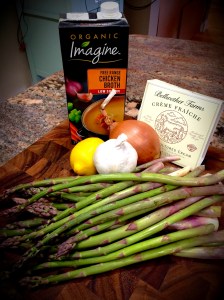
Ingredients

Last Saturday I visited our local farmers market. I love going there on Saturday mornings. Our famers market has a wide variety of vendors selling vegetables, meats and baked goods. There is also a guy who sharpens knives (I love that) and food and crafts vendors. It’s easy to spend a couple of hours meandering the site, sampling the goodies, listening to live music and going home with in season farm-to-table goodies.

This week the farmers stands were inundated with chives and asparagus. There was asparagus as far as the eye could see. I couldn’t resist buying some (along with some cranberry walnut bread and some cheddar brats). I’ve had a craving for soup lately and thought I’d try my hand at making some asparagus soup. And the rest is history… I could’t believe how easy it was to make but even better than that how delicious it was. I’ll probably head back next Saturday for another batch.

But let’s talk asparagus soup…

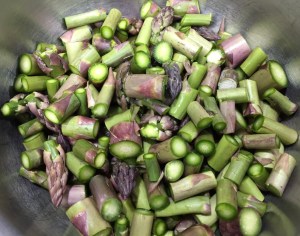
Lesson Learned 1 – Learn what parts of the asparagus spears you can use: Quite often you’ll see on television the way to trim asparagus is to bend it and where it breaks off is where you should trim your bunch. I’ve found that sometimes that wastes too much asparagus especially if you’re making soup. I learned early on that even with a very sharp knife, there can be a part of the spear that will very hard to cut – you almost always have to use two hands pressing down on the knife to cut it. That is the part you want to throw out. That still leaves some of the tougher parts of the asparagus, but as long as a knife will go through it without a lot of force you can use it in the soup. Keep in mind that soup is designed to use as much of the asparagus spear as you possibly can so don’t be afraid to use some of the tougher parts of the spear. As long as you can cut through it without a lot of force it will be perfectly fine for the soup.

Lesson Learned 2 – Be careful when using an immersion blender: I recommend using an immersion blender for this recipe. Some recipes have you blend the soup in batches in a regular blender. That’s a lot more work than is actually necessary. But, be careful when you use an immersion blender. If you lift the blade up over the top of the soup you’ll have soup splattered all over the place. (I know, I’ve done this!) Move the blender around slowly in the soup and don’t lift if above the top of the soup. If you have to lift it up higher, turn it off first. Just a little tip to save you a lot of aggravation.

Lesson Learned 3 – You can make this soup and store it: This soup will keep it’s freshness for a couple of days. If you decide not to serve it immediately hold off on stirring in the last tablespoon of butter and lemon juice. I made my soup in the morning, refrigerated it and served it for dinner. Right before I served it I stirred in the butter and lemon juice. It gives the soup that that final finishing touch and freshness.

This recipe is so simple and easy. Most of the work is in the prep of the ingredients. I also like this recipe because it makes a manageable amount of soup, servings for four. That way you don’t have a lot of waste. But if you want more, just double the recipe and it’ll turn out just as good.

This recipe is so good I plan on going to the farmers market again this Saturday and buying more asparagus to make some more soup. It’s so much better than the canned stuff. Enjoy!

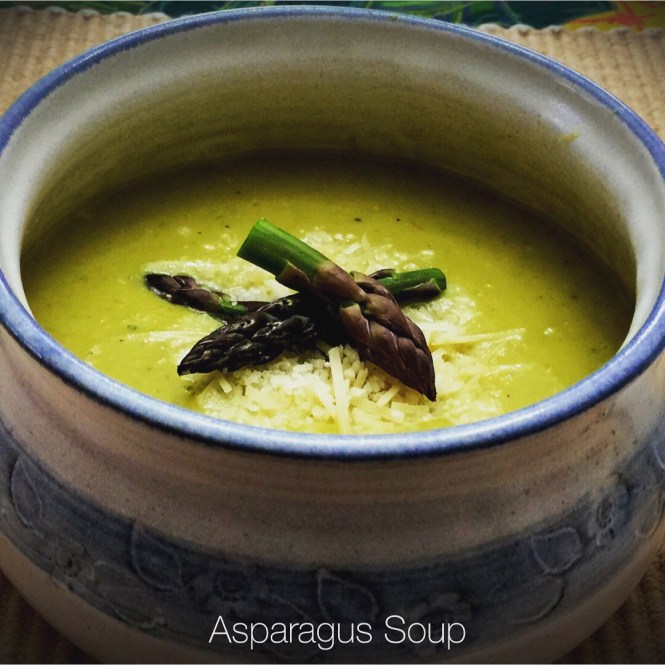
Asparagus Soup...

  • Servings: 4
  • Difficulty: Easy
  • Print

INGREDIENTS:

3 Tbs. butter, separated

1 medium sized onion, diced

2 cloves garlic, minced

1 pound fresh asparagus, cut into 1/2 inch slices

2 Tbs. flour

3 cups low sodium chicken broth (you can use vegetable broth as well)

1/4 cup creme fraiche (you can use sour cream)

1/2 lemon, juiced

salt and pepper to taste

DIRECTIONS:

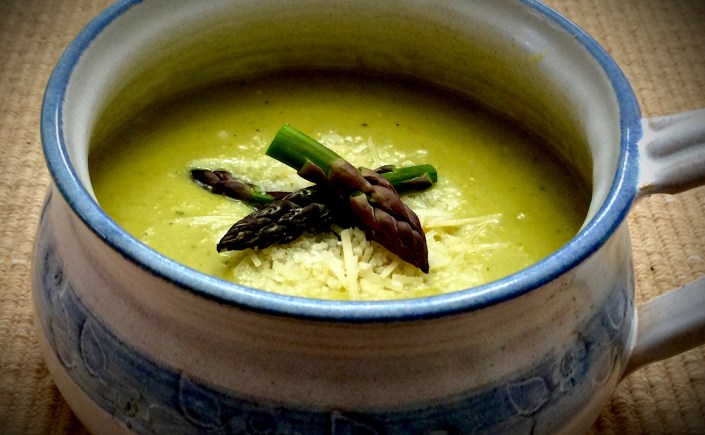
Take the tough bottoms off the asparagus spears. Remove a couple asparagus tips and set aside for garnish. (you can slightly steam them or leave them as is for a bit of crunch). Cut spears into 1/2 inch pieces. Place in a small bowl and set aside.

In a medium size high sided pot melt 2 Tbs. of butter. Add the onions and cook until translucent, approximately 5 minutes. Salt and pepper the onions while cooking.

Add the asparagus pieces to the onions and cook over low/medium heat for five minutes. Salt and pepper the asparagus. Add the garlic and cook until the garlic is fragrant, approximately 1 minute. Sprinkle the flour over the asparagus, stir and cook for about 2 minutes.

Add the chicken stock and bring the mixture to a low boil. Turn down the heat, cover and simmer for 25-30 minutes.

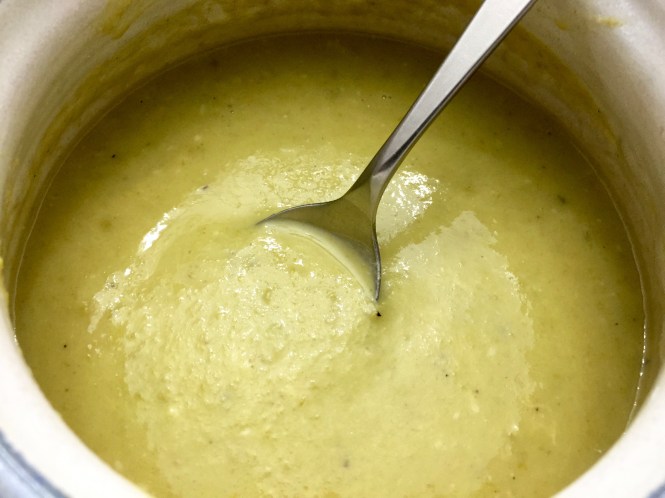
Turn off the heat. Use an immersion blender to blend the asparagus into the soup. Continue until there are no evidence of remaining spears. After a few minutes, if any parts of spears remain remove them – they are probably too tough to be broken down. Add the creme fraiche and stir to thoroughly combine.

At this point you can cool the soup and store it for a couple of days if you like. If you plan to serve it immediately stir in the remaining tablespoon of butter and the juice from the lemon. If you plan on serving it later, warm the soup and at that time and add the butter and lemon juice right before you serve.


SaveSave

SaveSave

SaveSave

SaveSave

SaveSave

SaveSave

SaveSave

SaveSave

SaveSave

SaveSave