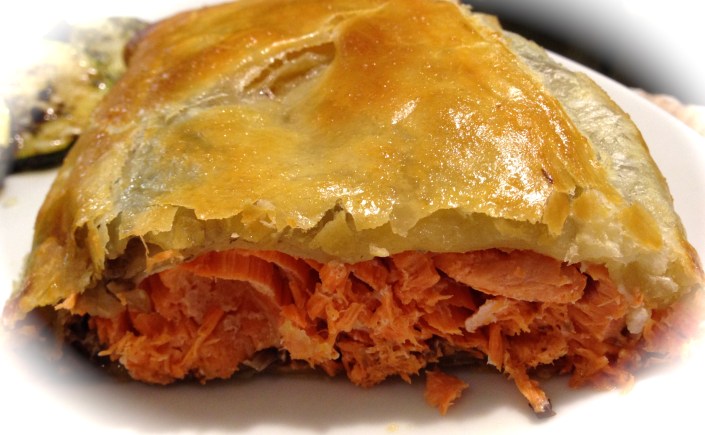
Baked Salmon and Cremini Mushroom Duxelle En Croute…

My husband and I have taken to eating more fish these days and so I’m experimenting with different ways of preparing it. I’ll admit it up front, fish can be tricky. You can’t eat it if it’s underdone and it tastes like the Sahara Desert if it’s overdone – and there is a very fine line of cooking time that separates fish from either one. But my job in this blog is to try to save you some of that uncertainty by my trial and error and not yours.
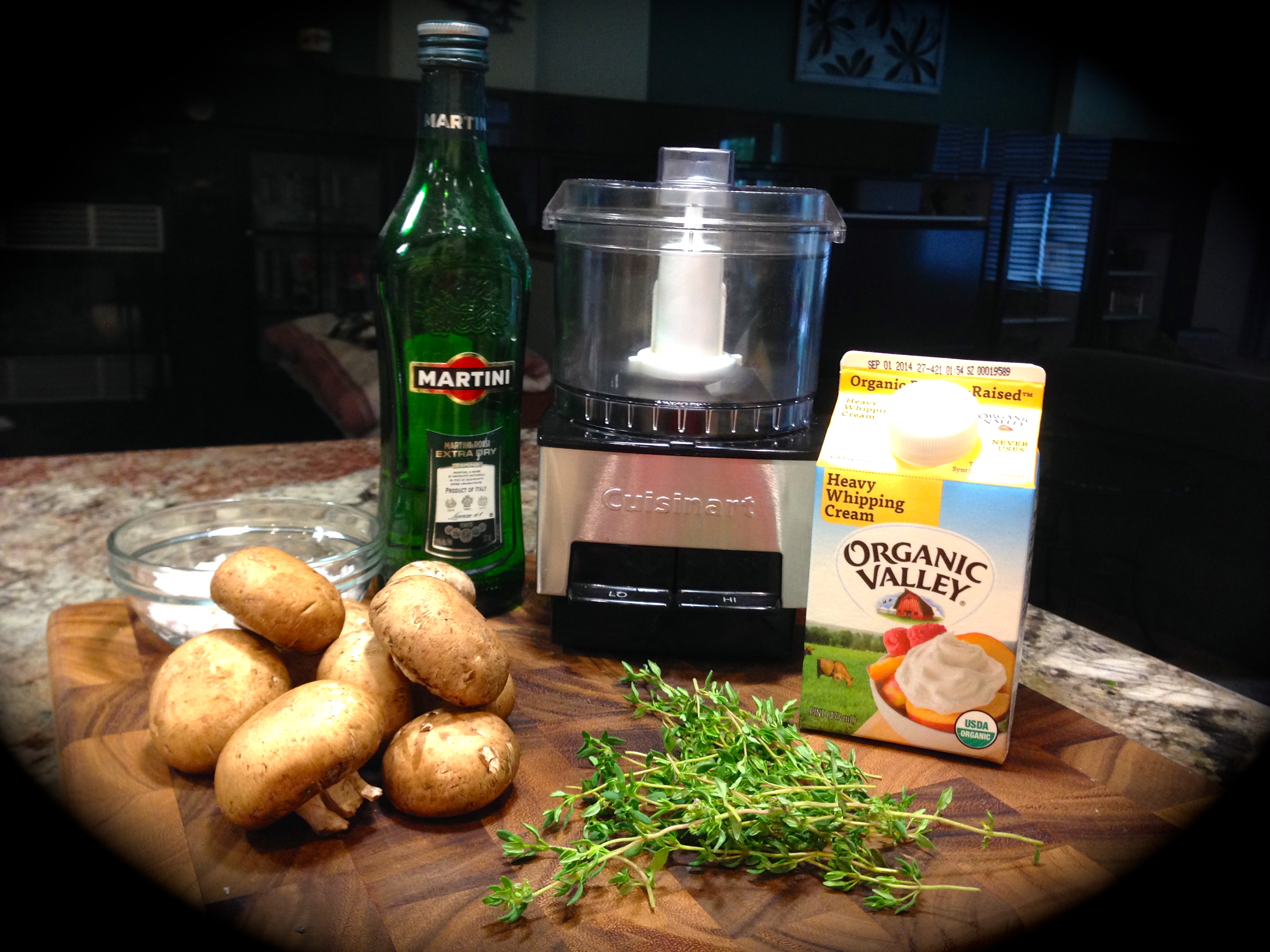
Duxelle Ingredients...

Duxelle Ingredients…

This fish recipe turned out very well the first time I made it, amazingly enough, and there is only one simple thing I would change from the original recipe and that would be the cooking time. The name of the dish sounds fancy but don’t let the terms en croute and duxelle frighten you. En croute simply means in a crust and a duxelle is merely mushrooms, shallots and herbs sautéed in butter and reduced to a paste. This particular duxelle also adds some vermouth and a tad of heavy cream to the paste just to make it extra decadent. As for the puff pastry, hardly anyone tries to make it from scratch anymore as the process is tedious and time consuming. Frozen puff pastry is just fine and adds to the mystique of the recipe with hardly any work on the part of the chef. The beauty of this recipe is that it really isn’t that hard to put together. So I’ll share my recipe rating and lessons learned in the hopes that you’ll give this one a try.

Recipe Rating- A-: The minus in the rating is really for the cooking time listed in the original recipe. I find it hard to believe that the salmon would be moist considering the amount of time the recipe suggested to cook it. But other than that, this recipe is very good and I think even someone who is not a big fan of mushrooms might like the flavor of the duxelle, which nicely compliments the flavor of the salmon.

Lesson Learned 1 – You can always put the fish back in the oven: I like to perfect fish recipes with just me and my husband as the guinea pigs before considering serving them to guests. That way I’m less worried about the presentation and more about perfecting the cooking time. So, if for some reason the fish is not done to your liking, just pop it back in the oven for a few more minutes (even if it is primarily encased in puff pastry). The original recipe called for baking the salmon at 400 degrees for 15 minutes and then lowering the temperature to 325 and baking it for an additional 15-20 minus. I simply could not imagine moist salmon being the end result of that process. My filets were 6 ounces each but only about 1/2 inch or slightly less thick. I am glad I followed my gut instinct and cooked them at 400 for 25 minutes. Even then the salmon was on the verge of being dried out but not bad (as a matter of fact those who like their salmon well done should bake it this way) – the next time I make it, I’ll bake the salmon at 400 degrees for 20 minutes and that should be perfect. You need the time and higher temps to cook the puff pastry so you need to be careful to bake a piece of salmon that is at least 6 ounces in order for it to withstand the cooking time. Any less than 20 minutes and I don’t think the puff pastry will bake to its full potential.
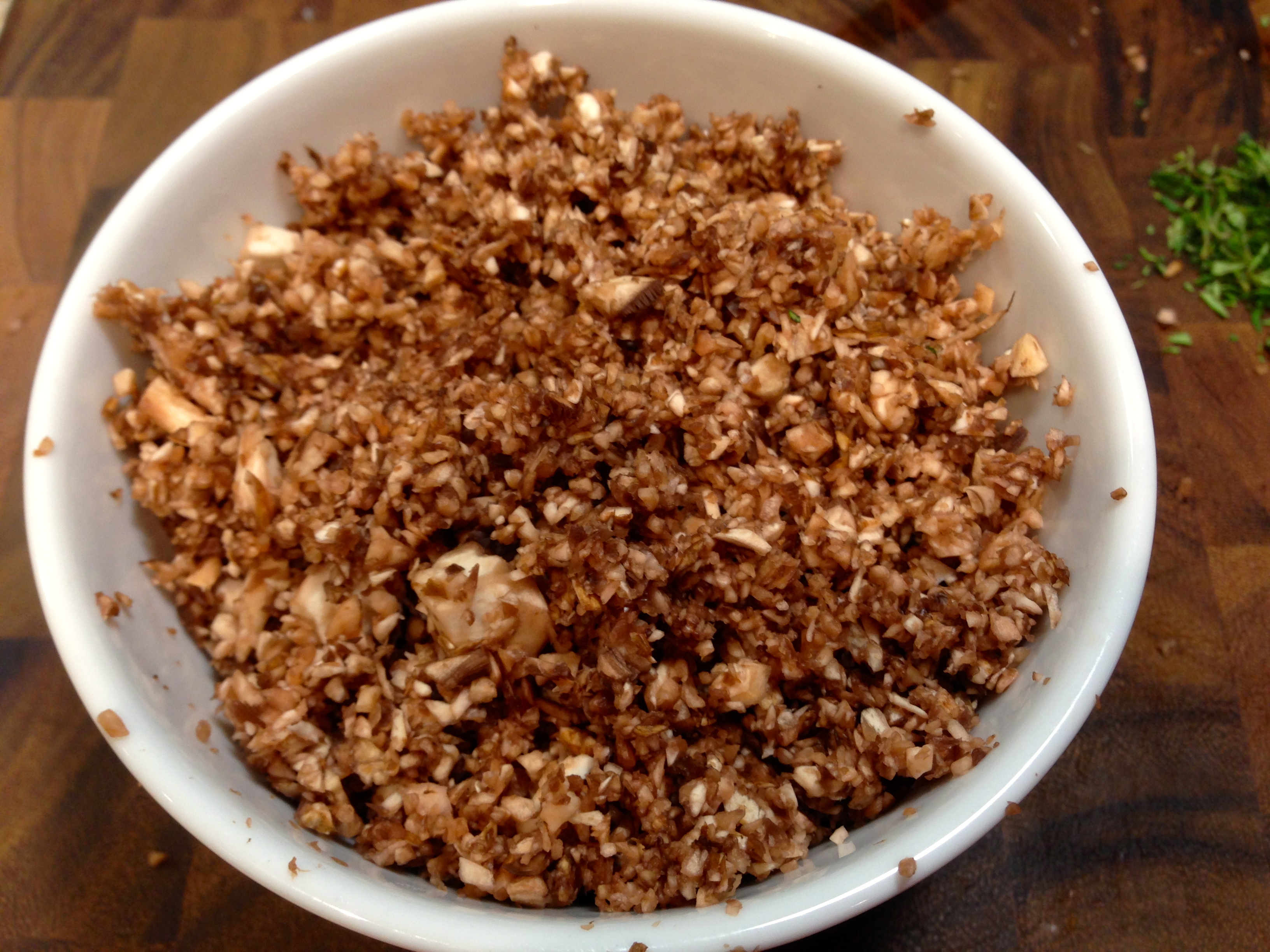
Finely chop the mushrooms for the duxelle...

Finely chop the mushrooms for the duxelle…

Lesson Learned 2 – To make the mushroom paste you need to finely chop the mushrooms: The duxelle consistency will not be achieved if you do not finely chop the mushrooms. As a matter of fact I don’t even recommend chopping them by hand. I would put them into a food processor and pulse them until they are finely chopped. I used my mini food processor for this and got the desired results without having to drag out the large food processor. I imagine this would be quite labor intensive if you tried to do this by hand.

Lesson Learned 3 – Remove the skin from the fish: I purchased wild caught salmon for this dish and was surprised at how thick and tough the skin was when I was removing it. You don’t want to battle with that while you’re eating so my advice is to invest in a good boning knife and remove the skin from the fish before preparing it.

Lesson Learned 4 – Working with puff pastry: Don’t be intimated. Working with puff pastry can actually be quite simple if you know a few things. First you’ll want to thaw a sheet in the refrigerator for about 3 hours before working with it. Lightly dust your prep station with flour, carefully unfold the pastry sheet (it’s folded in thirds) and roll it out to form more of a square shape. (Don’t roll it out too thin and be careful when lifting it if you need to add a little more flour to the surface). Don’t be afraid to adjust the salmon (scrunching it a little) to fit neatly into a folded pocket of puff pastry. For two filets you should only need one sheet of puff pastry. There will be two sheets in the box when you buy it. Keep the other sheet frozen and use it at a later time.

Lesson Learned 5 – An egg wash is puff pastry’s best friend: In order to enhance the color of your puff pastry, beat an egg with just a splash of water in a dish and then brush it all over the top of the puff pastry. The egg wash will help produce a beautiful golden color on the pastry. Once you’ve applied it, make a one inch slit in the center of the pastry to allow steam to escape during the baking process.

I know this recipe may look a little intimidating but really it isn’t. These salmon pockets can actually be made a couple of hours ahead of time and left in the refrigerator until they’re ready to be baked off. The original recipe states that these can also be frozen and then baked frozen but additional cooking time is necessary (not sure what that means but if you’re adventurous, try it). I can assure you this tastes delicious and is worth the little bit of extra time to put together. Enjoy!
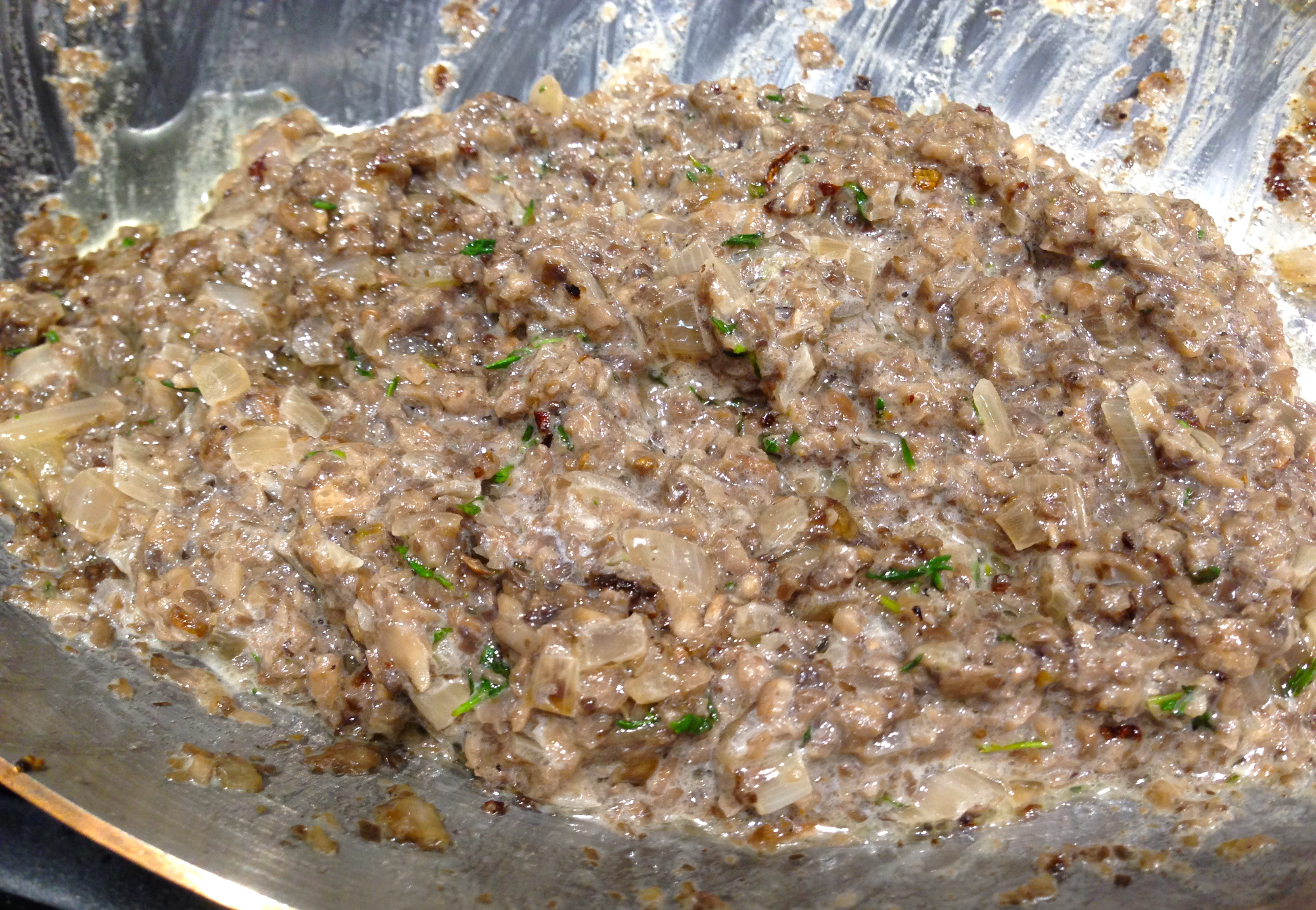
IMG_9704

The duxelle paste…

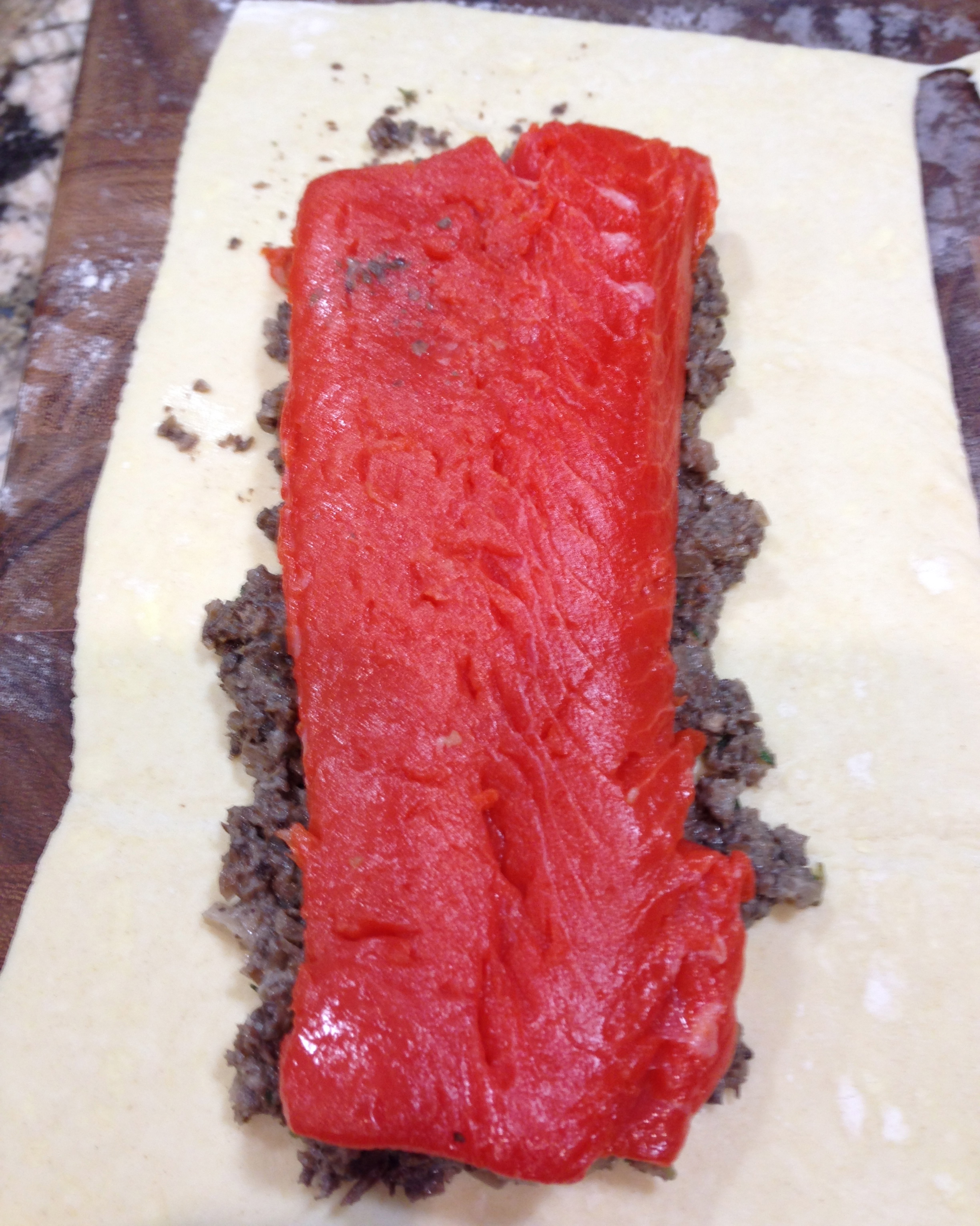
Layer the duxelle and salmon on to the puff pastry...

Layer the duxelle and salmon on to the puff pastry…
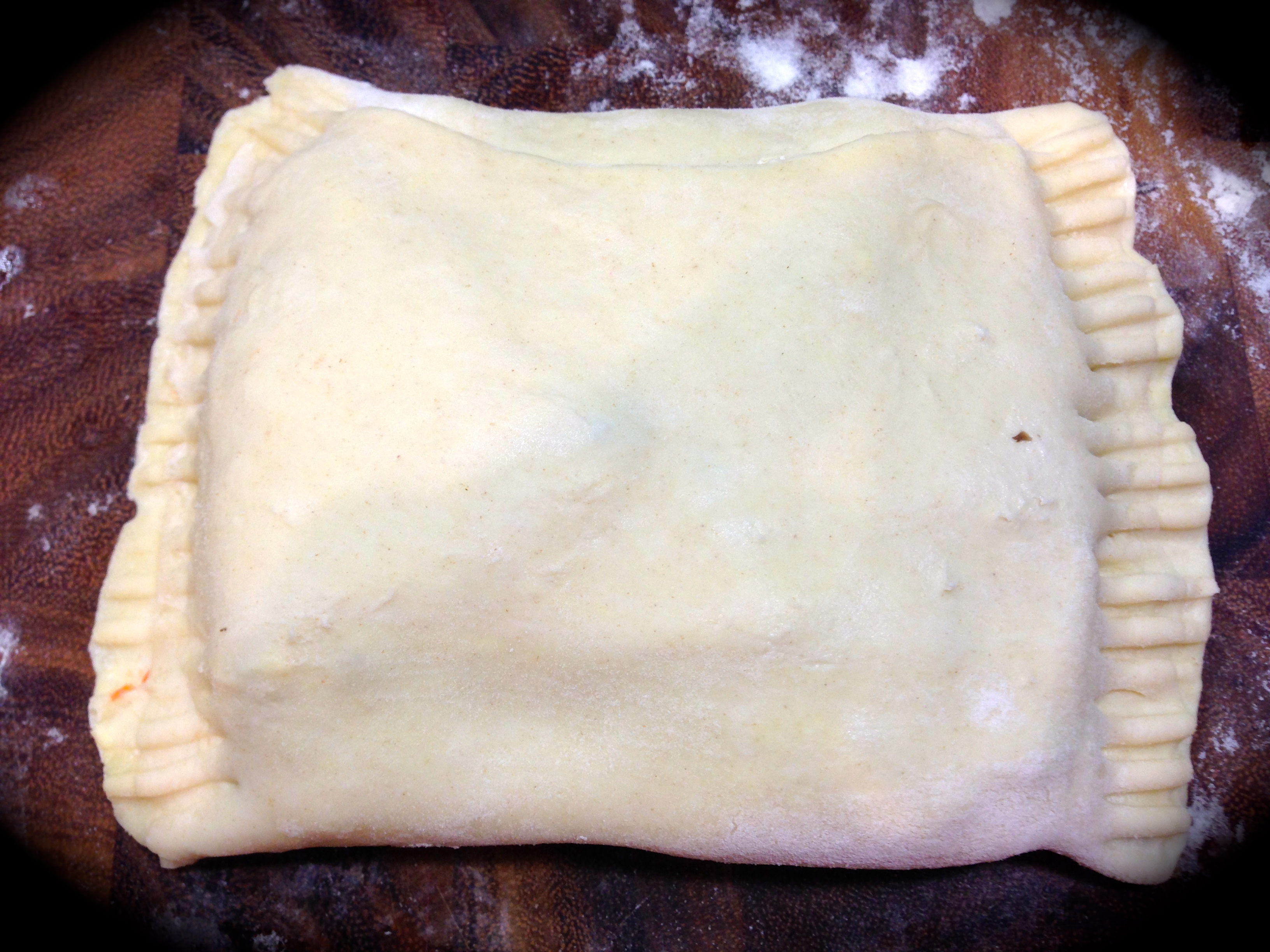
Make the pastry pocket and crimp the sides with a fork...

Make the pastry pocket and crimp the sides with a fork…
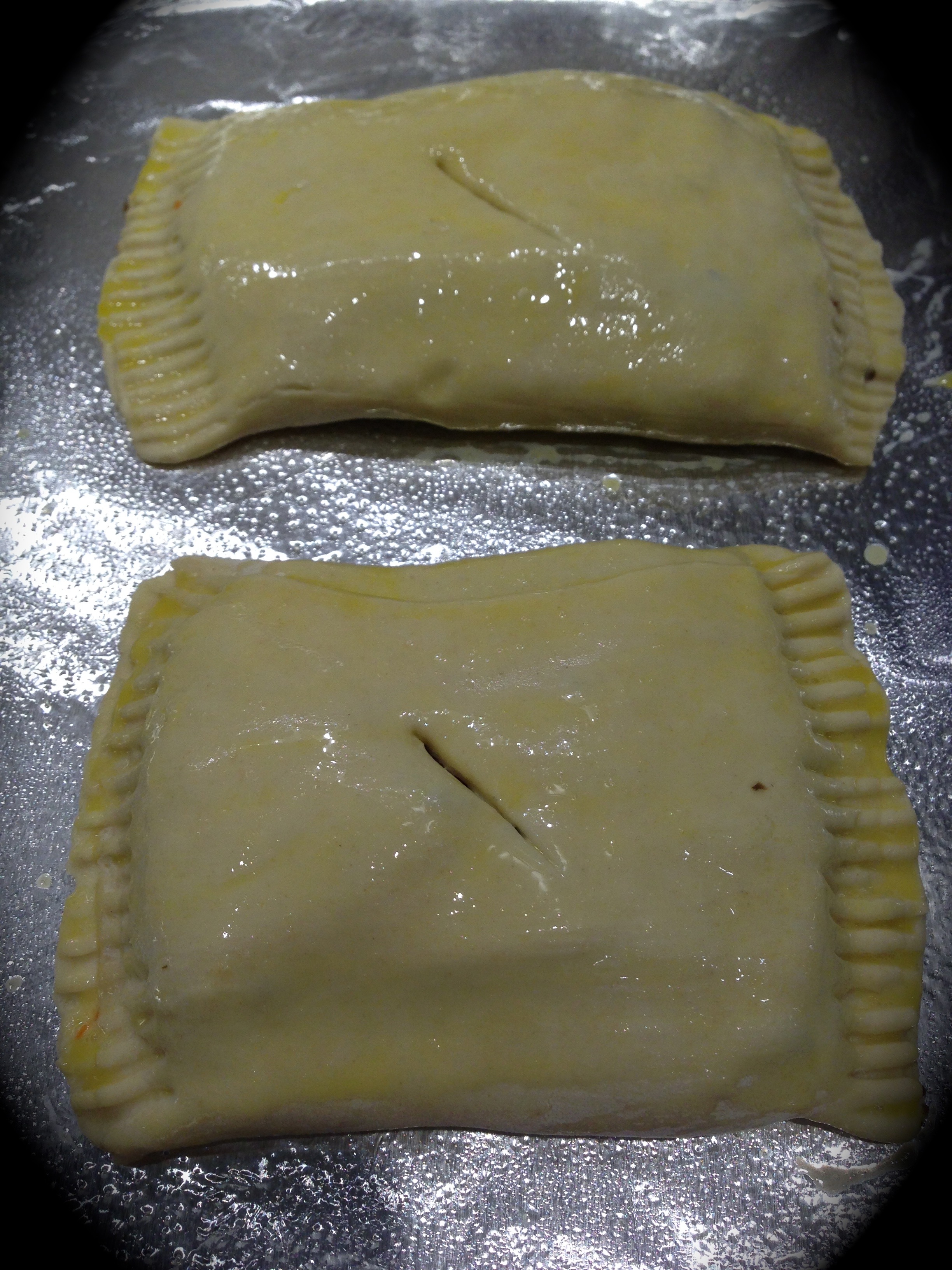
Brush the pastry with an egg wash and cut a slit in the center to release steam

Brush the pastry with an egg wash and cut a slit in the center to release steam

Baked Salmon and Cremini Mushroom Duxelle En Croute

  • Servings: 2
  • Difficulty: Medium
  • Print

INGREDIENTS:

2 six ounce salmon filets, skin removed

1/2 cup mushroom duxelle

1 sheet of puff pastry, thawed

1 egg 1 tsp. water

(FOR THE DUXELLE)

6 ounces cremini mushrooms

2 TBS. butter

1/4 cup finely chopped shallots

1 TBS. vermouth (or dry white wine)

1/4 – 1/2 tsp. fresh thyme

3 TBS. heavy cream

salt and pepper to taste

DIRECTIONS: Thaw the puff pastry in the refrigerator for at least three hours. Preheat the oven to 400 degrees. Using a damp paper towel, wipe off any residue on the mushrooms. Don’t wash them directly under water as they can absorb too much moisture if you do that.

Put mushrooms in a food processor and pulse until they are finely minced. Mince the shallots and chop the thyme. Melt the butter and sauté the shallots until soft. Stir in the mushrooms and simmer for 7-10 minutes, stirring occasionally until their moisture evaporates. Add the wine, thyme and salt and pepper. Simmer for about another 5 minutes. Remove from the heat and add the whipping cream. Use immediately or refrigerate until ready to use.

Remove the skin from the salmon. On a lightly floured surface, open the puff pastry and gently roll it into the shape of a square. Cut the puff pastry into four equal squares to create an upper and lower portion of the pocket (I cut mine in half and just folded the pastry over the salmon – I had to scrunch the salmon a little to get it to fit in the pocket but it worked out just fine). Spread the duxelle on the puff pastry up to an inch from the edges of the pastry.

Place the salmon on top of the duxelle and fold over the pastry to create a pocket. Use a fork to crimp the edges shut. Beat egg with water and brush the top of the puff pastry pocket with the egg wash. Slit a hole in the center of the pastry pocket (about a inch) to allow steam to escape. Line a baking sheet with foil and spray lightly with non-stick spray. Place the salmon pockets on the baking dish and bake for 20 minutes. Serve immediately.
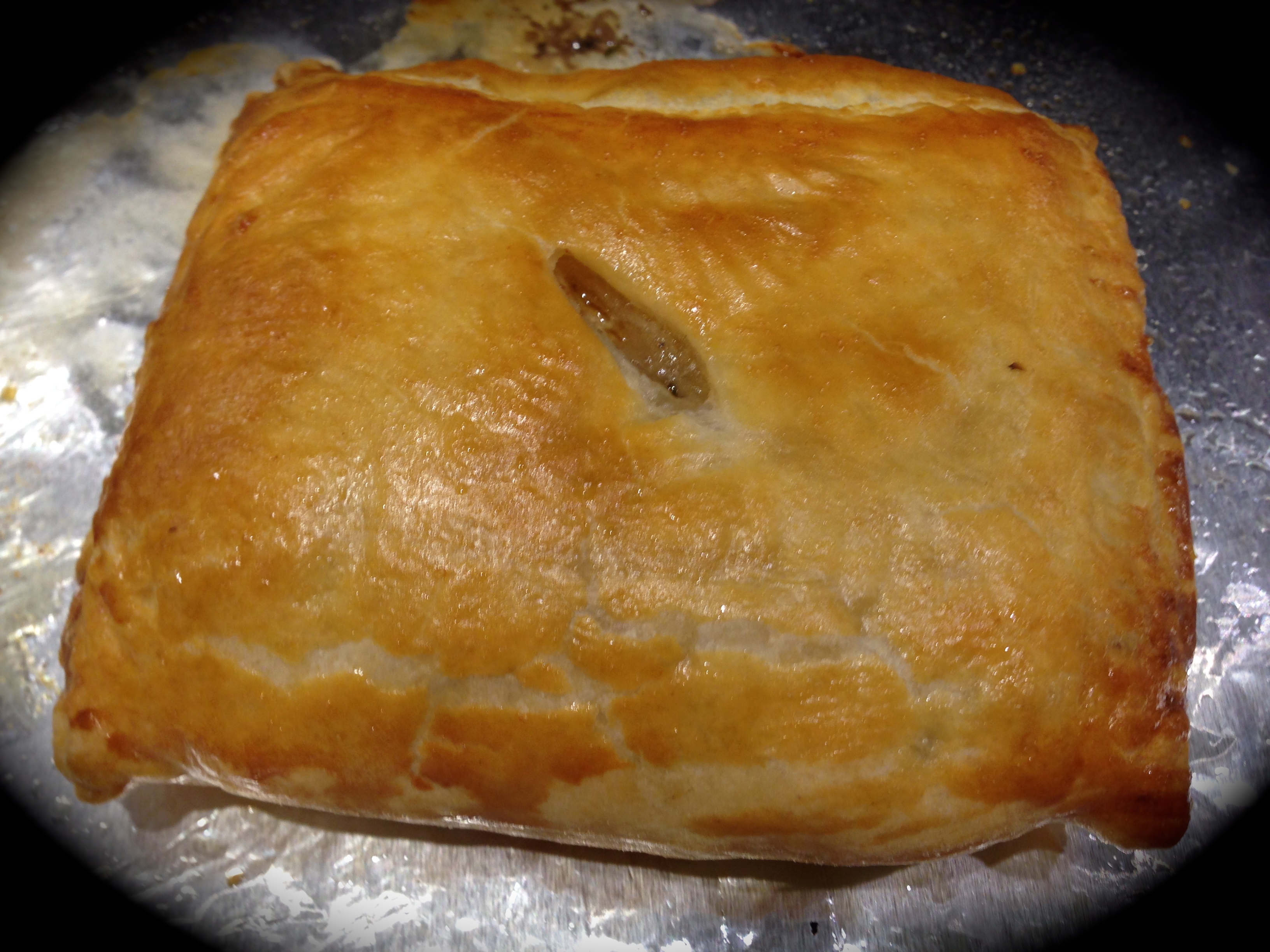
Pastry Pocket Right Out Of The Oven...

Pastry Pocket Right Out Of The Oven…
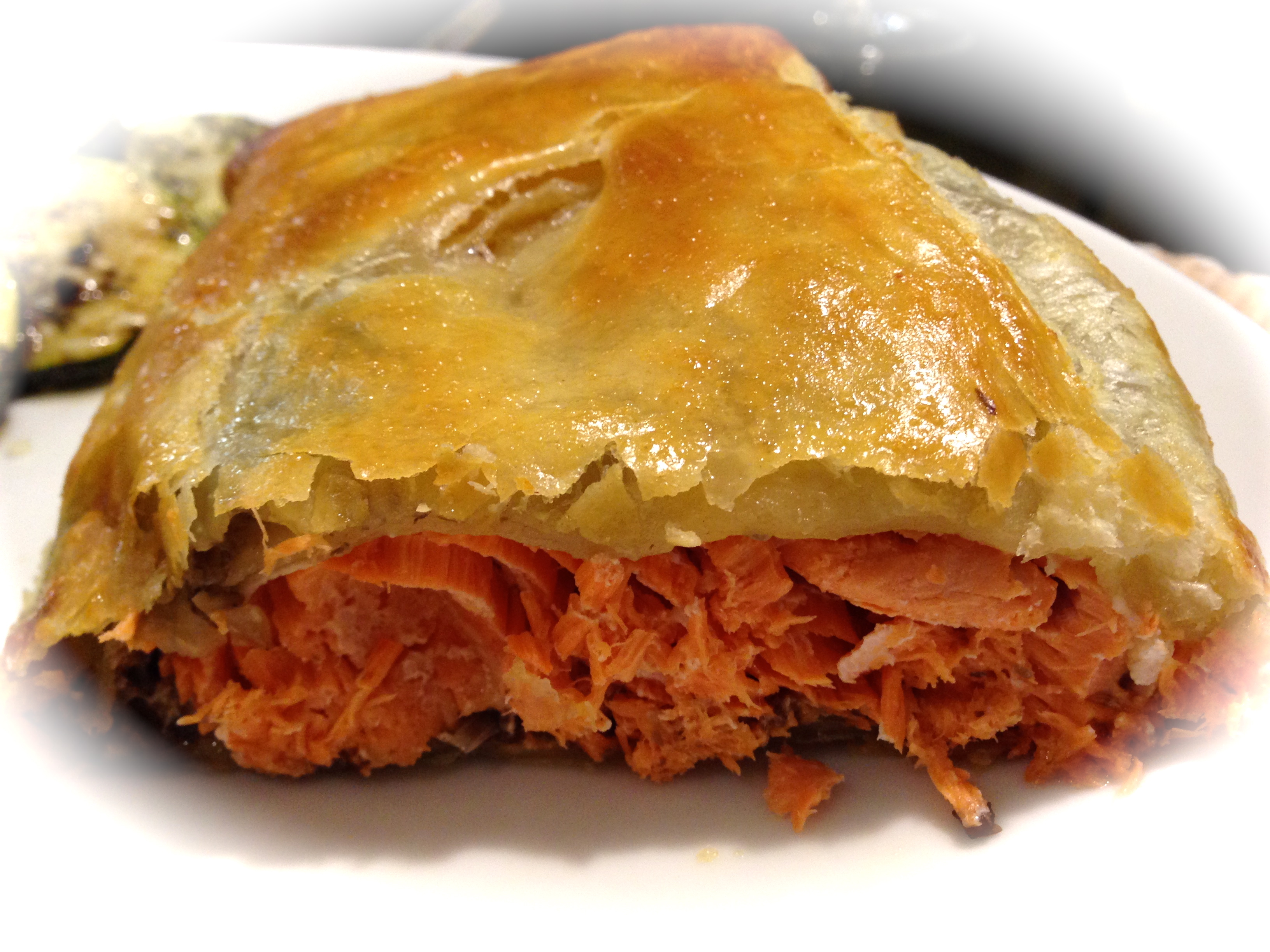
Salmon and Cremini Mushroom Duxelle En Croute...

Salmon and Cremini Mushroom Duxelle En Croute…

Broiled Salmon with Herb Mustard Glaze…
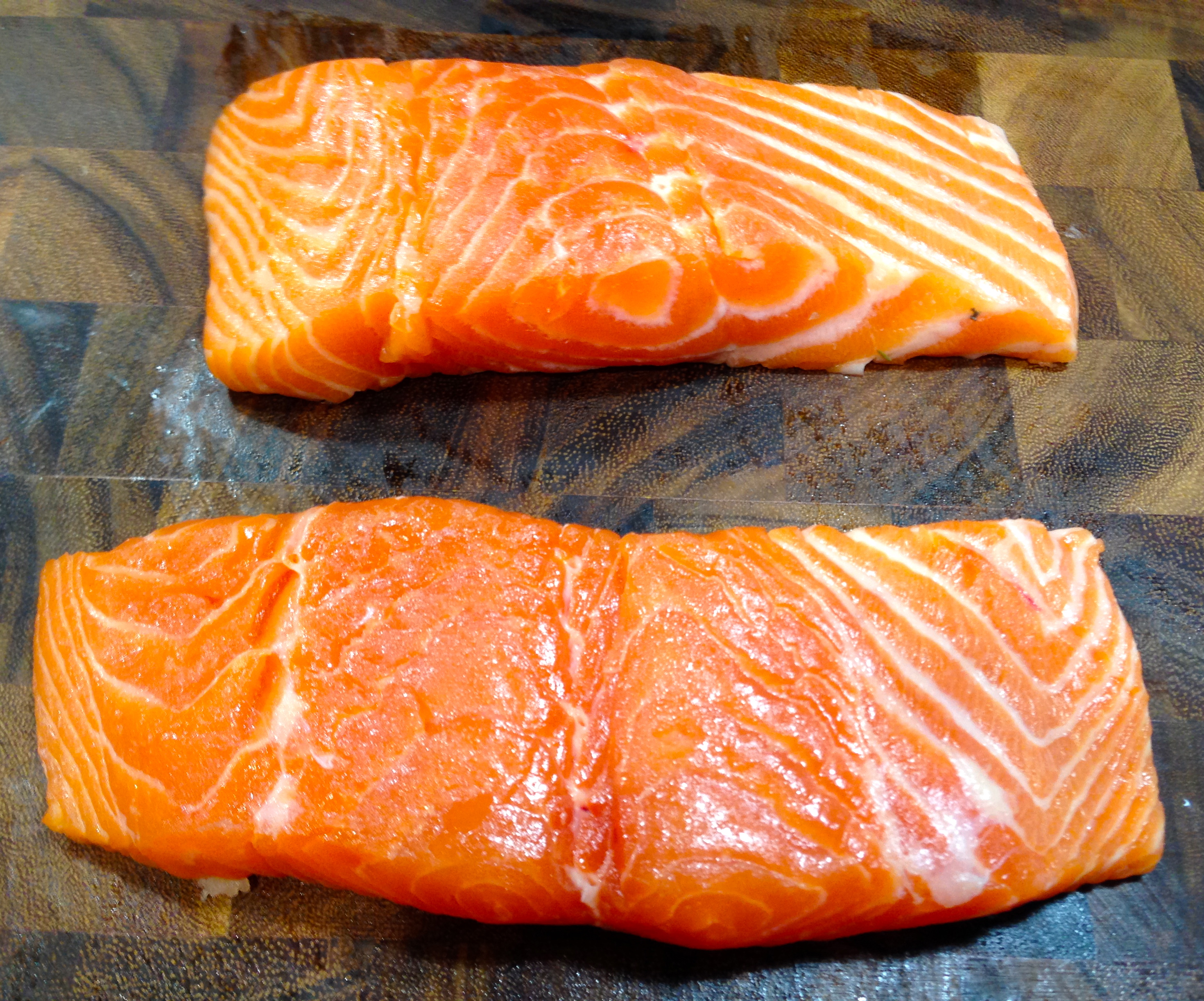
I’ve always been a big fan of salmon. It’s a mild fish that can be prepared in a variety of ways and, in my estimation, easier to cook than other types of fish. So this past weekend when a new high-end grocery store opened in our area, I decided to try some of their fresh fish. The salmon looked superb, as you can see from the photos, and that prompted me to look for an easy but flavorful salmon recipe.

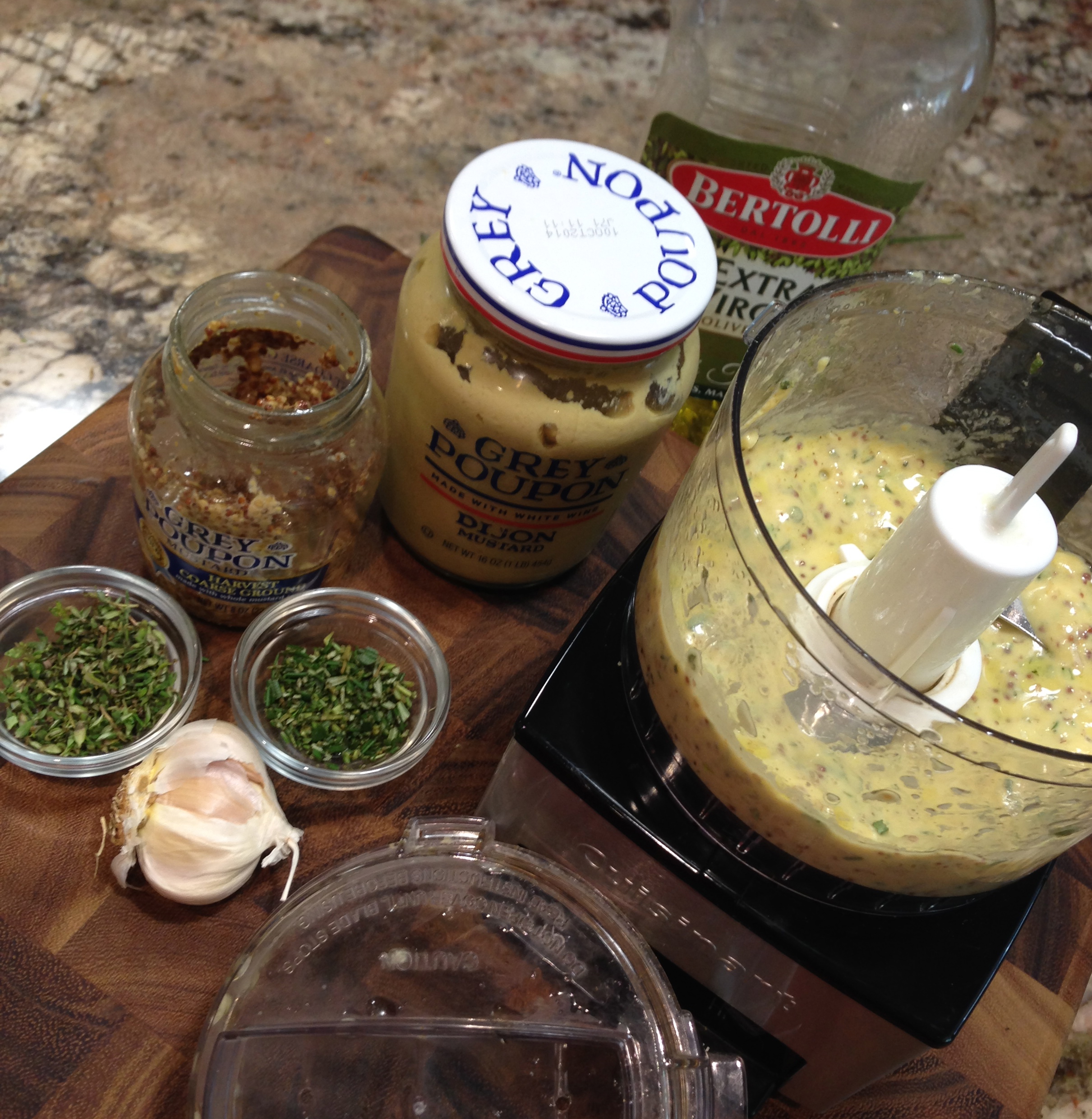
Herb Mustard Glaze Ingredients

Herb Mustard Glaze Ingredients

I found a great recipe on, you guessed it…, The Food Network Site (thought I was going to say Pinterest didn’t you?) The basis for this is Giada’s recipe of the same name. I adapted it for my own needs and tastes. So here is my rating of the original recipe and lessons I learned when making it:

RECIPE RATING A. This is a very easy recipe, the glaze is easy to make and the flavors of the glaze provide a delightful compliment to the salmon. The only things I would have expounded on in the recipe is the reason why you put the glaze on after you’ve cooked the salmon for a couple of minutes and a more detailed reference to variations in cooking times for fish. I’ll explain in my lessons learned.

Lesson Learned 1 – Not all fish are created equal: This is true especially when it comes to cooking time. I am still trying to perfect the art of cooking fish to perfect doneness. The challenge is that fish can be expensive and you hate to pay good money for something and then ruin it. The beauty of salmon is that is can be prepared in various stages of doneness. Some like their salmon a little less done, sort of medium rare, will others like their salmon well done. It’s a little easier to work with salmon because of this. When I made this recipe I used two salmon filets that weighed between 6-8 ounces just as written in the recipe. Giada advised to cook the salmon for 7 minutes total. I cooked mine for 8 and my filet, as it was a little thicker, was medium rare to medium. My husband’s filet was thinner and his turned out medium. So just be aware that your forays into cooking fish may take several trials and also be aware that cooking time is so dependent on not only the weight but also the thickness of the fish. In my case, my filet was thicker than the one I served to my husband, ergo the difference in doneness. But don’t give up. Mastering the art of cooking fish will be something that, in the end, will provide you with some extraordinary meals.

Salmon Filets

Salmon Filets

Lesson Learned 2 – There is a reason you don’t glaze the fish before you put it under the broiler: This is where I wished the recipe would have been more specific. Granted I have become more adept in the kitchen but there are still some things that are not intuitive to me. The glaze will burn if you keep it on too long. If I had known that up front I probably would have applied the glaze at the three minute juncture instead of the two. As it was, I had a nicely browned glaze but I think I just made it before it started to burn. So keep that in mind. If you think you need more cooking time than the 7 minutes called for in the recipe, put your glaze on a little later.

Lesson Learned 3Remove the skin from the salmon: If there is skin on one side of the salmon filet remove it. The skin is tough and you won’t eat it. I find the filets cook more evenly with the skin removed. I use a very sharp knife, a Shun boning knife, and just run it up and down the edge of the skin until I can peel a little of it away. Then I hold the skin taught and keep moving the knife up and down close to where the skin meets the flesh, gently pulling on the skin as I go until all the skin as been removed. This will take a few minutes, but it’s worth it.

Herb Mustard Glaze

Herb Mustard Glaze

Lesson Learned 4 – The glaze is fabulous: I really liked the flavor of this glaze both on the fish and on its own. I imagine with a little bit of ingenuity it could be used on other things. The combination of the dijon and whole-grain mustard along with the herbs provides great depth of flavor and would probably taste good on chicken too.

I would highly recommend trying this recipe. Don’t be afraid to cook fish. If you’re concerned, err on the side of caution and take it out sooner rather than later. You can always throw it back on the cooking source but you can’t undo overcooking. Let me know what you think of this one.

Broiled Salmon with Herb Mustard Glaze

  • Servings: 4
  • Difficulty: Medium
  • Print

Ingredients:

2 cloves of garlic

3/4 tsp. finely chopped fresh rosemary

3/4 tsp. finely chopped fresh thyme

1 Tbs. dry white wine

1 Tbs. olive oil

2 Tbs. dijon mustard

2 Tbs. whole grain mustard

4 (6-8 ounce) salmon filets, skin removed

Salt and pepper

Directions:

Preheat the broiler (if you have an option of low or high, choose high). Place oven rack to be approximately 8-10 inches away from the broiler flame.

In a mini food processor combine garlic, rosemary, thyme, wine, oil, dijon mustard and 1 Tbs. of the whole grain mustard. Pulse until well combined. Transfer to a small bowl and stir in the remaining 1 Tbs. of whole grain mustard. Set aside.

Line a broiler pan with aluminum foil and spray with non-stick cooking spray. Arrange the salmon on the broiler pan (I arrange them vertically so that they nest completely under the broiler flames). Salt and pepper to taste. Broil for 2-3 minutes (depending on the thickness of the filets). Remove broiler pan from oven and spread the mustard glaze on top of the salmon filets. Put pan back in oven and continue to broil for about 5 minutes. Serve immediately.

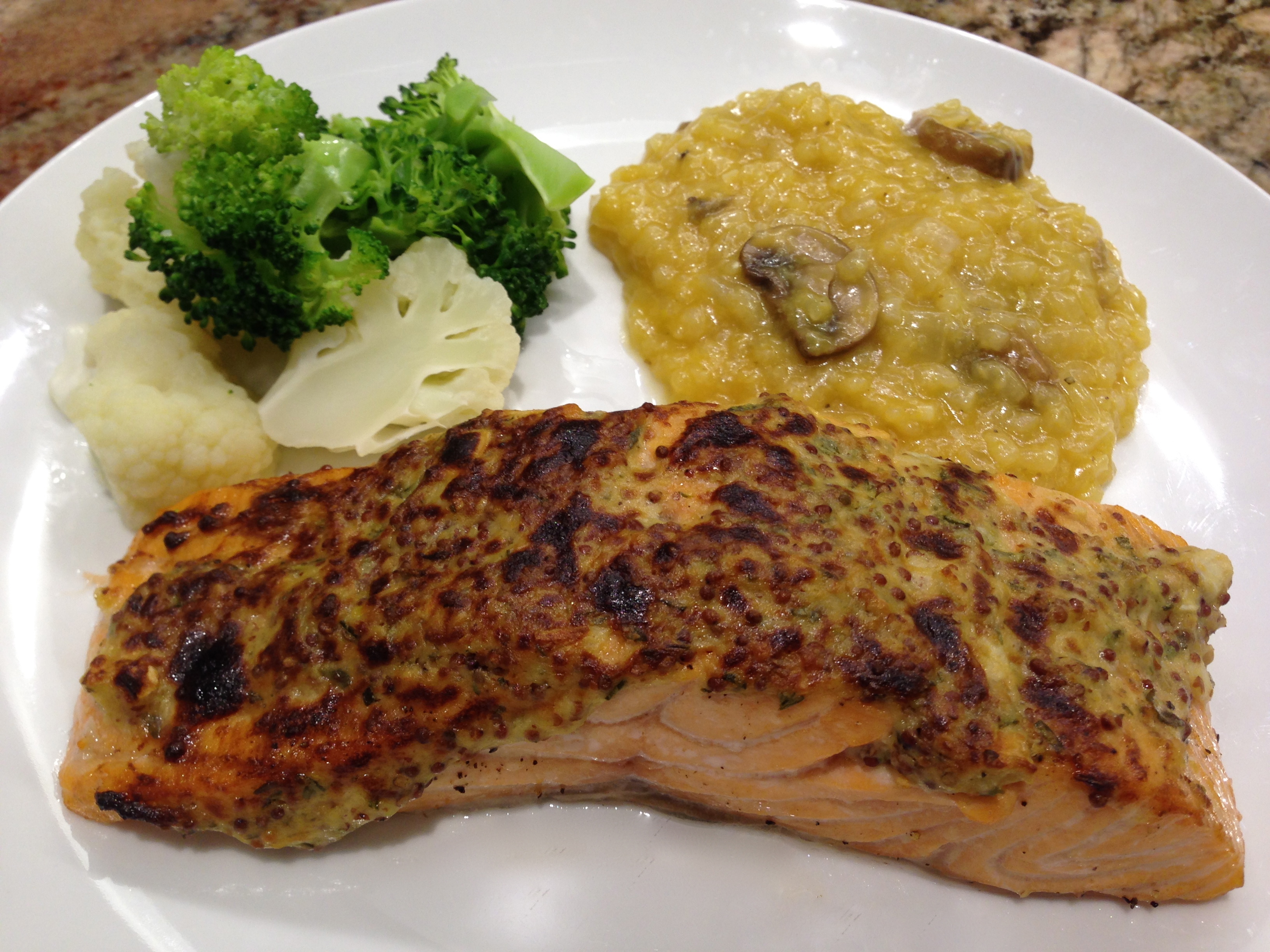
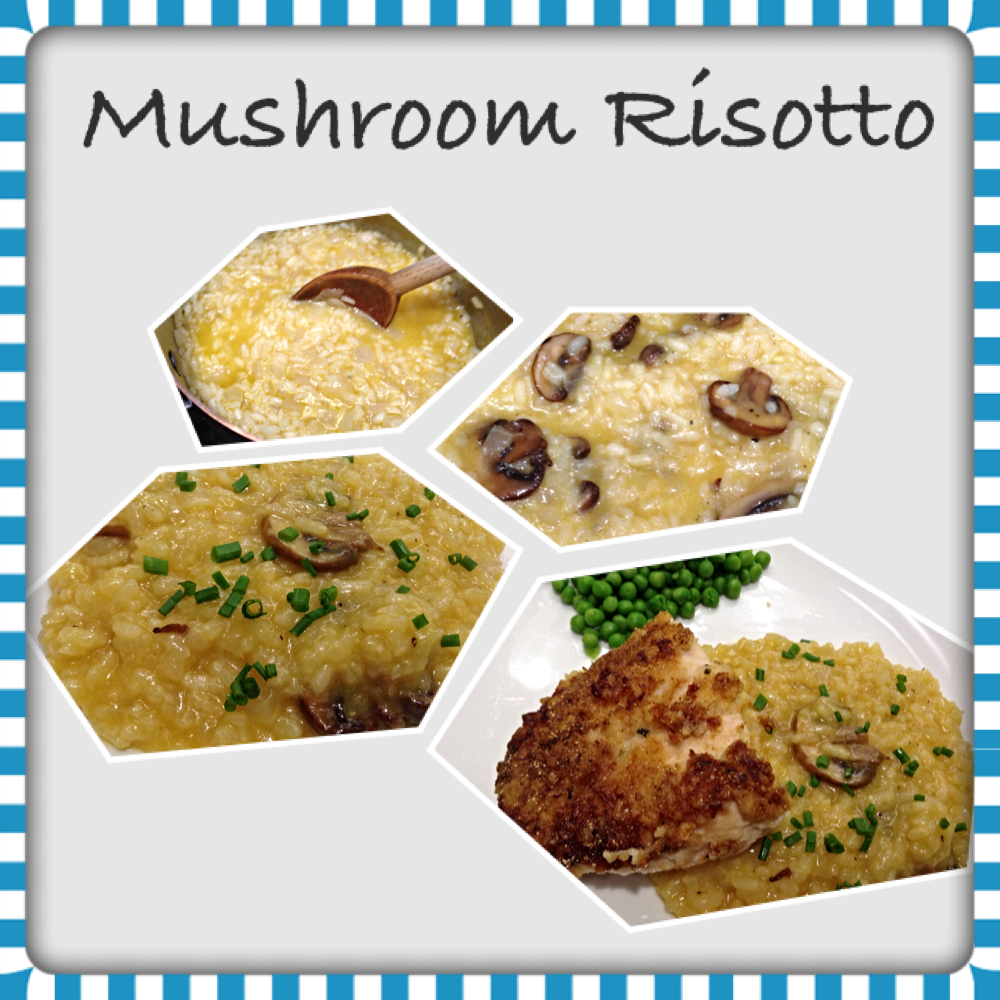
Serving Suggestion: Salmon with Mushroom Risotto and Steamed Vegetables

Serving Suggestion: Salmon with Mushroom Risotto and Steamed Vegetables

design


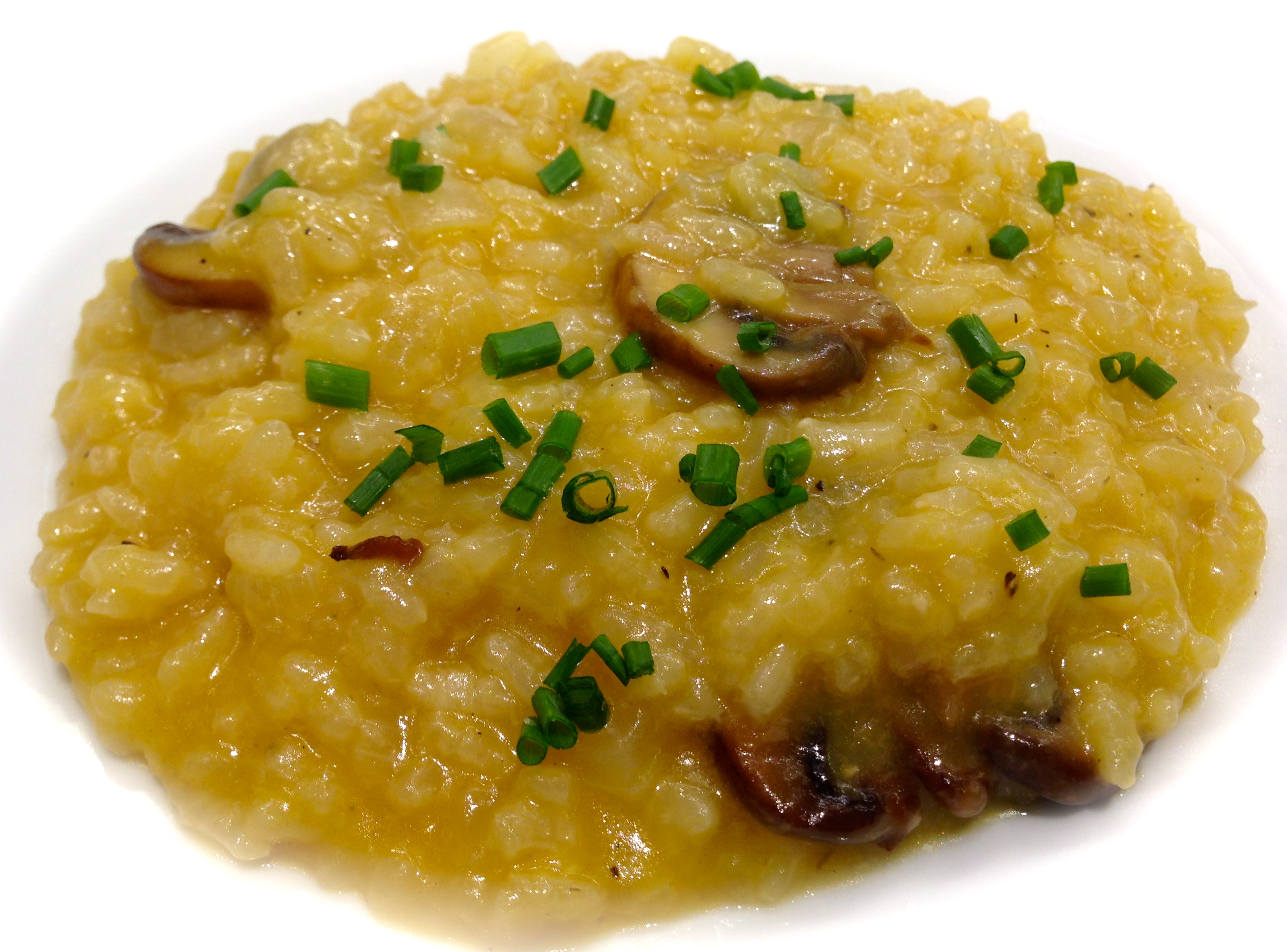
Portabella Mushroom And Sweet Onion Risotto…
The first time I ever heard the term risotto or saw it being made was on an episode of 30 Minute Meals with Rachel Ray on the Food Network. I remember distinctly her saying that many people think making risotto is difficult to master and labor intensive. I’d never tried making risotto and personally am not a big fan of rice to begin with, but it looked like a creamy style rice and I thought I could live with that. Plus my husband is a huge rice fan and I’m always looking for ways to satisfy his need for rice with something that I find palatable as well.

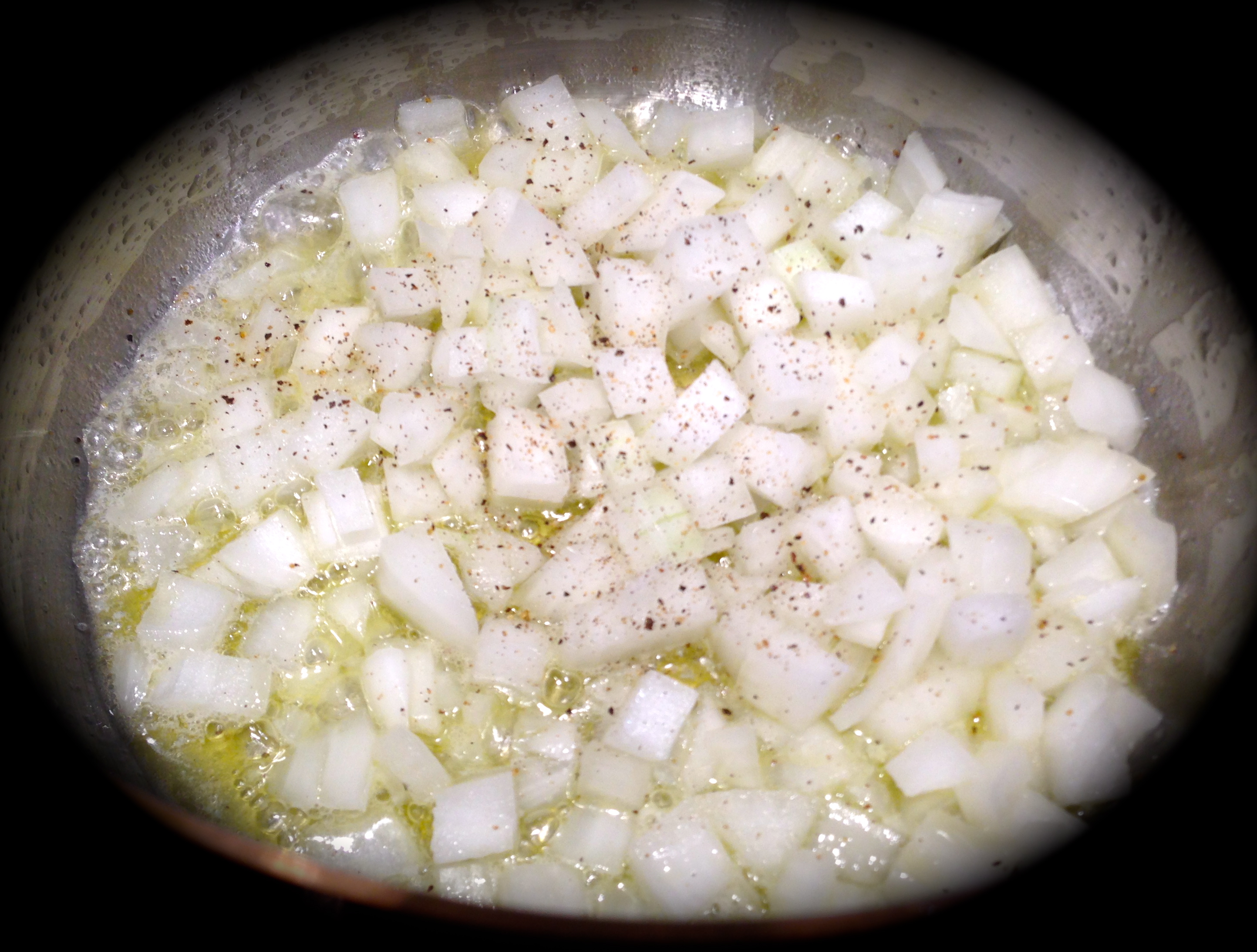
Sautee Onions In Butter And Olive Oil

Sautee Onions In Butter And Olive Oil

After watching several episodes where she made different variations of risotto I thought I might give it a go. And over the past year after having made it several times I think I have the process down pat. The base recipe that I use is my own and I’ve found with a little ingenuity (and a need to use up various types of vegetables in my refrigerator) you can make just about any kind of risotto you’d like.

At first, the thought of making risotto was daunting, especially for a non-intuitive cook like me. I found out quickly that although Rachel Ray could seemingly make it in 30 minutes it takes much longer than that for me. Maybe living in high altitude has an affect on the cooking time, but after several attempts I know that it takes me 1 hour to get creamy rice. So that’s what I plan for now and it always turns out perfectly.

Since the recipe is mine, I’m not going to take the time to rate it. What I will say is that it did take several attempts before I got the risotto to its desired consistency. So let me share with you my lessons learned regarding making basic risotto and my recipe for portabella and sweet onion mushroom risotto.

Image

Lesson Learned 1 – USE CHICKEN STOCK: Some recipes call for chicken broth, some for chicken stock, you can also use a combination of broth or stock and some wine, but my advice is always use chicken stock instead of chicken broth. Chicken stock is richer and adds more depth of flavor. There is no contest here – always use chicken stock. I find it takes me one full box of stock to make my risotto. (You can also use vegetable stock if you want to make this as a vegetarian dish).

Lesson Learned 2 – MAKE SURE THE CHICKEN STOCK IS WARM: A warm liquid helps the arborio rice (and that’s what risotto is, arborio rice) release more of its starches. Those starches are what creates the creaminess. About 5 minutes or so before I begin the process I put the stock in a pot on the stove and warm it under a very, very low flame. No need to boil or even simmer. I put my gas stove on its lowest possible setting where you can barely see a flame and keep it there the during the entire cooking process. It keeps the stock warm to the touch and that is really all you need.

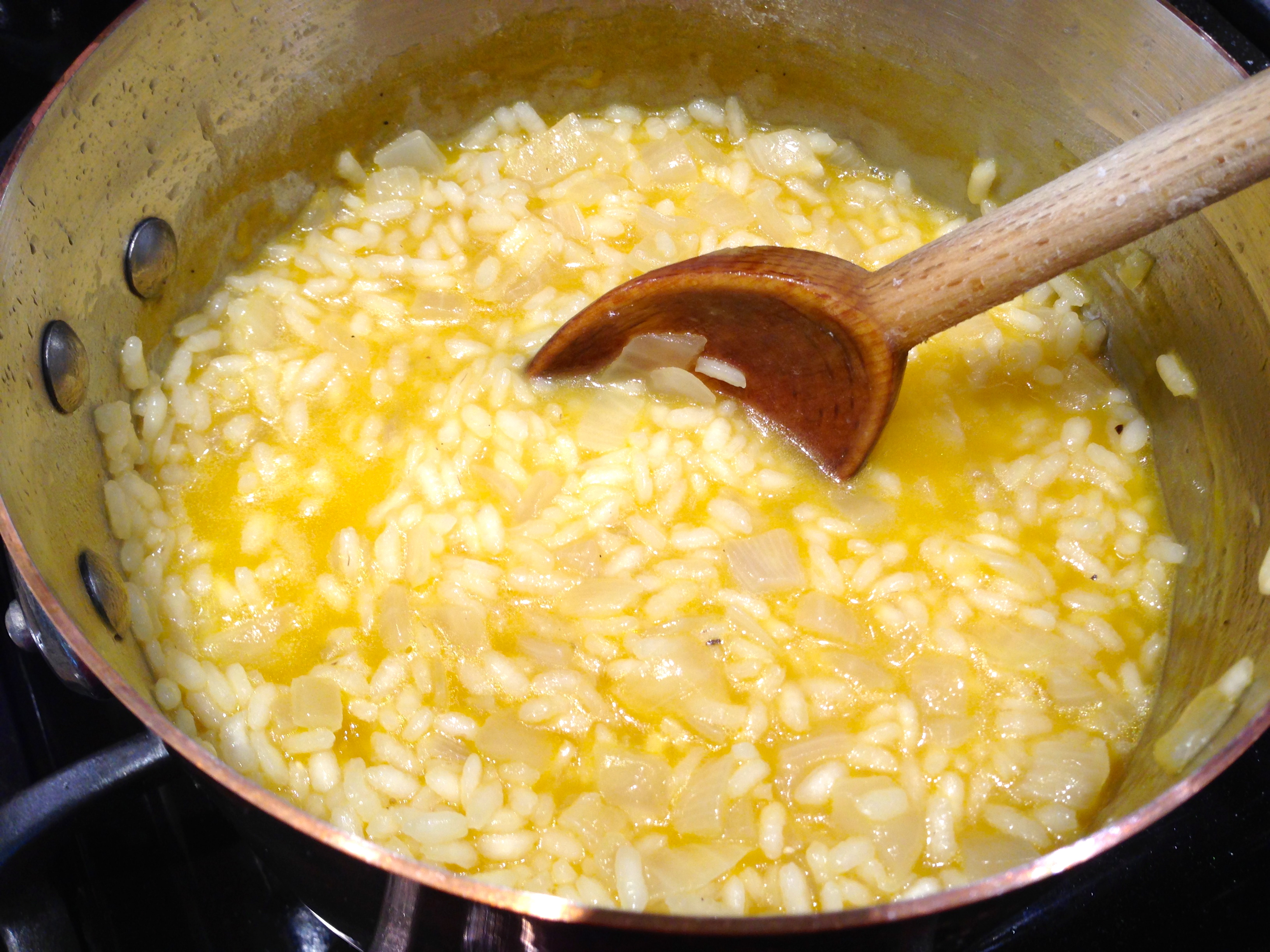
Stir Regularly

Stir Regularly

Lesson Learned 3 – COOK THE RISOTTO SLOWLY UNDER A LOW FLAME: Face it, risotto takes time and there is no getting around that. The more you nurture it during the cooking process the better the end result. At any given point in time the risotto should barely bubble.

Lessons Learned 4 – SYSTEMATICALLY ADD WARM STOCK AND STIR: I think this may be the part where most people say forget it, I don’t have time for this. But it really isn’t that bad. I’ve gotten to the point where I check my risotto about every 5 minutes and if the stock has mostly cooked away I add another soup ladle full of stock, stir the risotto and then leave it for another 5 minutes. Remember stirring also helps the rice release its starches.

Lesson Learned 5 – IT MAY TAKE A FEW TRIES TO TIME IT RIGHT: As I mentioned earlier, when watching Rachel Ray cook risotto, it supposedly only took her 30 minutes. I’ve never even come close to that time. It takes me a full hour to get the risotto to its desired creaminess. Now I am not sure that high altitude has an effect on it, but I know that if I want to have risotto with a meal I need to start it an hour ahead of time. Depending upon where you live, the time may very. Unfortunately, this is something that you will need to discover on your own.  But take my word for it – IT’S WORTH IT. I am not a big fan of rice but I love risotto.

Lesson Learned 6 – ADAPTABILITY: You can add just about anything you like to risotto and serve it either as a side dish or the main course. I like to add portabello mushrooms that have been sautéed in butter and garlic. But I’ve also added roasted butternut squash or asparagus. Just remember that whatever you add should be pre-cooked and added during the last 5 minute or so. Top it off with some chopped scallions or chives and you’ve got something very special.

Lesson Learned 7 – SIZE OF POT & THE AMOUNT OF RICE: My recipe calls for one cup of arborio rice. Don’t be fooled into thinking that is not enough. One cup of rice becomes three cups of risotto so depending on how many you will be serving this could well be enough for one meal and leftovers. And make sure to use a high sided pot when making risotto as it will grow right in front of your eyes. You’ll want to have a pot that can handle the end result.

Portabella Mushroom And Sweet Onion Risotto…

  • Servings: 4-6
  • Difficulty: Medium
  • Print

INGREDIENTS:

8 ounces of Portabella Mushrooms, sliced

1/2 cup sweet onion, diced

1 clove garlic, minced

1 box (32 oz.) low sodium chicken stock

3 TBS. butter

3 TBS. olive oil

1 cup arborio rice

DIRECTIONS:

Pour stock into a pot and heat on the stove under the lowest possible flame (just enough to keep it warm). In a sauté pan, heat 1TBS. oil and butter. Add garlic and cook until fragrant (30 seconds to 1 minute). Add mushrooms and sauté until slightly softened. Set aside.

In a high-sided pot under medium heat, heat 2 TBS. of butter and olive oil. Add onions and cook until translucent. Add arborio rice and cook with the onions for 1 minute. Turn heat to low and add a soup ladle full of chicken stock. Stir to combine. After approximately five minutes (or until you see the chicken stock has almost been completely incorporated) add another ladle full of stock and stir. Repeat this process until all of the chicken stock has been used and the rice is thick and creamy (for me, that was approximately 1 hour). DO NOT LET THE RICE MIXTURE DRY OUT DURING THE COOKING PROCESS. There should always be a little moisture left when adding the next ladle full of stock.

During the last five minutes of the cooking process, add the mushrooms to the mixture. Garnish with chives or scallions and serve.

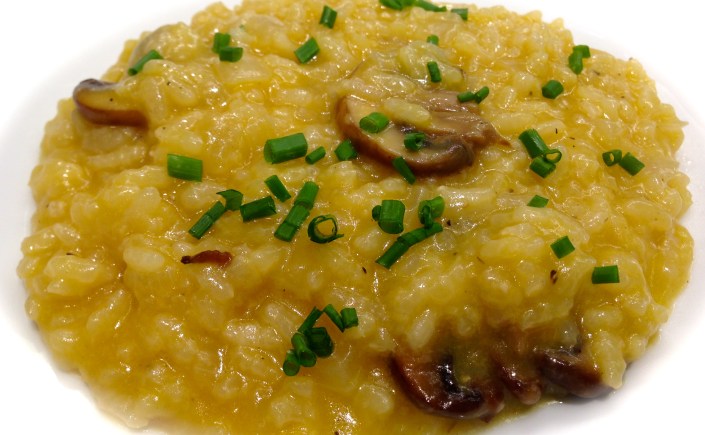
Portabella Mushroom Risotto

Portabella Mushroom And Sweet Onion Risotto

Meatloaf For Two…

Just about every family has their version of how to make meatloaf. I think meatloaf may have been with us since the dawn of time. And although my vegetarian friends may cringe at the thought, I still enjoy eating meat every now and then but now I try to balance my diet so that I am not solely relying on red meat as my main protein. But every once in a while I need some good old comfort food and I turn to things like roast chicken, pot roast or some good old meatloaf.

As I’ve mentioned before, I grew up in a meat and potatoes household. So today’s blog takes me back to my childhood where meals like these were often the family faire for dinner. And if you’re not a beef fan, you can skip this recipe as my goal is to try a wide variety of recipes and I’m sure at some point I will post something that will pique your interest.

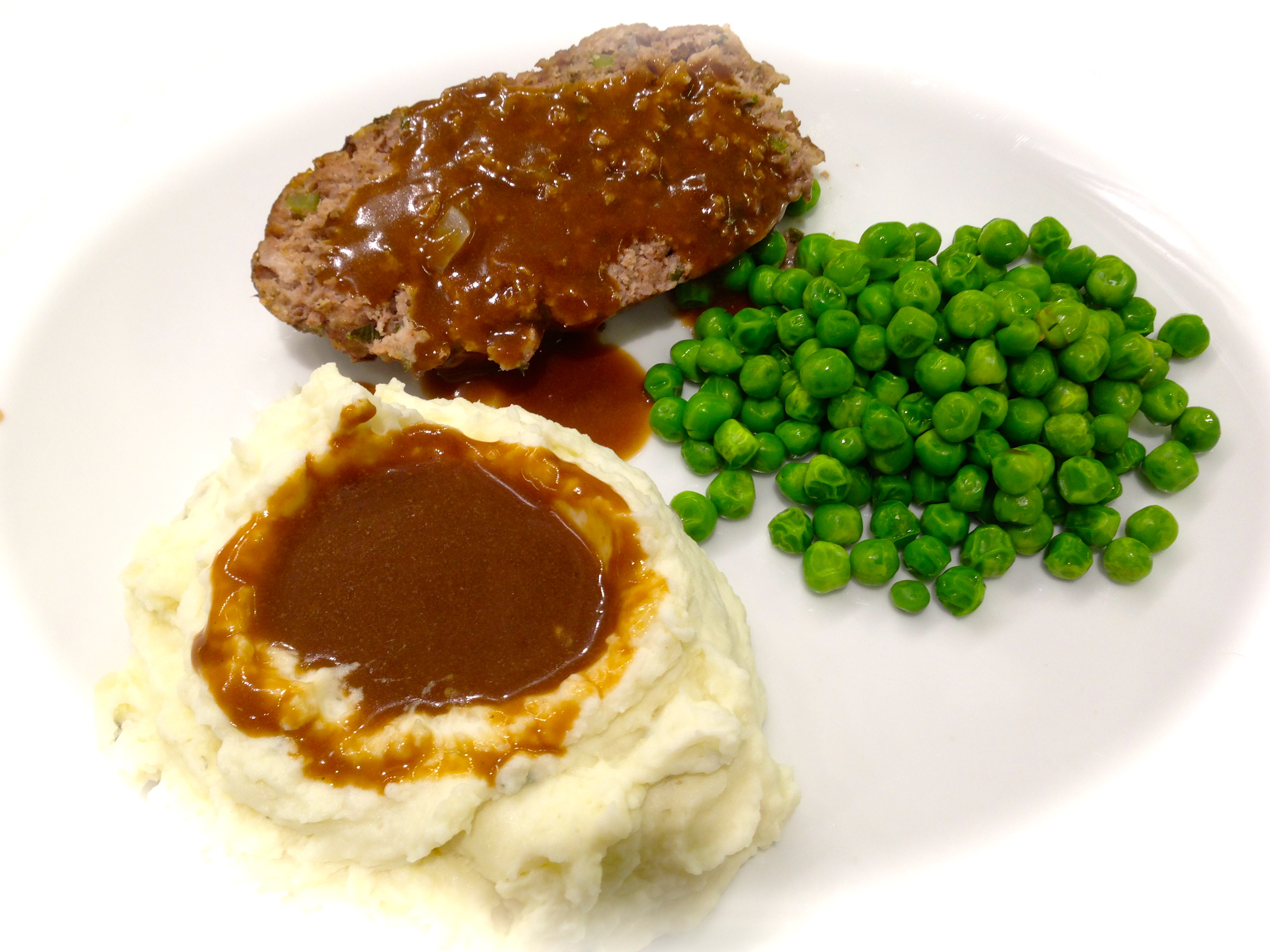
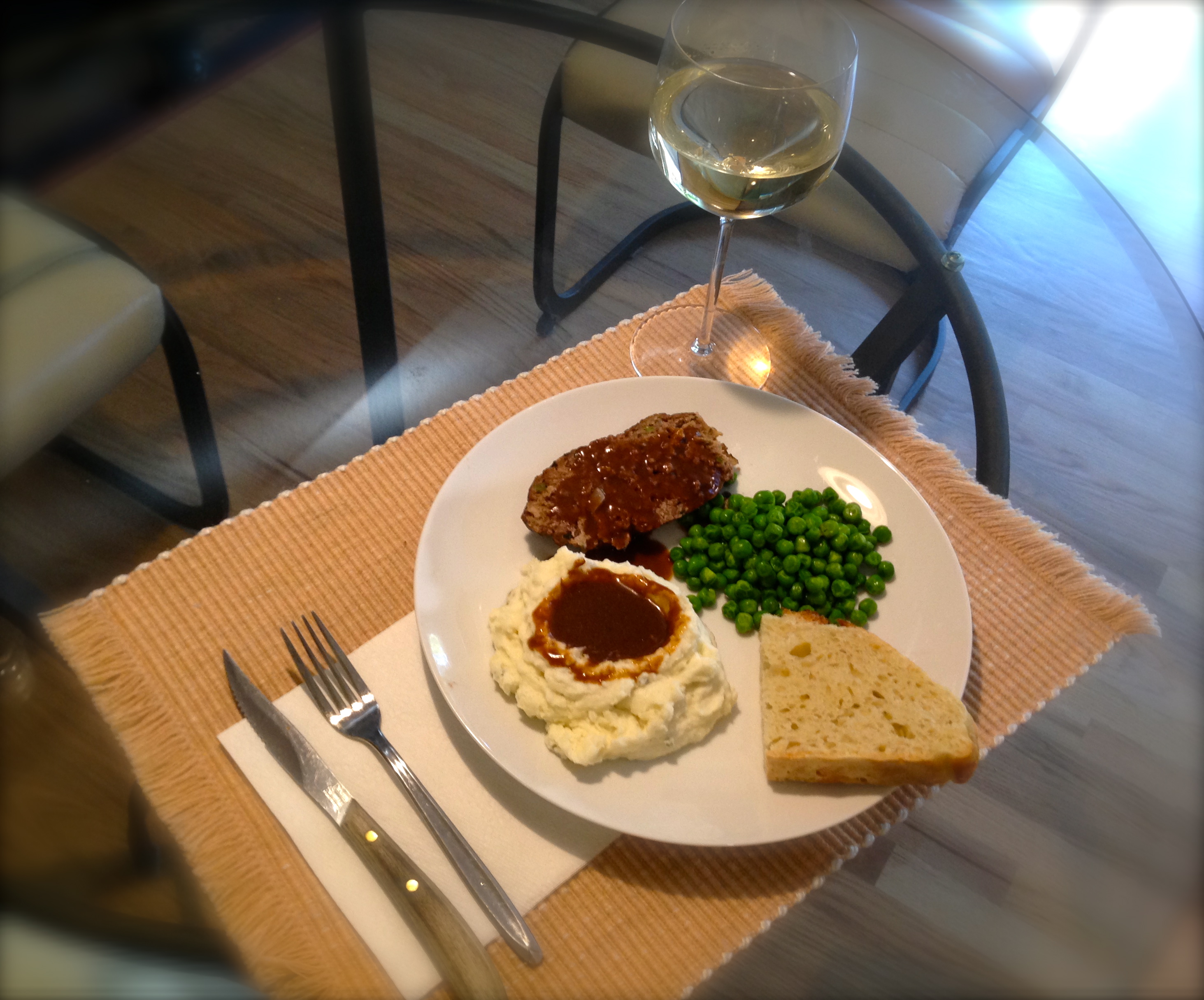
This is one of my husband’s favorite meals from when he was a child – meatloaf, mashed potatoes and peas. Meatloaf was something his mother didn’t totally annihilate in the oven and the art of scooping up a bunch of peas with a wad of mashed potatoes is a skill he has well honed over the years. As a matter of fact, no other vegetable will do for him in this meal – it has to be peas and of course there must also be mashed potatoes. My husband is one of those that does not like to combine his food and eats one thing on his plate till he’s finished with it and then moves on to something else. But for this meal the combination of meatloaf, mashed potatoes and peas compels him to break his habit and mix them all together. We all have our little idiosyncrasies don’t we?

This recipe comes from a book my husband got back in the 1970’s called The Complete Family Cook Book. It was a cook book that was offered by a chain grocery store to its customers. On your first visit to the store you got the recipe book binder and chapter 1. Every week after that, if you spent “x” amount of dollars you received an additional chapter. That continued every week until the book was complete. You could also purchase a chapter if your grocery bill was not large enough to warrant a free chapter. The book is so old now that the back of the binder is held together with duct tape, but it is an amazing book with so many recipes that we’ve used many times over the years. This one has to be our all time favorite from that book. I’ll share my rating and lessons learned over many, many years of making this recipe.

RATING: A+ what can I say, we’ve made this recipe for years and it continues to be our favorite. It’s simple, straightforward and very satisfying. You’ve simply got to try this one. And being it’s only recently that I’ve improved my cooking skills, I guarantee you this recipe can be made by even the worst cook and still turn out great. I can also tell you that from many years of experience!

Mini Loaf Pan

Mini Loaf Pan

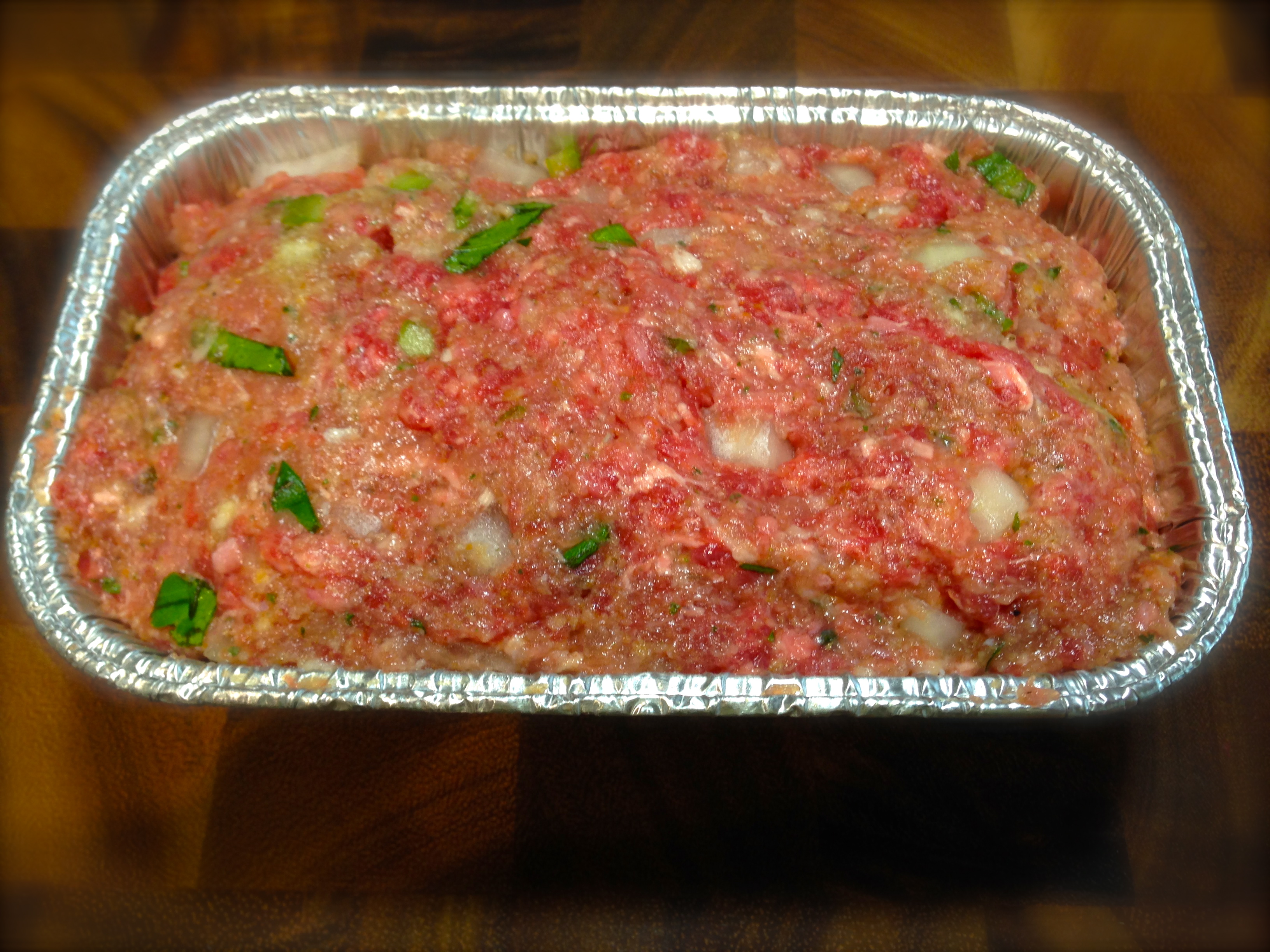
LESSON LEARNED 1: MAKING MEATLOAF FOR TWO – The recipe as I will share it makes a very big meatloaf that serves 6. Since it is only me and my husband I wanted to figure out a way to eliminate as much waste as possible and still enjoy this meatloaf recipe. A local grocery store used to sell meatloafs in mini loaf pans (3.25 W x 2″D x 5.75L). I got the idea of trying to see how this recipe might translate into filling mini loaf pans. Well, it worked beautifully – this recipe will make 3 complete mini meatloafs. So when I want meatloaf for dinner I make the recipe, fill the mini pans, freeze two of them for a later date and cook one of them that evening. There you have it  – meatloaf for today and two others for future dinners. The mini pan gives you 3 good sized slices so you can each have one slice for dinner and if you don’t take seconds have a slice leftover to make a meatloaf sandwich the next day (remember those?).

LESSON LEARNED 2: FREEZING THE LOAFS – If you plan on having your loafs “live” in the freezer for a while I recommend first wrapping the loaf pan in plastic wrap and then wrapping them with aluminum foil. That tends to hold off freezer burn for quite some time. The mini loaf will thaw in a couple of hours so you can take it out of the freezer and put it in your refrigerator in the morning, take it out when you come home from work and just pop it in the oven. Take off the aluminum foil when you place it in the refrigerator from the freezer – the foil tends help maintain the cold and you want the loaf to thaw. I also recommend minimally letting the loaf stand on the counter at least while you preheat the oven. Any chill you can reduce will assist with the cooking time.

LESSON LEARND 3: MILK OR CANNED TOMATOES – The recipe says you can use 3/4 cup milk or 3/4 cup canned tomatoes. I’ve tried this recipe both ways and prefer making it with milk versus canned tomatoes. I think the flavor is richer and more full bodied with milk. I think the tomatoes tend to take over as the dominant flavor and I prefer the dominant flavor to be the meat itself.

IMG_8195

LESSON LEARNED 4: PREPARING THE MEATLOAF – the recipe in itself is pretty self explanatory. The one thing I’ve learned over the years is to resist the urge to over mix. Mix all the ingredients until just combined and then STOP! Mixing a meatloaf is like mixing cake batter – the more you do it the tougher the end product. Be careful not to over mix.

LESSON LEARNED 5: BREAD CRUMBS – although the recipe calls for 3/4 cup of bread crumbs, I only add 1/2 cup to begin with and then add more if I think it’s needed. It just seems sometimes the mixture is drier than others and I would rather err on the side of caution and not add all the bread crumbs at the beginning to ensure getting a moister mixture than just dumping it in all at once and being stuck with what I’ve got. This was something learned over many years of practice.

IMG_8160LESSON LEARNED 6: DRAIN THE GREASE – Once you take the meatloaf out of the oven make sure you drain the grease before slicing and serving. I tend to use the leanest ground beef I can find and I still have grease in the pan. There’s nothing worse than serving a greasy slice of meatloaf.

LESSON LEARNED 7: MAKE IT IN YOUR TOASTER OVEN – With a mini loaf you don’t have to use your oven. Cook this in your toaster oven at 350 for 1 hour and voila, you’ll have meatloaf! And you can have meatloaf any time of year, including the summer, without heating up your house.

This is definitely not a difficult recipe to master. Give it a try and tell me what you think. This has been our go-to meatloaf recipe for a long time and I hope you will enjoy it. If you’ve got a family favorite meatloaf recipe – please share it. Would love to try it and compare the two. Enjoy this one!

Meatloaf For Two…

  • Servings: 2-6
  • Difficulty: Easy
  • Print

(This recipe, with it’s noted adjustments can be made to serve two or serve 6)

INGREDIENTS:

1 1/2 lbs. ground beef

1/2 lb. ground pork

1/3 cup finely chopped onion

3 Tbs. celery (two small stalks)

3 Tbs. italian parsley (or you can chop the leaves from the celery stalk)

1-2 cloves minced garlic (personal preference)

3/4 cup bread crumbs

3/4 cup milk or canned tomatoes

1 beaten egg

1 1/2 tsp salt

1/2 tsp pepper

1/2 tsp poultry seasoning

DIRECTIONS:

Mix all ingredients together until fully blended. If making one loaf, shape in a 9×5 inch loaf pan and bake at 350 for 1 1/2 hours. If making mini loafs, divide mixture into 3 mini loaf pans. Bake at 350 for 1 hour. Take out of the oven and remove the grease from the pan. Cover with foil and let sit for 5 minutes. Serve with mashed potatoes and peas.

IMG_8176

IMG_8182

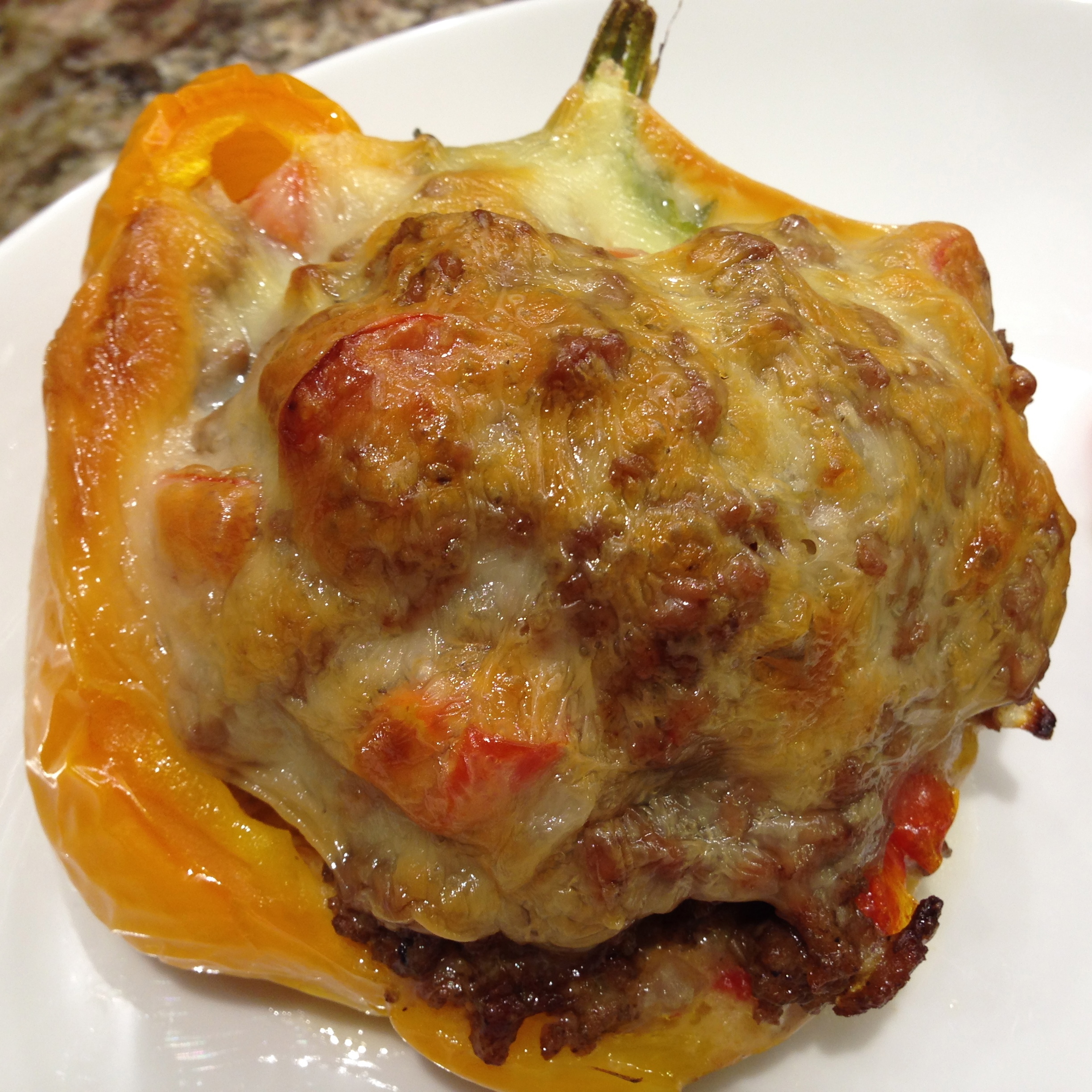
Easy Cheesy Stuffed Peppers…

I’d never made stuffed peppers before. I always bought them either frozen or pre-prepared at the grocery store. But in my quest to do one new recipe a week I decided to try my hand at making stuffed peppers. As you can imagine there are so many variations of stuffed pepper recipes out there but I wanted to do something that was simple but also interesting.

I came across a recipe called “Make Me Stuffed Peppers” from the website genaw.com. It was quick, easy and in my mind adaptable to what I already had in the refrigerator and so I chose it over a plethora of others.  Here is my rating and lessons learned.

Rating: B for the recipe, C for how the recipe was written. The recipe although good needed, in my estimation, a little something. It lacked depth of flavor. The next time I might try adding a little BBQ sauce or worcestershire sauce to the ground beef or maybe some red pepper flakes or smokehouse beef seasoning just for a little more kick. Don’t get me wrong, it’s not a bad recipe. It just needs a little more substance to it. And if you like things a little more mellow don’t add anything. I think the beauty of this recipe is its adaptability to one’s personal tastes.

Lesson Learned 1: CHEESE. The recipe mentioned something that I never knew.  It calls for cheese to be mixed with the ground beef and also for some cheese on the top. It specifically states not to use pre-shredded cheese as the powdery coating doesn’t allow it to melt properly. I never heard that before, but I have experience pre-shredded cheese not melting properly. Who knew? Good thing to remember for next time. The recipe called for using cheddar cheese both mixed in with the ground beef and on top. I mixed the ground beef with a cheese blend that contained three different types of cheeses mixed with cream cheese and that melted nicely. I also had some provolone slices and I used those to put on top of the stuffed pepper. That melted nicely as well. The beauty of this recipe is that you can use whatever cheese you have available – it doesn’t matter. The cheese blend gave the ground beef a nice silkiness and I liked that.

stuffed peppersLesson Learned 2: PARBOILING THE PEPPERS. It is important to cook your peppers in boiling water for 3 minutes before you cut them and fill them. Bring a pot of water to a boil, put in the peppers and cook for only 3 minutes. Take them out, let them cool slightly and then prepare them to be stuffed. If you don’t do this step they won’t cook properly. Don’t cook them any longer than 3 minutes or else you’ll have mush on your hands at the end of the process. Cooking them for 3 minutes gives them just enough of a head start to be done perfectly when they come out of the oven.

Lesson Learned 3: BROWN BUT DO NOT COOK THE GROUND BEEF. The ground beef will be in the oven for a half hour after you stuff the peppers. There is no need to cook the meat all the way through when preparing ground beef mixture. Cook it about three quarters through (so you still see a little bit of pink). The oven will take care of the rest. I also recommend using a fattier ground beef for this recipe. That way the meat will not dry out in the oven. Be sure to thoroughly drain off the grease after you brown the meat and before you stuff the peppers.

Lesson Learned 4: CUTTING THE PEPPERS. I recommend cutting the peppers in half as shown in the picture above versus hallowing out the pepper and trying to make it stand on end. If you cut the pepper lengthwise you don’t have to worry about the peppers falling over in the oven. You also are serving half a pepper per portion versus a full one. Personally I think that is a much more reasonable portion size.

My husband, my very own in-house recipe critic, liked this recipe but told me not to be afraid to jazz it up a bit. That was a very clear message that, yes it was good, but it needed just a little more umph! I’ll write the recipe as I made it and I encourage you to experiment with some additional things to add depth of flavor. This is definitely a recipe that, with your own personal tweaking, can be a staple in your recipe repertoire. I would love to hear of any adjustments you make and how it turned out. I always love to hear new ideas! 

Easy Cheesy Stuffed Peppers

  • Servings: 4
  • Difficulty: Easy
  • Print

INGREDIENTS:

2 large sweet peppers halved lengthwise

1 pound ground beef

1 TBS butter

1/4 cup of onion, chopped

2 cloves of garlic, minced

1/2 cup chopped fresh tomato

Salt and pepper to taste

4 ounces of cheese (to be mixed with the ground beef)

2 ounces of cheese for the topping

DIRECTIONS:

Preheat the oven to 350. Bring a large pot of water to a boil. Once the water is boiling put in the peppers and cook for only three minutes. Immediately remove the peppers from the water and set aside to cool slightly for easy handling.

In a saute pan, melt the butter and cook the onions until they become translucent. Salt and pepper the onions during the cooking process. When onions become translucent add the garlic and cook until fragrant (between 30 seconds and one minute). Push onions and the garlic to the side of the pan and add the ground beef. Break up the ground beef and spoon the onions and garlic on top of it. Let cook over medium heat until browned (approximately 5 minute). Turn the meat over and cook for a few more minutes. It is ok if there is some pink in the meat, it will finish cooking in the oven. Add the tomatoes and cook only until warmed (no longer than a minute). Stir in the cheese, combine until the cheese is melted and take the mixture off the heat to cool slightly.

Cut the peppers in half lengthwise and remove seeds and any white pith. Fill the hallowed out peppers with the meat mixture. Top with cheese.

Place the stuffed peppers on a greased (or you can use nonstick spray) baking sheet. Bake at 350 degrees for 30 minutes. Serve immediately.

Easy Cheesy Stuffed Pepper

Easy Cheesy Stuffed Pepper

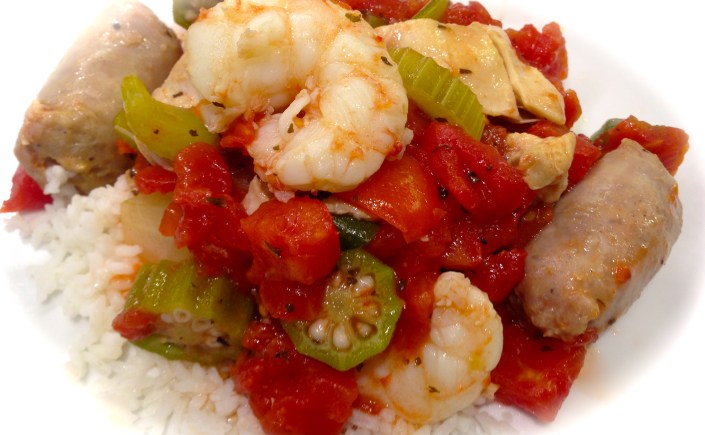
Slow Cooker Jambalaya…

It was the very first recipe blog I wrote a couple of years ago, just something I wanted to share because I thought it was so good. I never thought it would morph into chronicling my journey about learning my way around a kitchen. I never imagined being adept in the kitchen as something that would interest me. I used to think is was too cliche. A few years later I recognize what an art cooking is and success can be tenuous. Like any well developed skill, it takes passion, time, practice and perseverance. For me, the passion came about rather quickly and my blog shares the lessons I’ve learned over time with practice and perseverance.

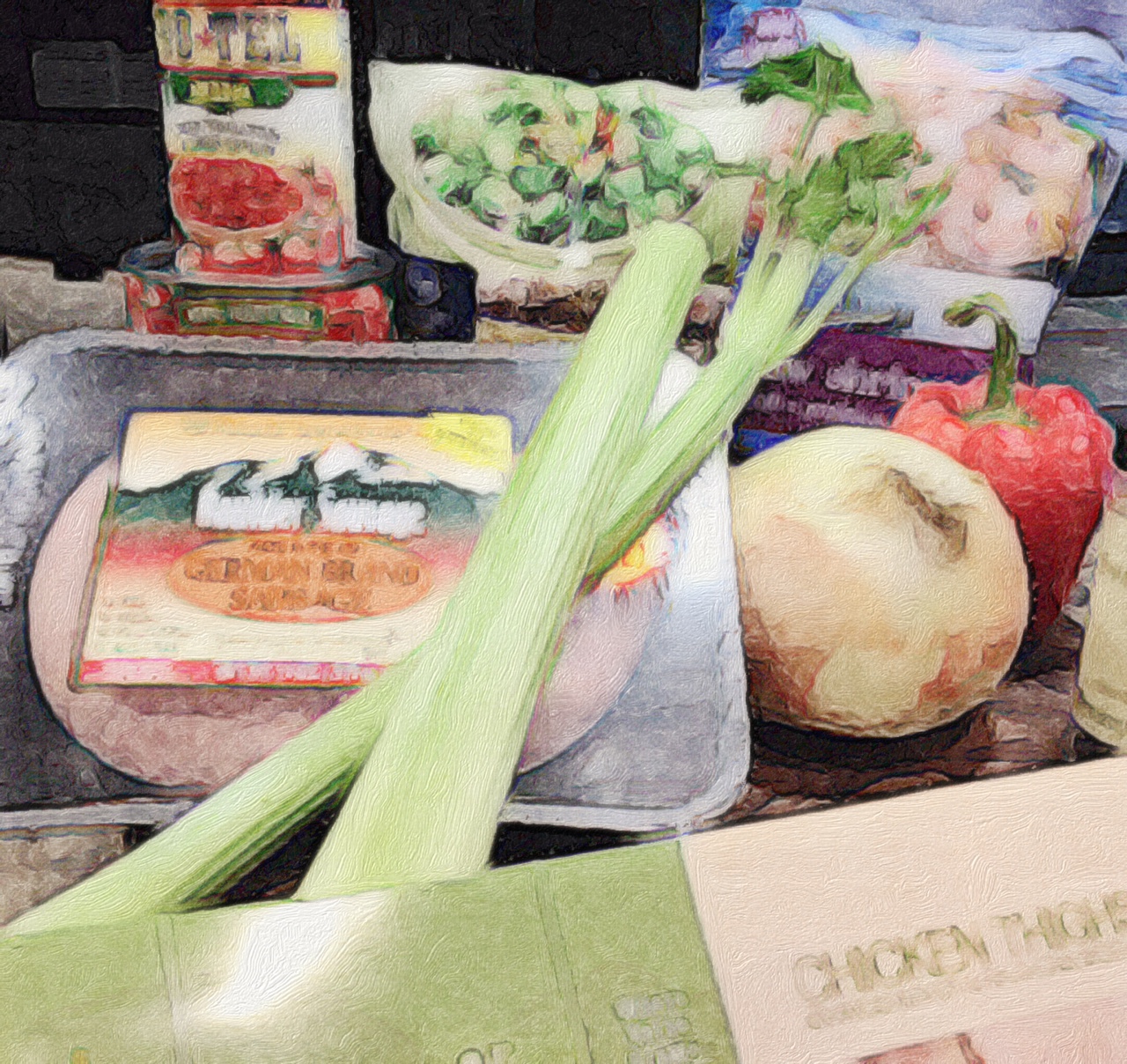
Jambalaya Ingredients

Jambalaya Ingredients

That being said, let me reintroduce this slow cooker jambalaya recipe since, in my estimation, it is one of the best slow cooker recipes ever! Last time I just posted a picture of the recipe. This time I will add pictures I took while making it, my rating and lessons learned as they are equally if not more important and a printable version of the recipe itself.

We’ve discussed before the benefits and challenges of cooking in a slow cooker. I guarantee you with this recipe the only challenge you’ll have will be fine tuning the cooking time for your particular slow cooker and your part of the country. More and more I realize that my high altitude challenge is not the norm for most, so I will talk about how to do this recipe from the perspective of what works for me. I don’t think altitude plays a factor in this one at all. What will play a factor is the default temperature settings of your slow cooker. That being said, this recipe holds up well to the slow cooking process, has some nice kick to it and makes great leftovers as well.

RATING: A++++++++++++ I cannot say enough about this recipe. It is so easy and really retains its flavor during the slow cooking process. Many times people complain about slow cooker recipes being bland and lacking flavor. Not this one. Try it – I just know it will become a go-to slow cooker recipe!

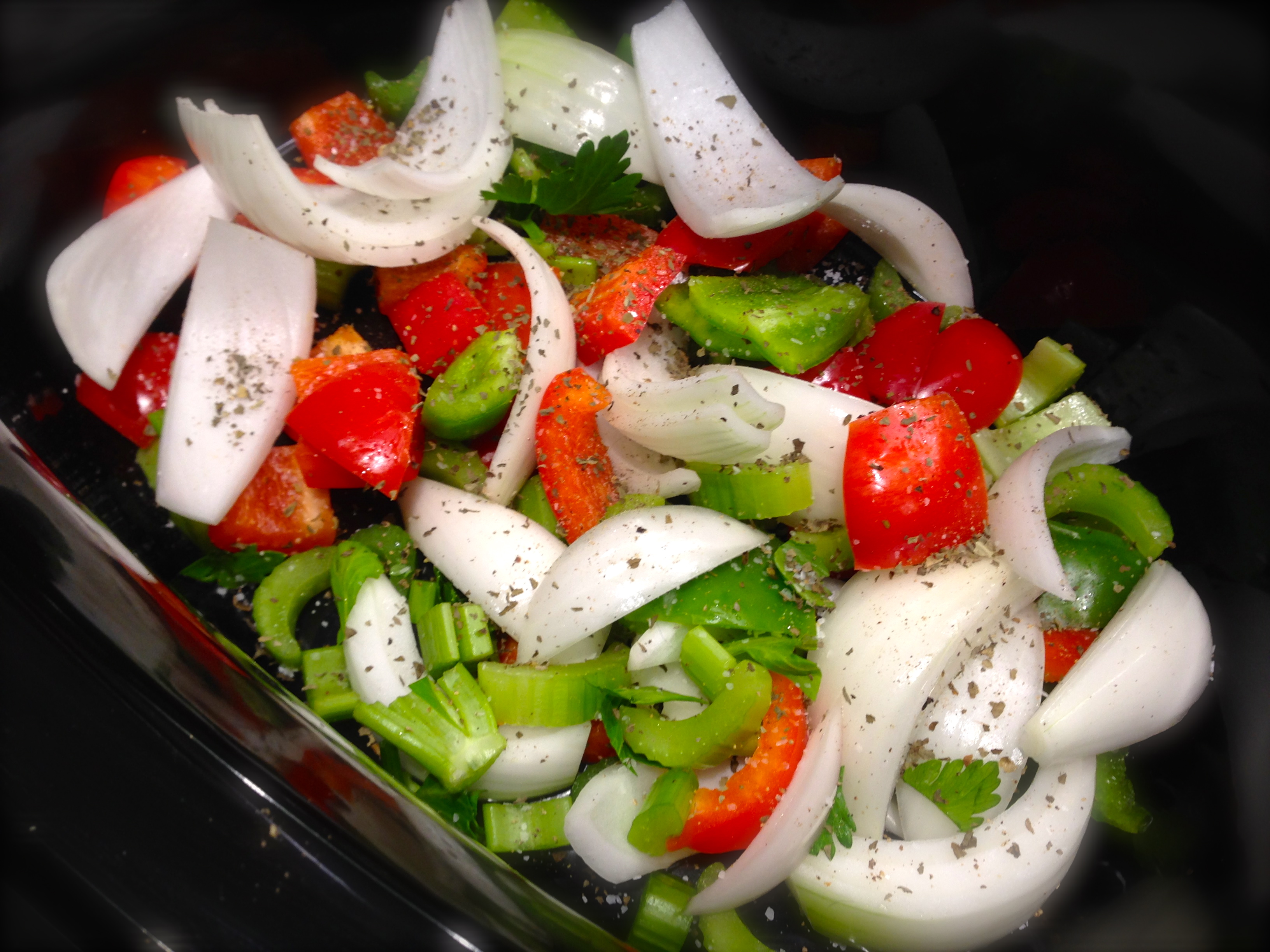
Cut Veggies Into Large Chunks

Cut Veggies Into Large Chunks

Lesson Learned 1: VEGETABLES IN A SLOW COOKER: You have to learn what vegetables hold up well during a lengthy cooking process and which ones should be added at a later time. I am still playing around with how do to this. When I made it I put in the onions, peppers, and celery at the very beginning. Next time I think I’ll just start off with the onions and celery. Let’s face it, the celery will not be crisp tender but I think it’s main function is to add flavor to the sauce. Onions, if you cut them large enough, will hold up and also add to the flavor during the longer cooking process. If you add peppers at the beginning, cut them in large chunks otherwise they will become mush. Next time I’m considering adding the peppers during the last hour of cooking to help them retain more body.

LESSON LEARNED 2: CUTTING THE MEAT – It’s important not to cut the meat too small or to large for this recipe. I use a German sausage in this recipe and I cut the links into two inch pieces. I use chicken thighs for this recipe (they tend not to dry out in a slow cooker) and cut them into large bite-size chunks.

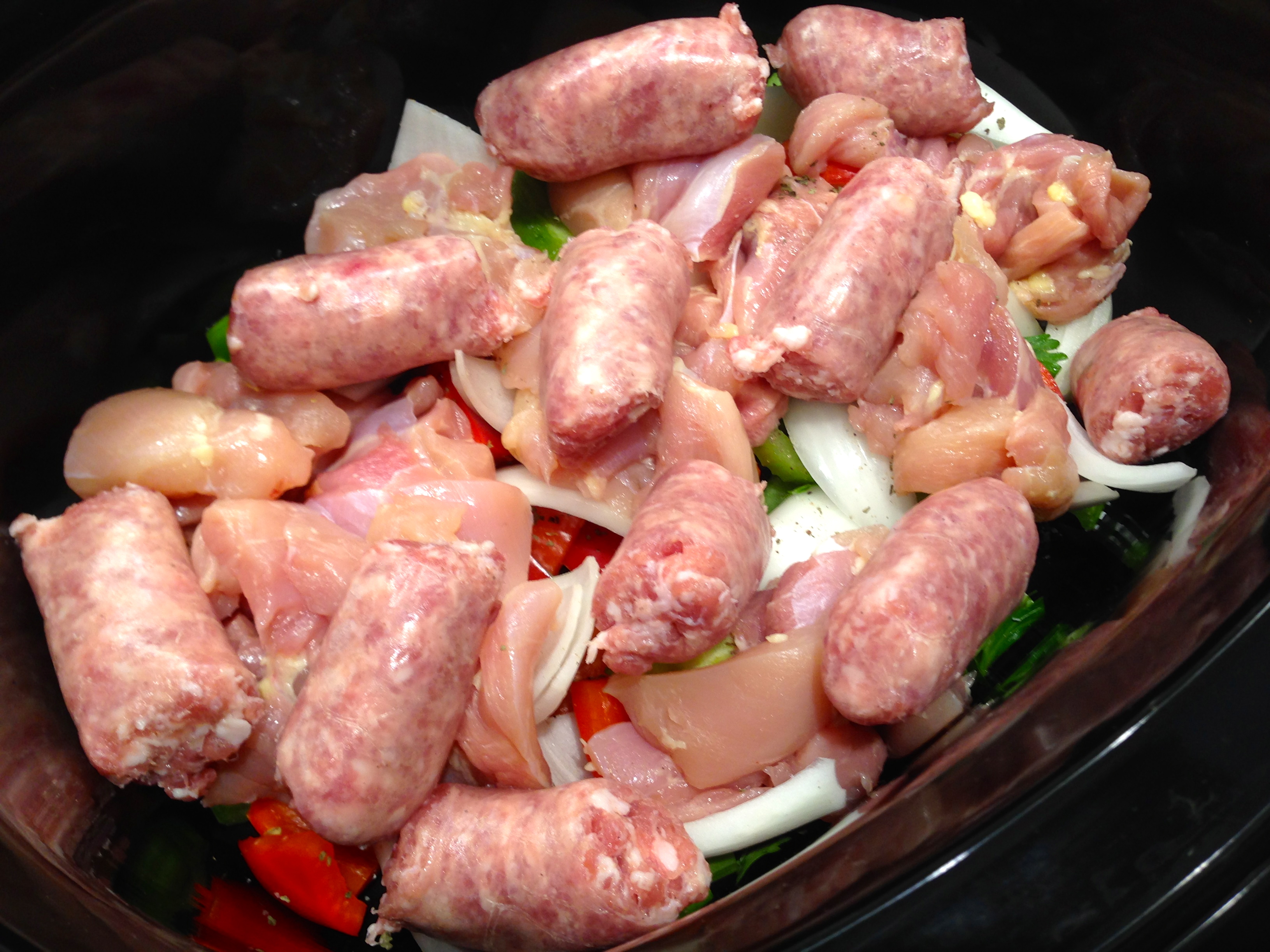
Add Sausage and Chicken To The Veggies

Add Sausage and Chicken To The Veggies

LESSON LEARNED: COOKING TIME – The original recipe I used called for the traditional 6-8 hours on low and 4-6 hours on high. My advice is never ever cook this recipe for 8 hours regardless of altitude. Your vegetables will be soggy and your meat dry. Once I made that mistake I decided to change the cooking time to 6 hours on low. Even that produced dried out chicken. Now I cook it for 5 hours on low (the last half hour I raise the temperature to high) and that seems to work well. The sausage is cooked through and the chicken is not dried out. Again, this will depend on the type of slow cooker you have and its default settings for low and high.

LESSON LEARNED 4: SHRIMP – Only put in as much shrimp as you plan to serve immediately. If you save cooked shrimp in the leftovers, chances are they will get tough when you reheat them.  It is better to add fresh shrimp during the last 10 minutes of the reheating process for your leftovers. That way the shrimp stays fresh and tender.

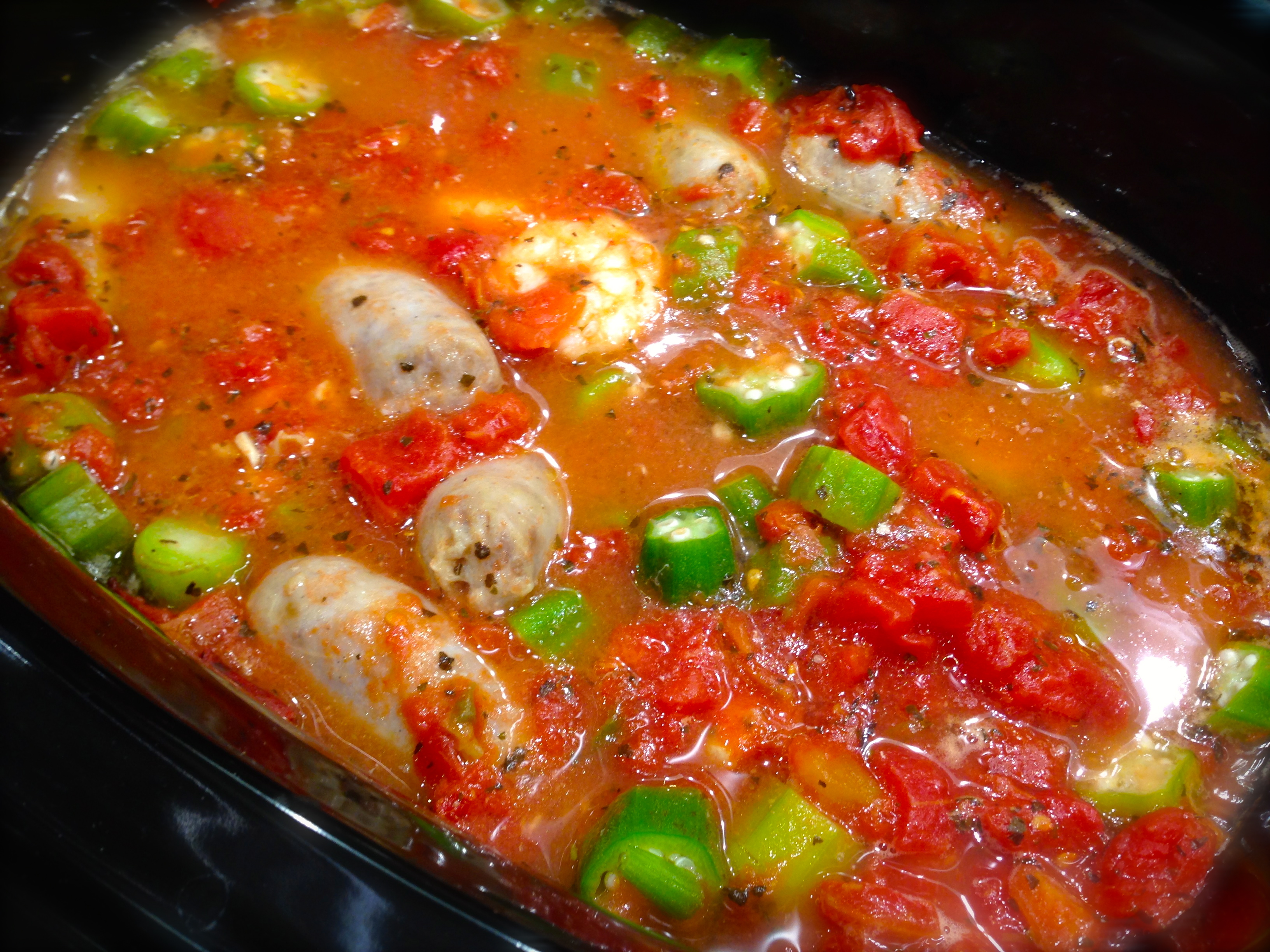
Add Okra and Shrimp During The Last Half Hour

Add Okra and Shrimp During The Last Half Hour

LESSON LEARNED 5: ADDING THE OKRA AND SHRIMP – I add the frozen okra and shrimp during the last half hour of the cooking process and for that half hour I change the slow cooker setting to high. The okra comes out crisp tender and the shrimp is cooked perfectly.

Slow Cooker Jambalaya

  • Servings: 4-6
  • Difficulty: Easy
  • Print

INGREDIENTS:

4-5 chicken thighs (depending on size)

8 oz. uncooked sausage (I prefer a German-style sausage)

1 large sweet pepper

2-3 stalks of celery (depending on size)

1/2 of a large onion

1-  14.5 oz. can of diced tomatoes

1 – 10 oz. can of diced tomatoes with green chiles (I use the mild version)

2 TBS. quick cooking tapioca

2 TBS. dried basil

1/4 tsp. cayenne pepper (optional)

6 – 12 large shrimp (depending on many you will be serving – I usually plan on 3 per person)

2 cups of frozen cut okra

DIRECTIONS:

Prepare the vegetables cutting the onions and peppers into large chunks. The celery can be cut in thin slices. Cut the sausage into links of approximately 2 inches. Cut chicken thighs into large bite-sized chunks. Thaw shrimp if frozen. Keep cool in refrigerator once thawed.

Layer the vegetables in the bottom of the slow cooker. Add the sausage and chicken. Stir to combine.

Mix together both cans of diced tomatoes, tapioca, basil, and cayenne pepper. Pour on top of the vegetable and meat mixture.

During the last half hour of cooking time, add the okra and shrimp and stir. Change the slow cooker temperature to high and cook for additional half hour. Serve immediately.


Slow Cooker Jambalaya

Slow Cooker Jambalaya

Three Cheese Spinach Strata with Sundried Tomatoes and Peppers

I was raised a meat and potatoes girl so I don’t often cook meatless meals, but I do enjoy them. So when I was tasked to make something for a meeting at work, knowing that some of the associates do not eat meat, I went to my tried and true friend Pinterest to get some inspiration. And, as always, I found a wide variety of options from which to choose.

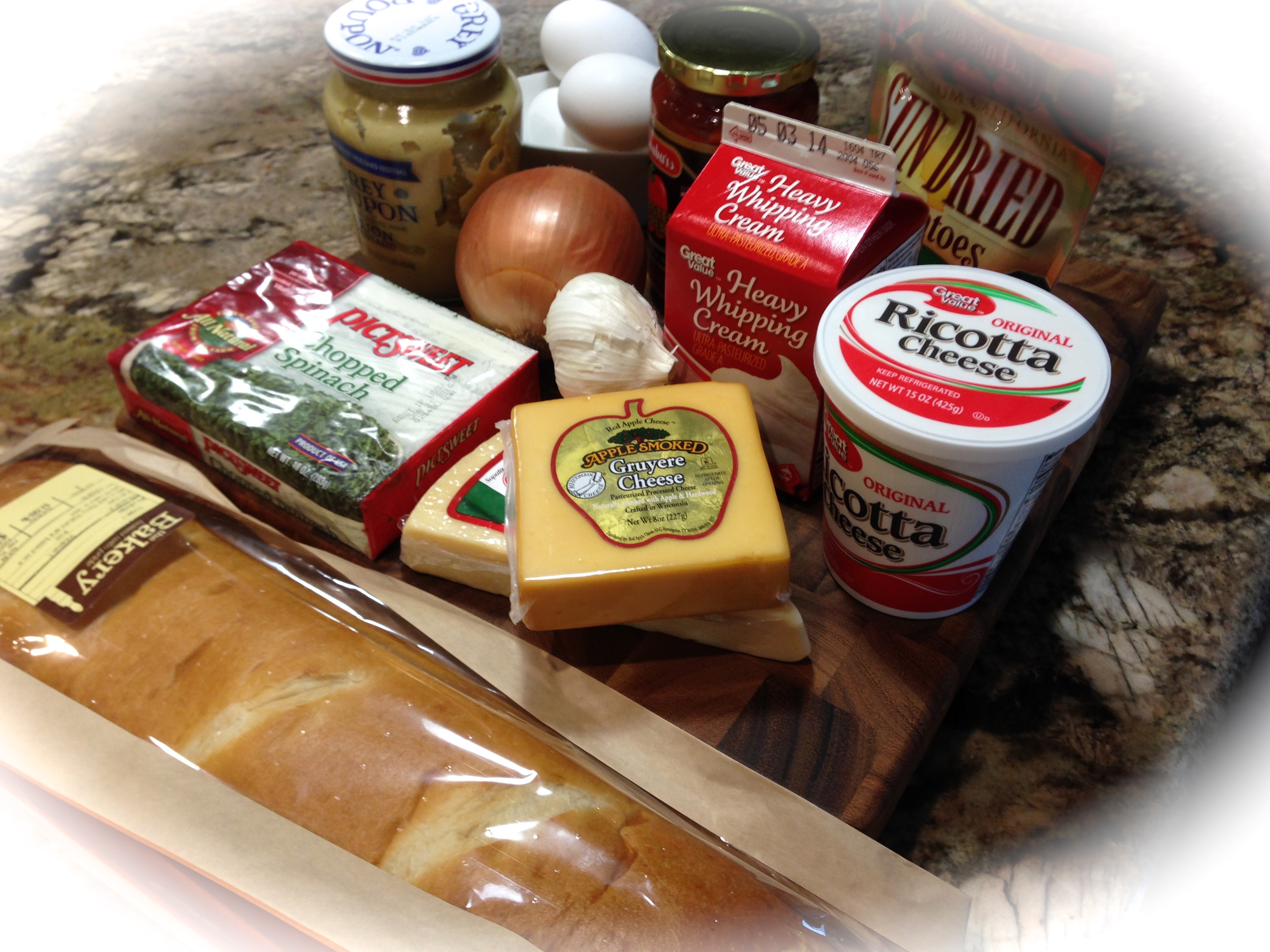
Strata Ingredients

Strata Ingredients

I was intrigued by this recipe for several reasons: 1.) I’d never made a strata, [and was always intrigued to make it especially after watching one of my favorite holiday movies “The Family Stone” with the strata being a “Morton family tradition – lovers of the film know what I mean]; 2.) I love the combination of ricotta, gruyere and parmesan and; 3.) the recipe appeared to be very adaptable even for a nonintuitive cook like me.

This recipe originated from a website called onecaketwocake.com and I can certainly understand why since the finished product is almost like an egg cake. I adapted it by adding sliced baby portobella mushrooms (one of my favorite add-on ingredients) and doubling it for a 9 x 13 pan. I also added more cheese than called for, used kosher salt instead of table salt and opted for frozen instead of fresh spinach, although fresh spinach would be very good as well.

I was a little nervous to bring something to a meeting that I never made before but I decided to take a risk and try it. So here are my lessons learned and recipe rating:

Rating: A++ I always LOVE it when you make something the first time and it turns out perfectly. This definitely did. All of the work is in the prep (and I’ll get to that in my lessons learned) but after that you just let it chill in the refrigerator overnight and bake it off in the morning. I will definitely make this for dinner sometime. You know it’s good when the whole pan disappears, which it did. It looks good and tastes good. This is definitely a keeper recipe.

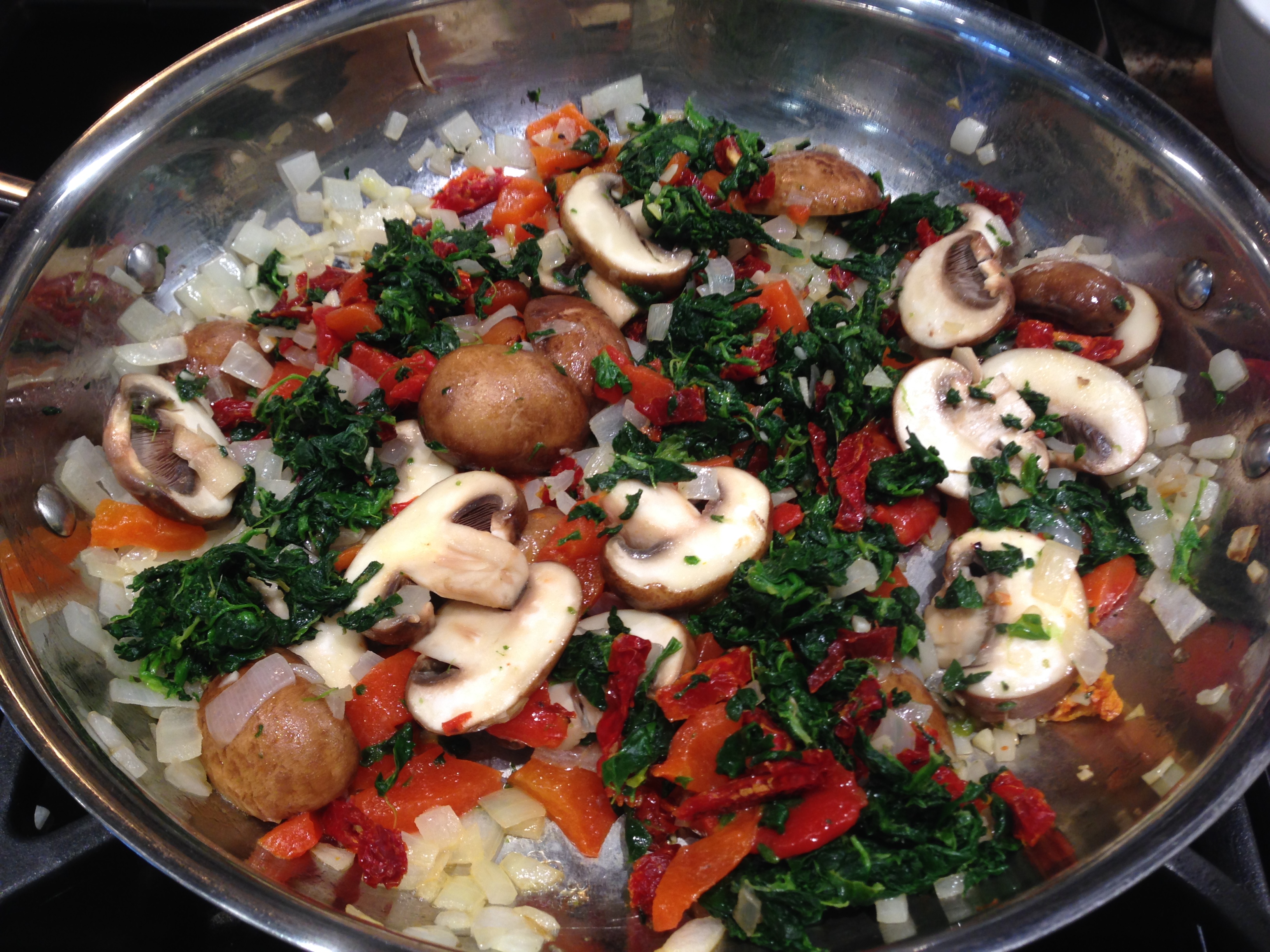
Strata Filling

Strata Filling

Lesson Learned 1: This takes a long time to prep, and I mean a LONG TIME especially if you grate the cheese yourself which I did. I had a slab of parmesan in the fridge as well as a slab of gruyere so I had to process both of them. I grated the parmesan in the food processor and the gruyere with my hand grater which added a lot to the time and extra clean up. There is also a lot of chopping, mincing and dicing from the onion to the garlic and the sun dried tomatoes, peppers and bread. I never realized how time consuming cutting the crust off a loaf of french bread can be. All in all this took me about an hour to prep and that surprised me. Was it worth it – DEFINITELY. Just be aware that this recipe has a lot a prep and set the time aside to do it.

Lesson Learned 2: Make sure you take the onion, garlic, spinach and roasted red pepper mixture (and in my case I also added mushrooms) off the stove and let it cool somewhat before building the strata. This is the only area where I thought the recipe directions could be clearer. Anytime you have anything warm to add to an egg mixture you either have to temper the egg mixture (slowly warm it) or let the warm ingredients cool somewhat so you don’t wind up with scrambled eggs. I found removing the veggie mixture from the pan and letting sit on a plate for just a few minutes got it to a point where it would not adversely affect the egg mixture.

Lesson Learned 3: Saute the mushrooms first for about 3-5 minutes then add the onions until they turn slightly translucent then add the spinach, tomatoes and peppers and cook until the pan is showing no moisture. The mushrooms give off a lot of moisture so you want to begin by sautéing them.

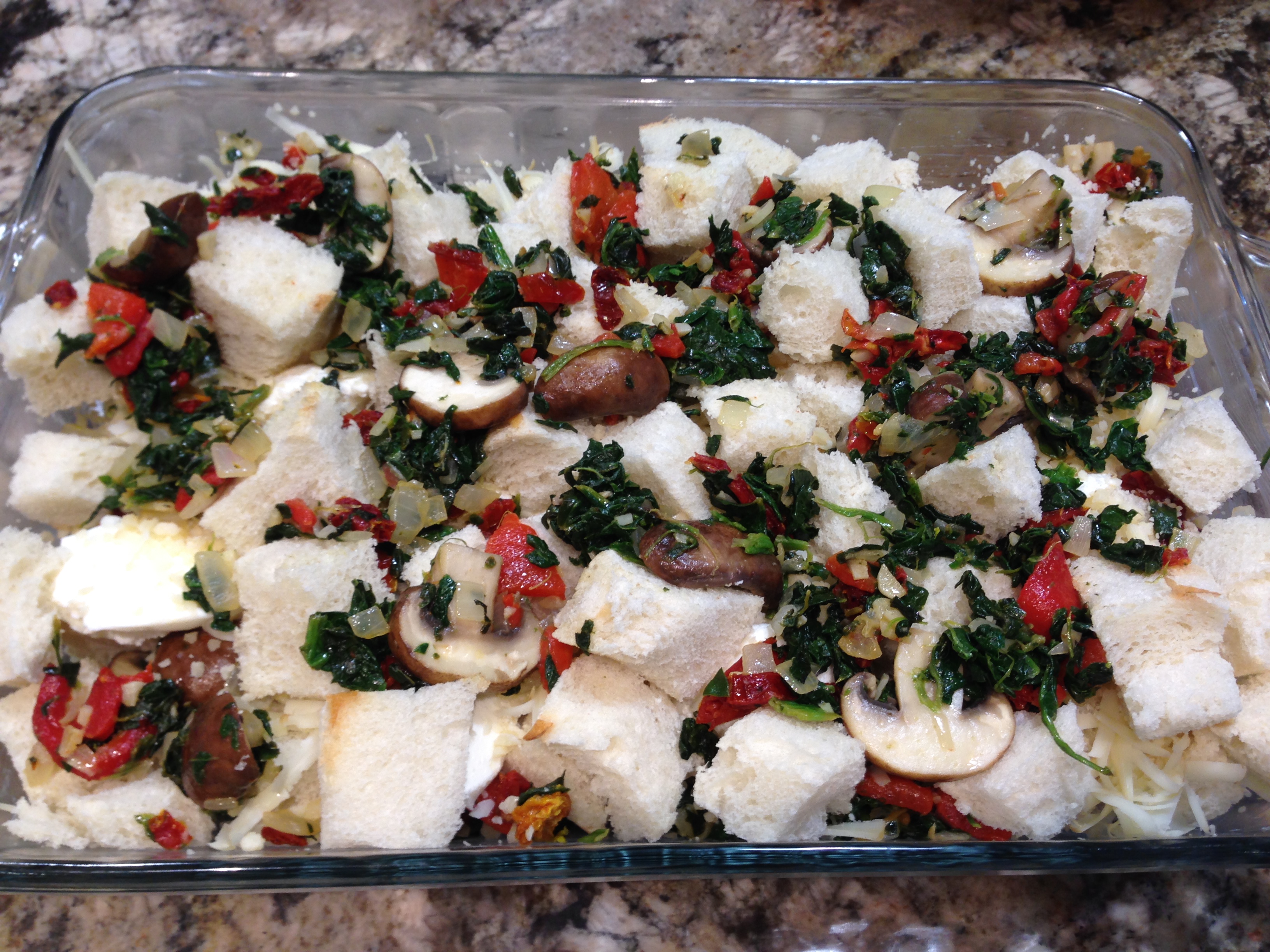
Strata Layers

Strata Layers Before Adding The Cheeses

Lessons Learned 4: After the prep, the rest is a breeze. This dish could be a great holiday breakfast or simply a breakfast-for-dinner meal. You have to let the strata “cure” in the refrigerator overnight or at least for 8 hours so that the bread soaks up the egg mixture. Just cover it with foil once you’ve assembled it and forget about it. I love that part of it!

Lesson Learned 5: This recipe is very adaptable. I could see adding broccoli or asparagus or even zucchini to this. I think this might be a good clean out your vegetable bin recipe. Just be aware of the various cooking time of your vegetables and plan accordingly. For example, I might add asparagus uncooked or only slightly cooked into the mixture. Since the strata bakes for 50 minutes, it gives the more tender vegetables plenty of time to cook in that process. I may try that the next time and I’ll let you know whether it works or not. You could also add meat to this. I’m thinking breakfast sausage would be the best compliment. Just cook it three quarters of the way through, let it cool slightly and add it into the layers. Don’t worry, the sausage will cook through during the remaining 50 minutes in the oven. I do the same thing for my Ravioli Lasagna recipe and the meat turns out just fine.

Lesson Learned 6: If you want to make this for dinner, just prep it first thing in the morning and let it sit in the refrigerator all day. Plan to try to keep it in the refrigerator for at least 8 hours.

As you can see, I have very few lessons learned since the recipe is basically easy – it’s just the prep that’s time consuming. But what you’re left with is something that looks fancy, tastes delicious and comes out perfect the very first time you make it. Enjoy this one!

Three Cheese Strata With Mushroom, Tomatoes and Roasted Red Peppers

  • Servings: 8
  • Difficulty: Easy
  • Print

INGREDIENTS:

1/2 cup chopped sun-dried tomatoes

3 TBS butter

1 small onion, chopped

2 packages frozen spinach (6 ounces each), thawed

3/4 cup roasted red peppers (jarred or homemade), chopped

1 tsp kosher salt

I loaf french or italian bread (approximately 1 pound or 10 cups), remove the crust

10 large eggs

2 cups milk

1/2 cup heavy cream

2 TBS Dijon Mustard

Freshly ground black pepper

3/4 cup ricotta cheese

2 cups gruyere cheese

1 cup parmesan (or more if desired)

DIRECTIONS:

Thaw frozen spinach. Once spinach is thawed, place in a cloth towel and wring out several times until all excess water is removed.  Chop spinach and set aside. Make sure sundried tomatoes are soft. If not, cover them with boiling water and let them seep for 15 minutes and then chop them and set aside.

Over medium heat melt half the butter and sauté the mushrooms for about 3-5 minutes. Add the onions and cook the mixture until the onions begin to look translucent. Add garlic and stir for about 30 seconds. Add remaining butter. Stir in the spinach and pepper. Salt and pepper to taste. Stir until mixture is dry. Remove mixture from the pan and set aside to cool.

Cut bread (remove the crust first) into large cubes and place half in the bottom of a buttered 9×13 dish. Spread half of the spinach mixture on top. Take half of the ricotta and place by spoonfuls on top of the mixture followed by half of the gruyere and parmesan. Repeat the layering.

In a medium bowl whisk together the eggs, cream, mustard and a half teaspoon of salt and pepper. Pour the mixture evenly over the ingredients in the casserole dish. Cover with foil or plastic wrap and refrigerate over night.

In the morning, take the casserole dish out of the refrigerator and let it stand while you heat the oven to 350 degrees. Bake the casserole for 50 minutes or until lightly browned and cooked through.

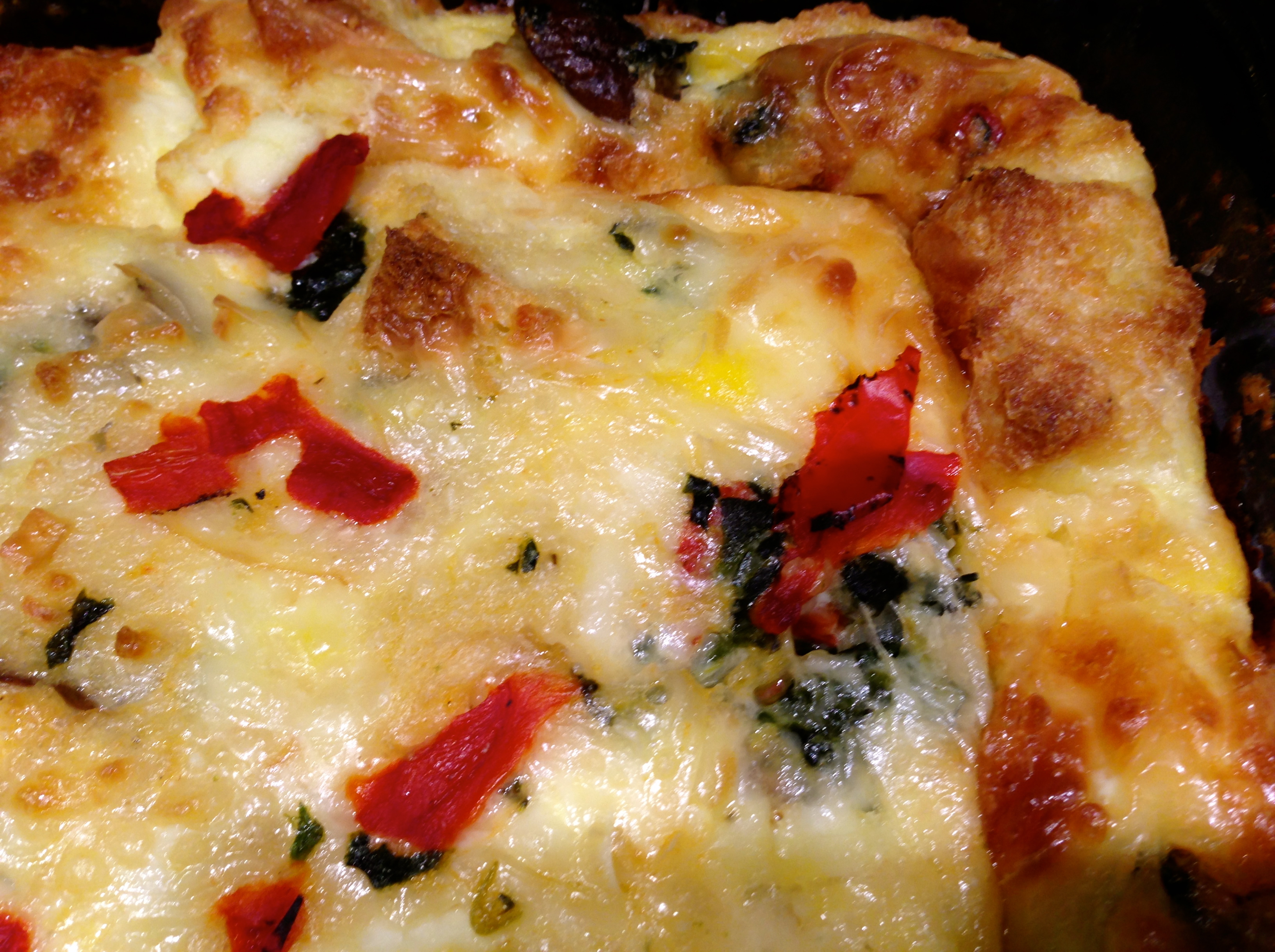
Three Cheese Strata With Mushrooms, Tomatoes and Roasted Red Peppers

Three Cheese Strata With Mushrooms, Tomatoes and Roasted Red Peppers

Slow Cooker Country Style Pork Ribs…

I just love the slow cooker, don’t you? All the work is done up front and that allows you to be about your day knowing that you will still have a good meal for dinner with minimal work needed when you get home. But the slow cooker can also produce bland, mushy food. You need to know what adapts itself well to slow cooking and the correct cooking time for every recipe. I’ve found over the years that the biggest mistake I’ve made with a slow cooker is cooking something too long.

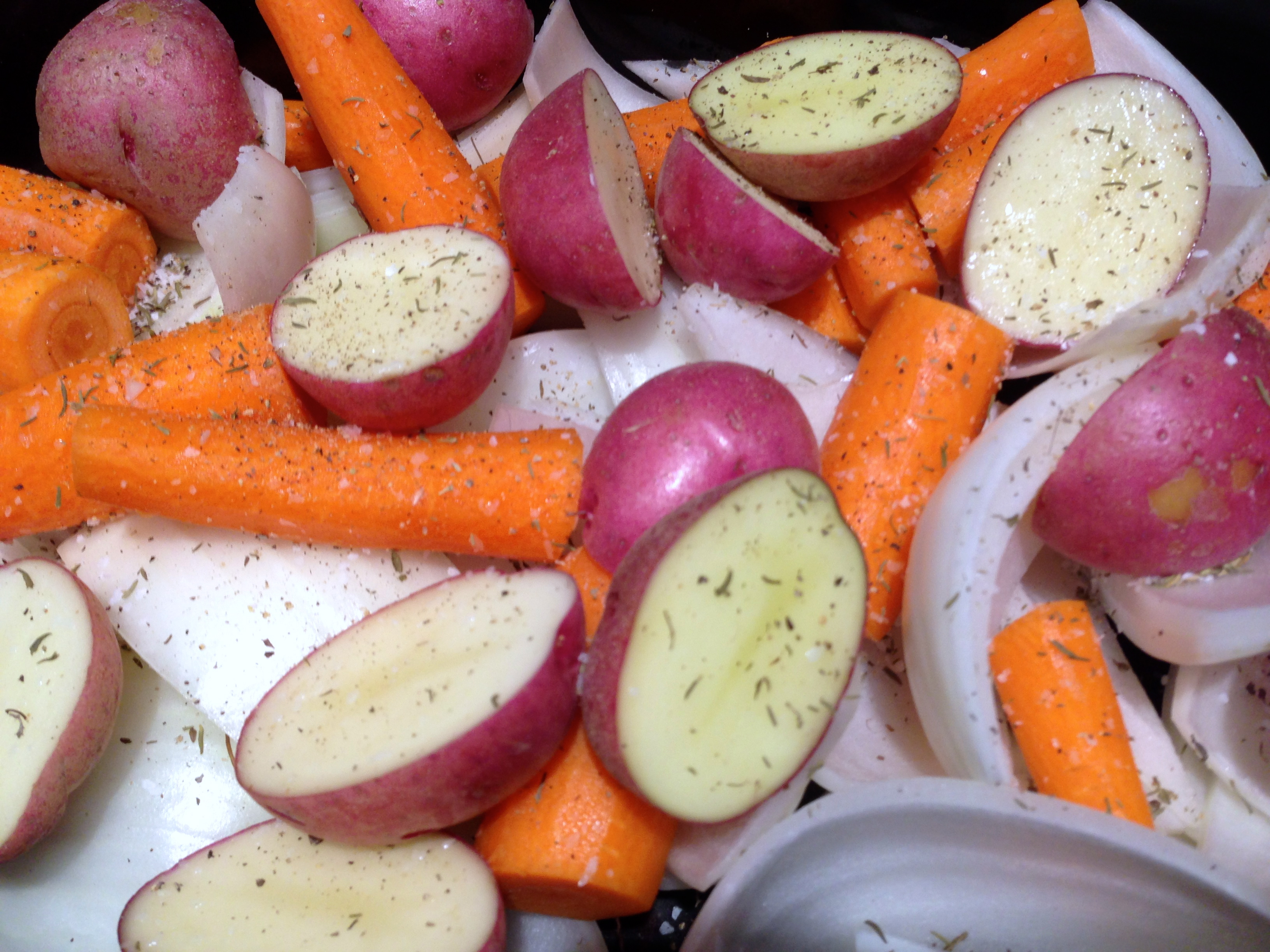
Layer the Vegetables On The Bottom of the Slow Cooker

Layer the Vegetables On The Bottom of the Slow Cooker

The beauty of this recipe is that it truly takes 8 hours to cook. You often see slow cooker recipes that say to set the timer on low for 8-10 hours or high for 4-6 hours. Don’t be fooled. Two extra hours can make a big difference. So I will warn you up front – be prepared to have a few slow cooker failures until you get the hang of your machine and the appropriate cooking time needed for a particular recipe. Unfortunately, it’s just a reality when using a slow cooker.

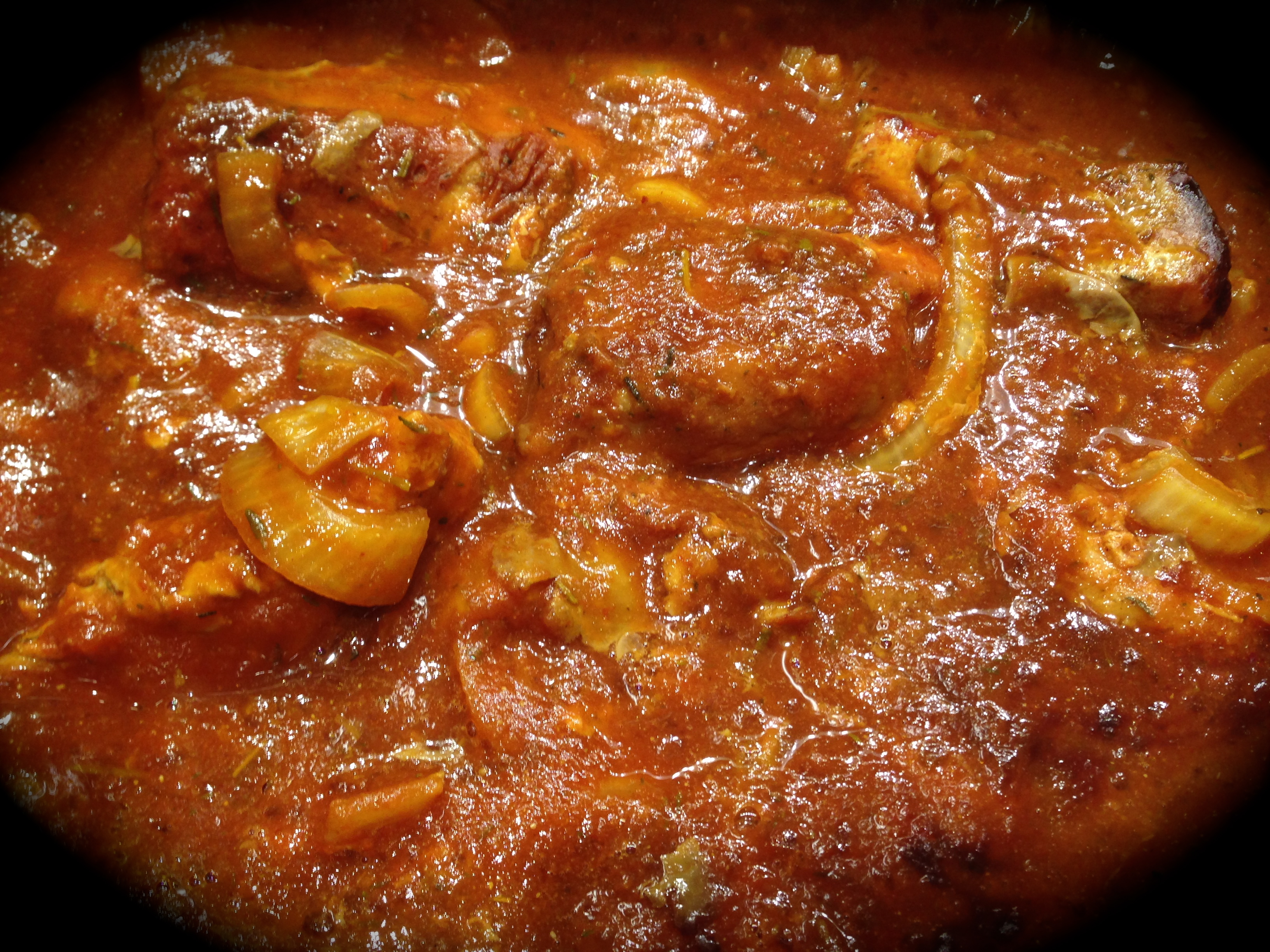
This recipe is another one of my favorite go-to slow cooker recipes. These fall off the bone ribs get their down-home flavor from vegetable juice, molasses and seasonings. It also takes very little prep to get this going and so it’s great for one of those crazy busy days. The basis of this recipe came from a Better Homes and Gardens magazine I purchased in 2005. I’ve adapted it over the years and am sharing my version of it. I’ve never had a failure with this recipe, even when I made it for the first time. So I feel pretty confident that you will have the same success I did. Enjoy!

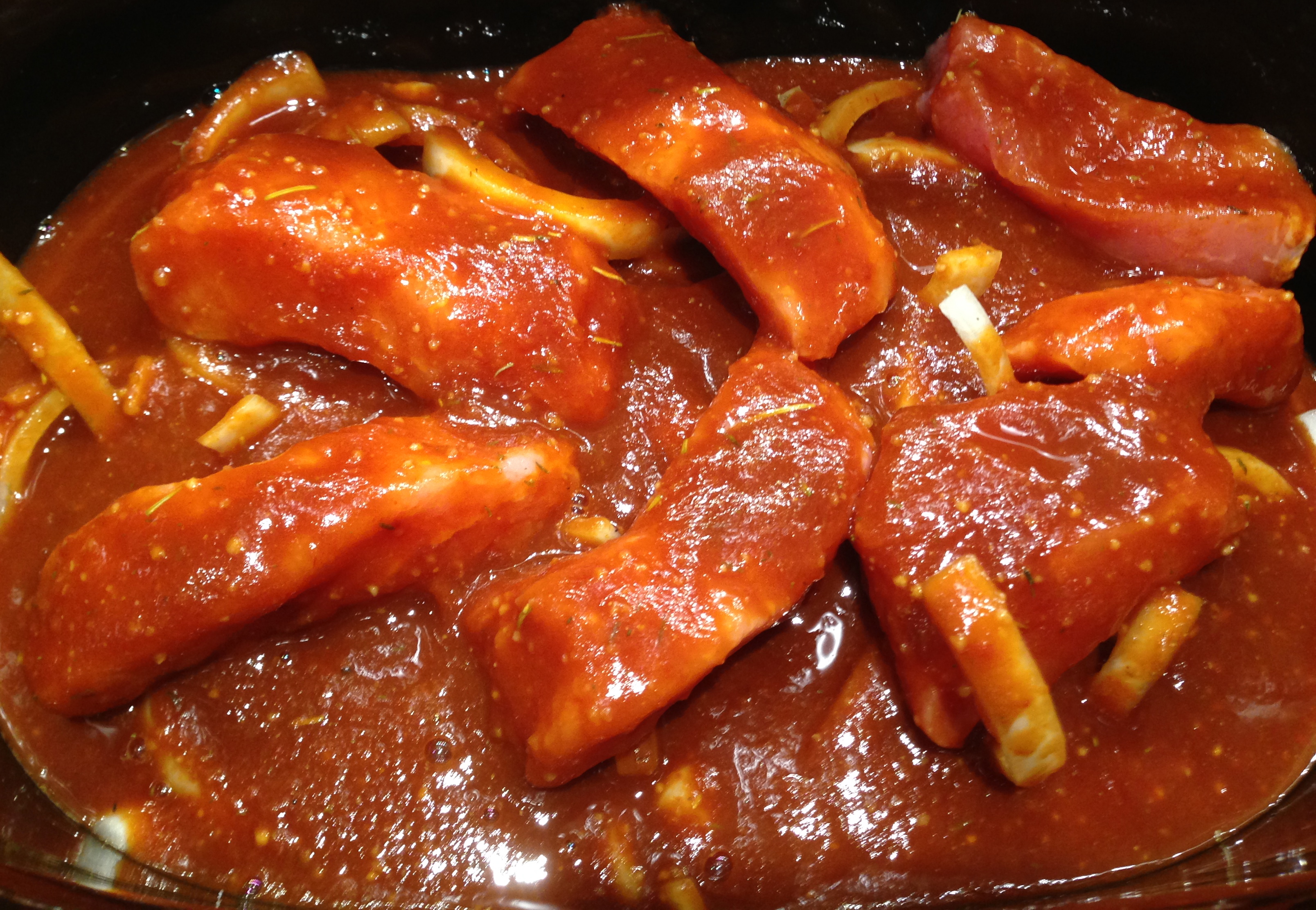
Place the Ribs On Top of the Vegetables

Place the Ribs On Top of the Vegetables

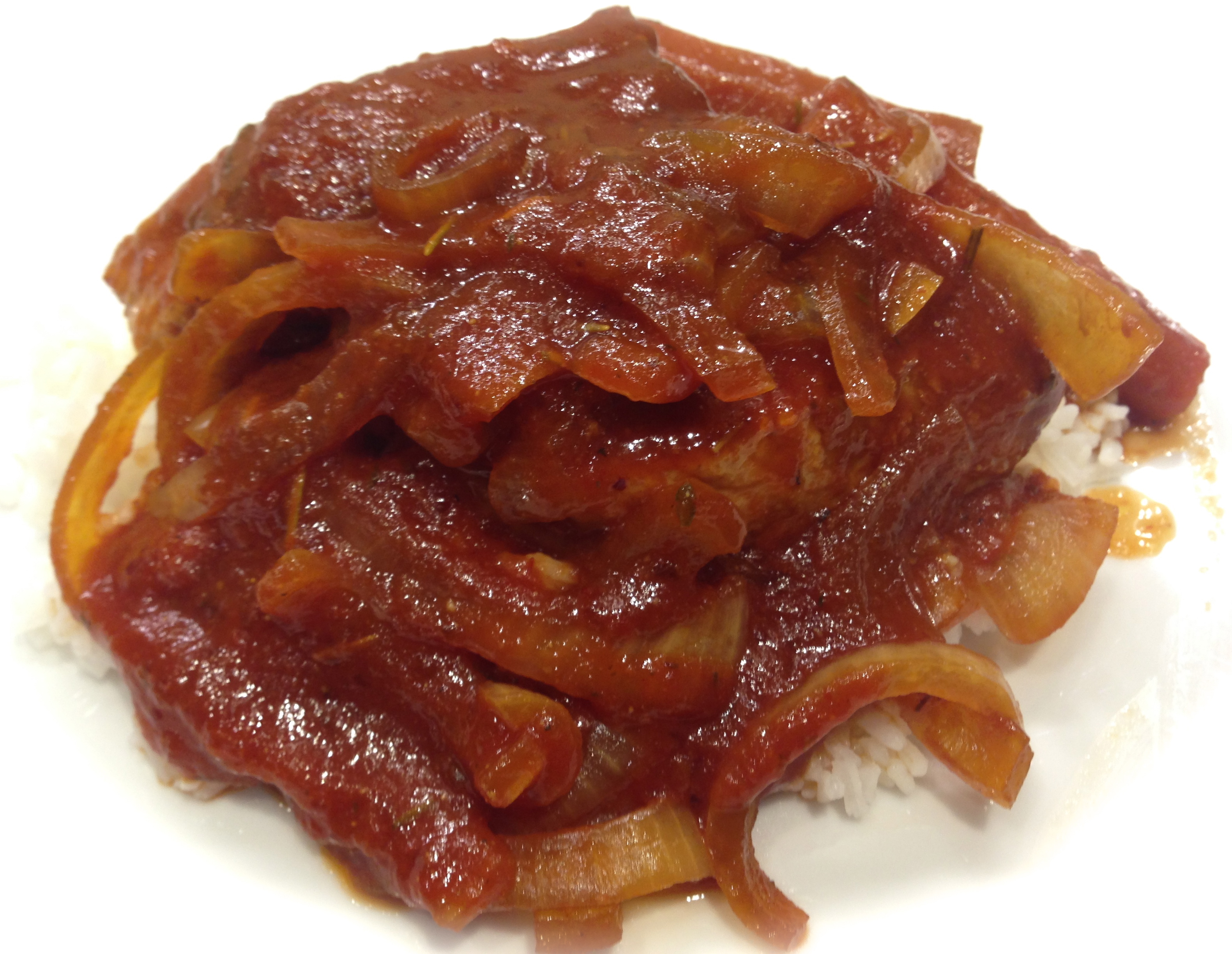
RATING: A. This recipe is so easy and the sauce is very flavorful. You can serve this with just about anything. Quite often I will get some of the pre-made mashed potatoes, heat them in the microwave and serve them with the ribs and a steamed vegetable. The sauce makes a great gravy for the mashed potatoes. You can also serve this over rice as well.  I’ve never made this with pasta. The recipe may be too robust for pasta but give it a try if you’re a pasta lover.

Lesson Learned 1: Make sure to set aside a cup of sauce at the beginning to serve over the ribs when they are done. You can use the sauce that is in the slow cooker if you forget but the reserved sauce gets much thicker when you heat it on the stove and has less grease. I think you’ll find that extra step more than worth it.

Lesson Learned 2: I love this recipe because it uses a whole can of tomato paste. I hate it when you are asked to put in a few tablespoons of tomato paste into a recipe and wind up having a half-used can sitting in your refrigerator until you throw it out. I know you can purchase tomato paste in a tube, but sometimes I have difficulty finding it in the store or they’re out of them. This way you have no worries, you use the entire can.

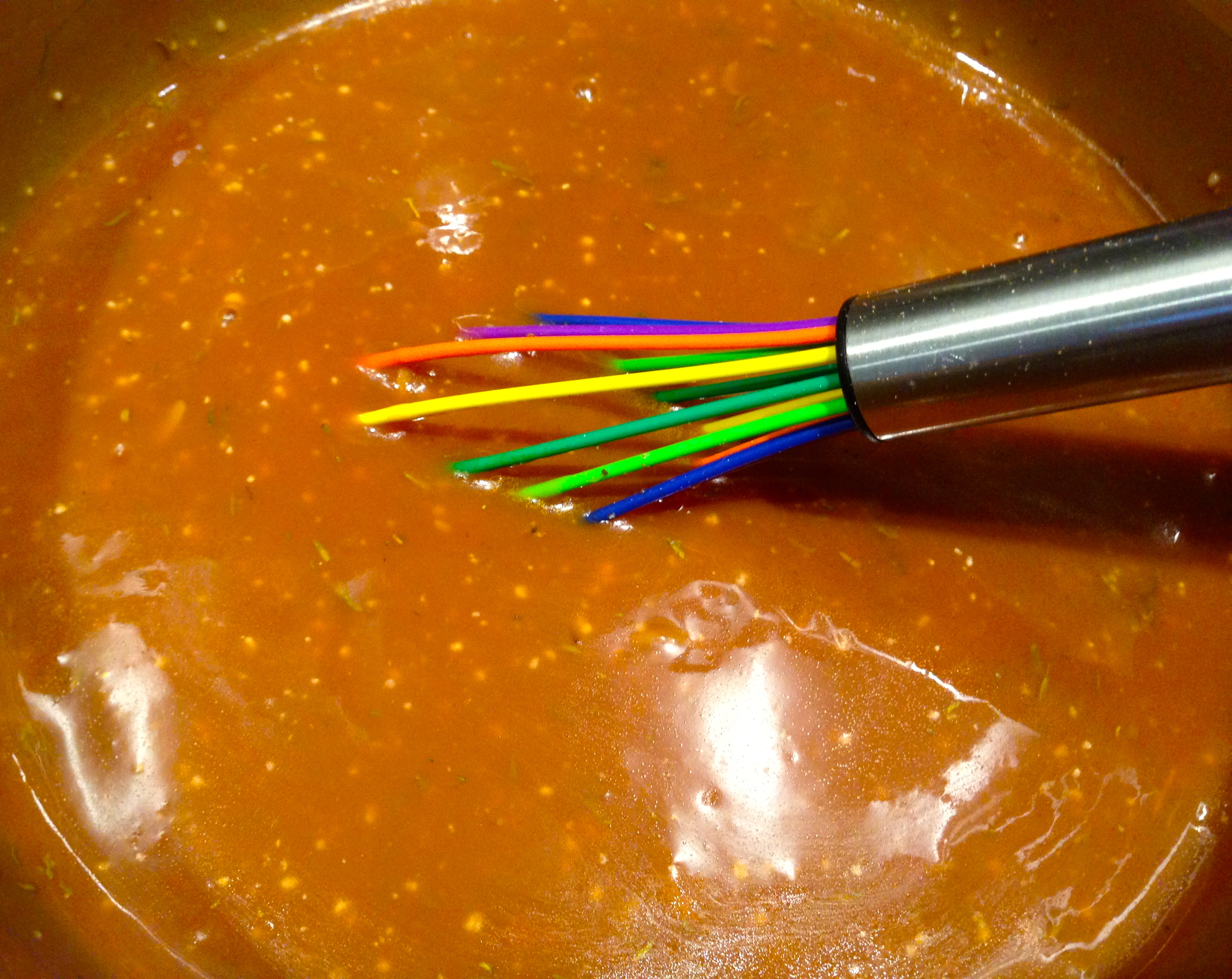
Cover With The Vegetable Juice Mixture

Cover With The Vegetable Juice Mixture

Lesson Learned 3: Vegetables can always be tricky in a slow cooker as they can disintegrate or become overly mushy if you don’t prepare them correctly. Make sure to cut the onion into large rings. I usually cut the rings almost an inch thick and then cut the rings in half length-wise before separating them. Onions should always be cut rather thick if you are putting them in a slow cooker. The same applies to the carrots. Cutting them into large logs helps them stand up better to the slow cooking process.

This also applies to the mushrooms. Since you are putting them in for only one half hour you don’t need to cut them overly thick. But only put them in for a half hour. That way your mushrooms will have a perfect consistency. If you put them in at the beginning they will become way too mushy.

Lesson Learned 4: Make sure you rub the thyme and rosemary into your palm to break up the dried seasonings and release some of the natural oils before you add them to the vegetable juice mixture. That will provide greater depth of flavor to the sauce.

Lesson Learned 5: You can use just about any type of vinegar you have on hand for this recipe. I normally use red wine vinegar, but plain white vinegar or any other type will work just as well.

Lesson Learned 6: Spray a measuring cup with cooking spray before you measure out the molasses. That way when you pour the molasses it will come out easily and quickly. (This is a great tip when using an ingredient like molasses or honey)

Lesson Learned 7: Never lift the lid during the cooking process. The only time the lid can be lifted is when you add the mushrooms. If you lift the lid during any other point, you will throw off the cooking time and will be faced with adding more time to the process.

Add The Mushrooms During the Last Half Hour

Add The Mushrooms During the Last Half Hour

Slow Cooker Country Style Pork Ribs

  • Servings: 4
  • Difficulty: Easy
  • Print

INGREDIENTS:

3 pounds pork country-style ribs (don’t use baby back ribs for this recipe)

1 large onion sliced into thick rings

4 large carrots cut into one 2 inch logs

3 cups of vegetable juice

1 can of tomato paste

1/2 cup of molasses

6 TB. vinegar (I use red wine vinegar for this)

2 tsp. dried mustard

1/4 tsp. kosher salt

1/4 tsp. freshly ground black pepper

1 tsp. dried thyme

1/8 tsp. dried rosemary

8 oz. baby portobella mushrooms, sliced.

DIRECTIONS:

Slice onion into thick rings and separate. Peel and cut carrots into 2 inch logs. Place them in the slow cooker. Remove any excess fat from the ribs and place on top of the onions and carrots.

In a medium size bowl stir together vegetable juice, tomato paste, molasses, vinegar, dry mustard, salt, and pepper. Rub the seasonings in your hand to release the natural oils, add to the mixture and combine. Reserve one cup of the vegetable juice mixture for sauce, cover and refrigerate it. Pour remaining mixture over the ribs and onions covering completely.

Cover and cook on low for eight hours. During the last half hour of cooking, add the sliced mushrooms and stir mixture to combine. Meanwhile on the stove put the reserved sauce in a small saucepan and bring to a boil. Once the mixture comes to a boil, lower the heat and simmer uncovered for 10 minutes. Cover the ribs with the sauce when serving.

Serve with rice, mashed potatoes or pasta and the vegetable of your choice.

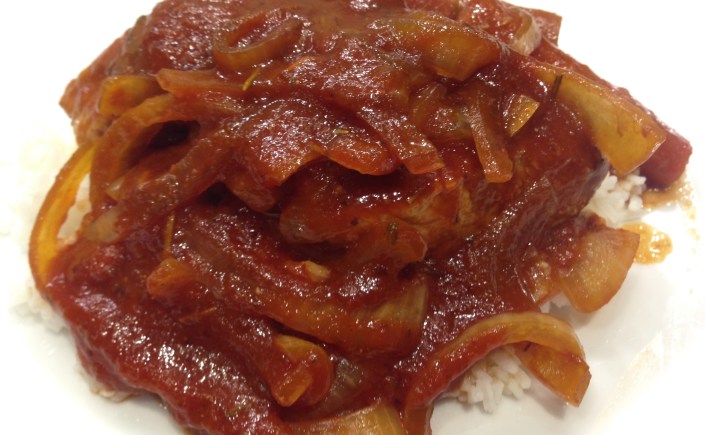
Serving suggestion: Over Rice

Serving Suggestion: Over Rice

Slow Cooker Red Wine Beef Stew…

I’ve been making beef stew for years and have experimented making it in a variety of ways. I’ve tried low and slow on the stovetop, low and slow in the oven using enameled cast iron and low and slow in the slow cooker. After many years and many iterations I’ve finally decided on the process and the recipe. And the winner is (drum roll) slow cooker red wine beef stew.

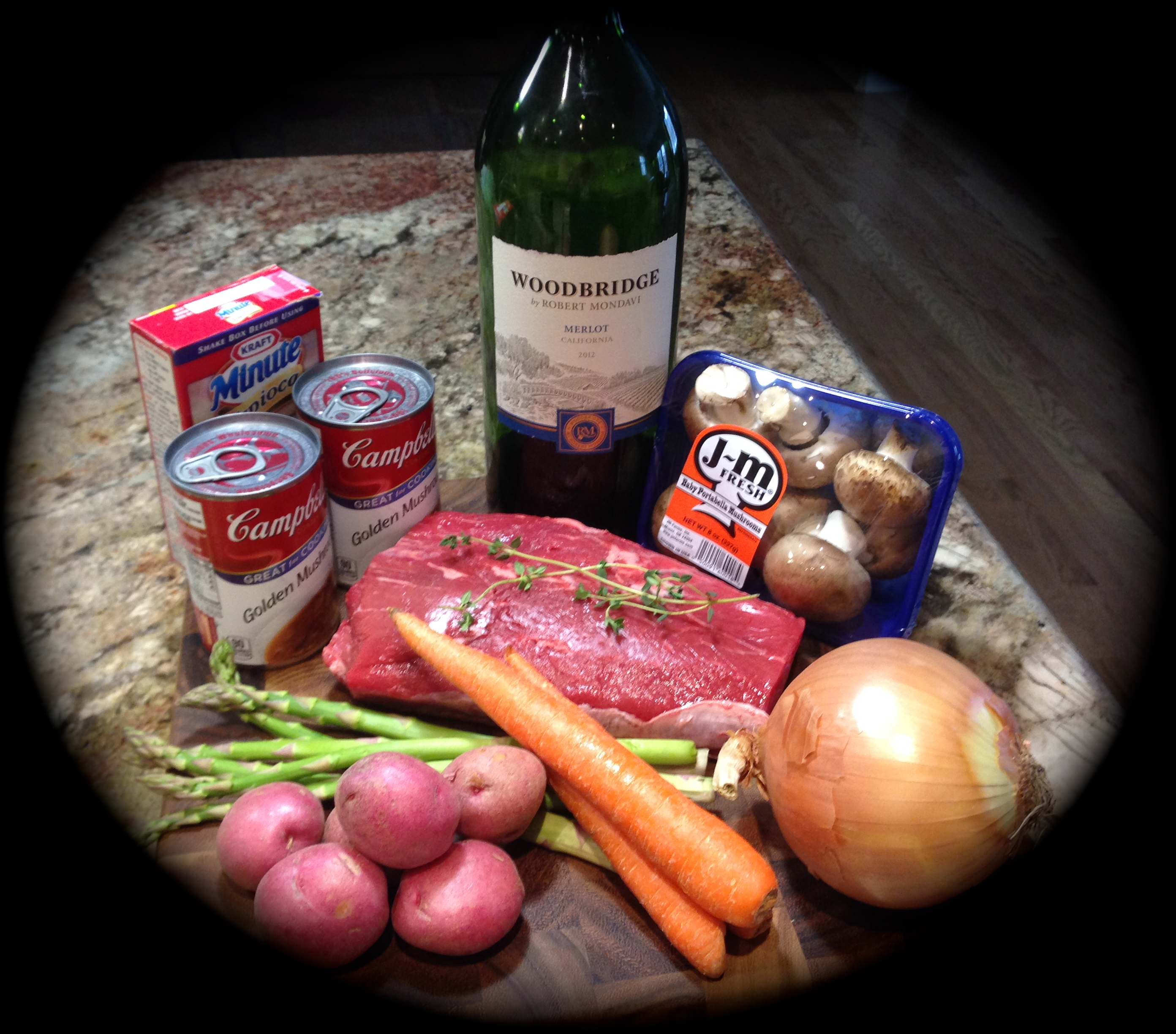
The Basic Ingredients

The Basic Ingredients

The keys to success in this recipe, and virtually any recipe in a slow cooker, is having a good slow cooker (and understanding its temperature controls), knowing the appropriate cooking time and making sure that the ingredients can withstand the cooking process.

Where this recipe is concerned, I have finally figured out how to make it flavorful and tender but not mushy. So here is my rating and lessons learned:

Rating: A+++++ Believe me, those pluses have only been earned over time. I’ve had a variety of failures over the years, namely tough meat, mushy vegetables and bland flavor. Hopefully my recipe and lessons learned will help you avoid years of trial and error in making easy and delicious beef stew in your slow cooker.

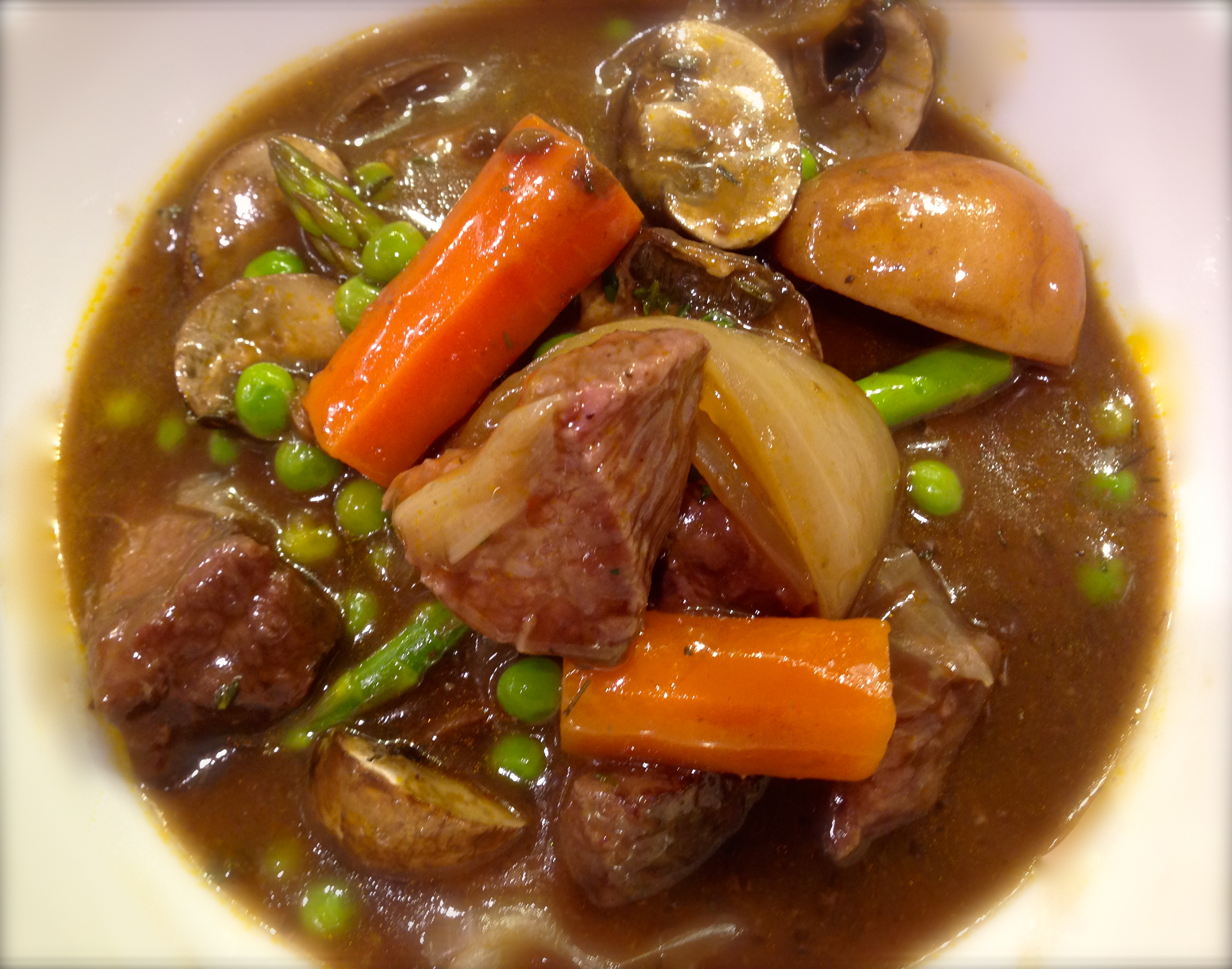
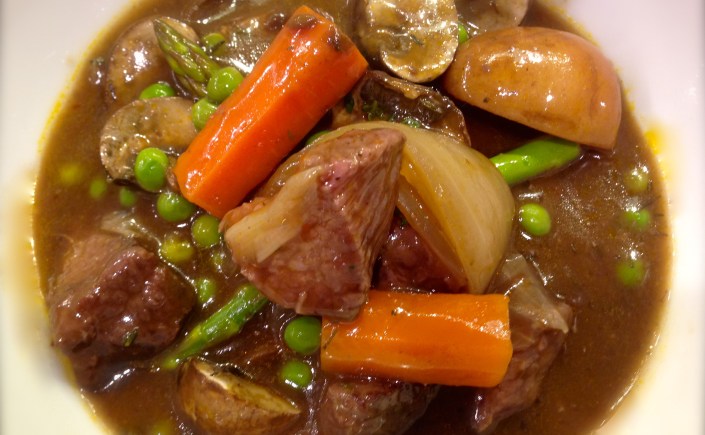
Lesson Learned 1: To brown or not to brown the meat and veggies before putting them in the slow cooker, that is the question. I have done them both ways. I’ve come to the conclusion that pre-browning is not necessary for this recipe to be eye as well as palate appealing (as seen in the final picture below). So save some time and skip that part.

Cut the vegetables into large chunks...

Cut the vegetables into large chunks…

Lesson Learned 2: Cutting the vegetables and potatoes to the appropriate size is important. Since you will cook this for 8 hours you need to cut the vegetables and potatoes in big chunks. I used one very large sweet onion cut in half and then into thirds separating the layers, the thickest carrots I could find, cutting them into two inch logs, and new red potatoes about two inches in diameter cut in half. If you’re not sure, err on cutting the pieces larger instead of smaller. All of these ingredients cut to large sizes will hold up nicely to this cooking process.

Lesson Learned 3: Buy a tough cut of meat like a chuck or eye of round roast and cut it into pieces yourself. If you purchase pre-cut “beef stew” meat, the pieces can vary in size and result in some being tough after cooking while others mushy. By cutting the meat yourself you save money and get evenly sized pieces. I usually cut the meat into 2 inch cubes. I find that to be the best for the 8 hour cooking process.

Red Wine Sauce

Red Wine Sauce Flecked with Instant Tapioca

Lesson Learned 4: Use red wine to flavor the cooking sauce. Not only will you have delightful smells in your house all day long but it goes a long way in adding flavor to the sauce. I used two cans of golden mushroom soup as the base and red wine is a perfect compliment to that. I normally fill one of the empty cans to the top with merlot and mix it with the undiluted soup. A little more or less won’t matter and it’s a great opportunity to take a sip yourself. After all, it’s five o’clock somewhere, right?

Lesson Learned 5: Here’s a great tip to use in all your slow cooker sauces. A perfect ingredient for thickening sauces in slow cookers is instant tapioca. I use two heaping tablespoons of it in the mixture and it yields a sauce that has body to it. This is a great trick to keep in your back pocket.

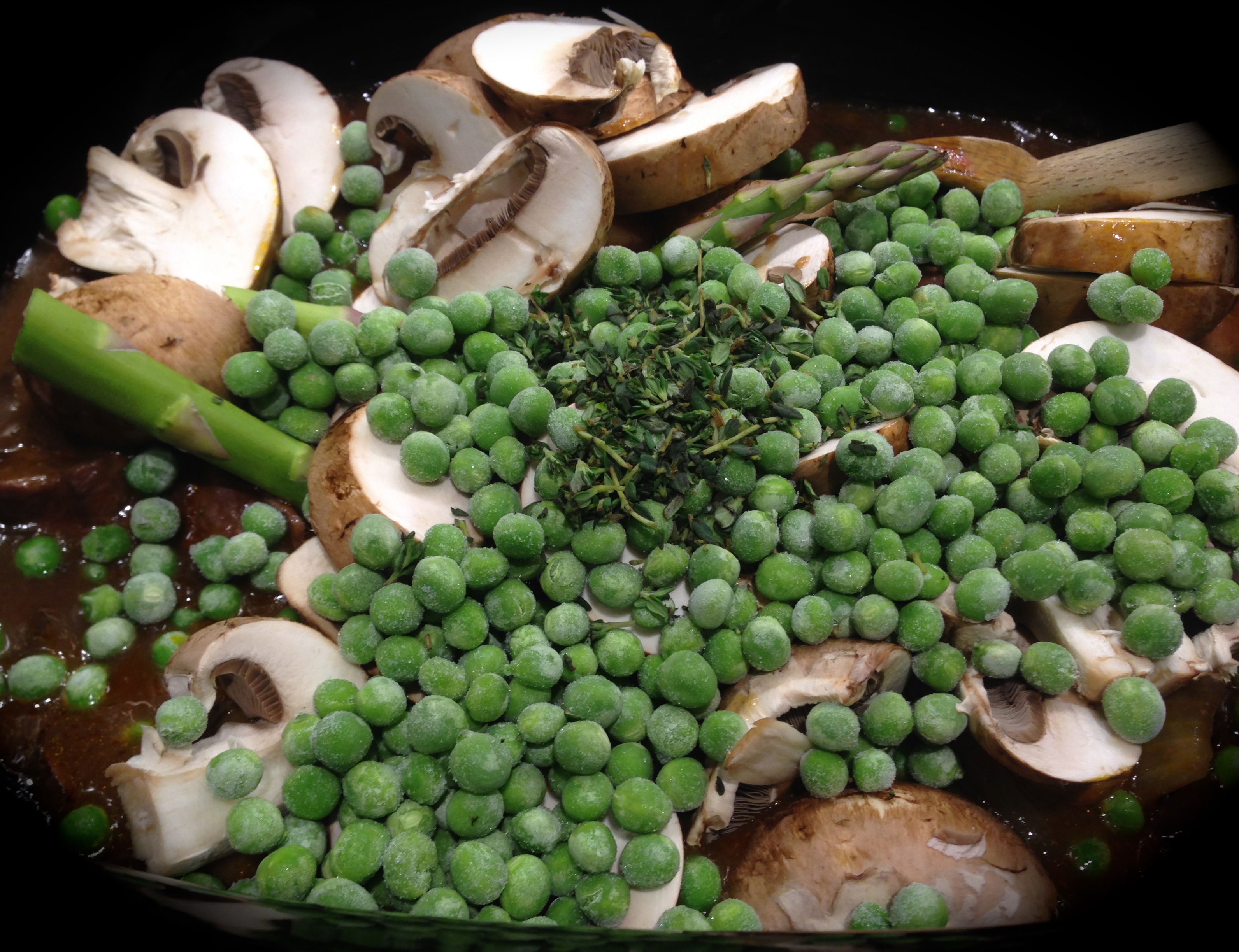
Lesson Learned 6: Not all vegetables are created equal. I used to think that I needed to put all the ingredients into the slow cooker at the beginning, and I happen to like mushrooms and peas in my beef stew. Well, if you add those at the beginning I guarantee you they will be mush by the end of 8 hours. Another trick I learned was to add these two ingredients 1/2 hour before the end of the cooking process. That way they will cook to just the right consistency.

bs6Lesson Learned 7: This lesson I just learned when making the recipe the other day. I had some asparagus spears in my refrigerator that I needed to use. I also threw them in with the mushrooms and the peas and they turned out perfectly, crisp tender. So if you have any of the more delicate veggies that you want to use, just pop them in during the last half hour and they will be perfect. I also threw in some fresh thyme at the end and it stood up well.

I’ve gotten this recipe to the point that it is my favorite beef stew recipe and it could not be easier to make. The bulk of the time is in the prep and I don’t know about you but there is something very comforting to me about slicing, dicing, mincing and chopping. Serve this in a crock style bowl with some garlic bread and a salad and you have one of the all time great comfort food meals.

Slow Cooker Red Wine Beef Stew

  • Servings: 6-8
  • Difficulty: Easy
  • Print

INGREDIENTS:

1 4 lb. chuck roast

8 large carrots

8 large baby red potatoes (2 inches in diameter)

1 large sweet onion

8 ounces baby portobella mushrooms

2 cans golden mushroom soup

1 cup frozen petite sweet peas

Additional vegetables as desired (cooking times may vary see below)

2 TBS of worcestershire sauce

1 cup dry red wine, preferably merlot

2 TBS. instant tapioca, heaping

2 TBS dried thyme

2 TBS fresh thyme

Salt and Pepper

DIRECTIONS:

Cut the roast into 2 inch square cubes, set aside. Peel and cut the onion in half and cut the halves into thirds. Separate the layers and put into the slow cooker. Peel carrots and cut into 2 inch lengths, place into slow cooker. Wash the potatoes and cut them into halves, place in slow cooker. Season this layer with salt, pepper and dried thyme.

Place meat on top of the vegetables. Season with salt, pepper and thyme.

Mix together two cans of golden mushroom soup, add 1 can (about one cup more or less, no need to be exact) of merlot and mix until combined and smooth. Add 1 TBS of dried thyme, the worcestershire sauce and tapioca. Mix until combined. Pour over the meat and vegetables making sure they are completely covered. Cover and set the slow cooker on low for 8 hours.

Slice the mushrooms into 1/2 inch thick slices. Remove the leaves from the fresh thyme and chop. (For this recipe I used some asparagus I had in the refrigerator. I simply chopped off the woody stems and added them with all of these ingredients). Remove the cover from the slow cooker and add the peas, mushrooms, (asparagus), and fresh thyme. Stir until combined. Cook for an additional half hour.

Serve in a crock style bowl with a green salad and garlic bread.

Slow Cooker Red Wine Beef Stew

Slow Cooker Red Wine Beef Stew

Brandy Chicken With Mushrooms and Pearl Onions…

After my post last week that featured one of my favorite go-to recipes, chicken roll ups, I thought I would be off of the chicken bandwagon for awhile. But lo and behold the very next day I got my copy of Cooking Light in the mail and what was this months feature but “12 ways for perfect chicken!” On the cover was an enticing picture of chicken smothered in mushrooms and pearl onions and I thought, I just gotta make this one. And so I did, last night.

I am always on the look out for a good chicken recipe and this issue features an abundance of them, but I was drawn to the recipe pictured on the cover. I’d never cooked with Brandy before and was a little fearful and skeptical. I looked online to see if there was a viable substitute for brandy, as I don’t drink it and would use it only for cooking, but the information I found stated there really was no substitute. Wine was mentioned as an alternative but it would not provide the same flavor. So off to the liquor store I went. I actually found a small bottle of Korbel brandy for $10 and so I figured I could live with that. Other than fresh thyme and pearl onions, all the other ingredients I already had in the house so this seemed like a no-brainer. So here is my rating and lessons I learned making the dish for the first time.

Rating: A- for the recipe B- for the instructions. As I’ve mentioned several times I am not an intuitive cook so I need for the directions to be explicit and correct. I tend to take things literally, but more and more I am beginning to trust my instincts. I enjoyed this recipe, would definitely make it again and maybe even experiment using wine instead of brandy. I’ll explain all that in my lessons learned.

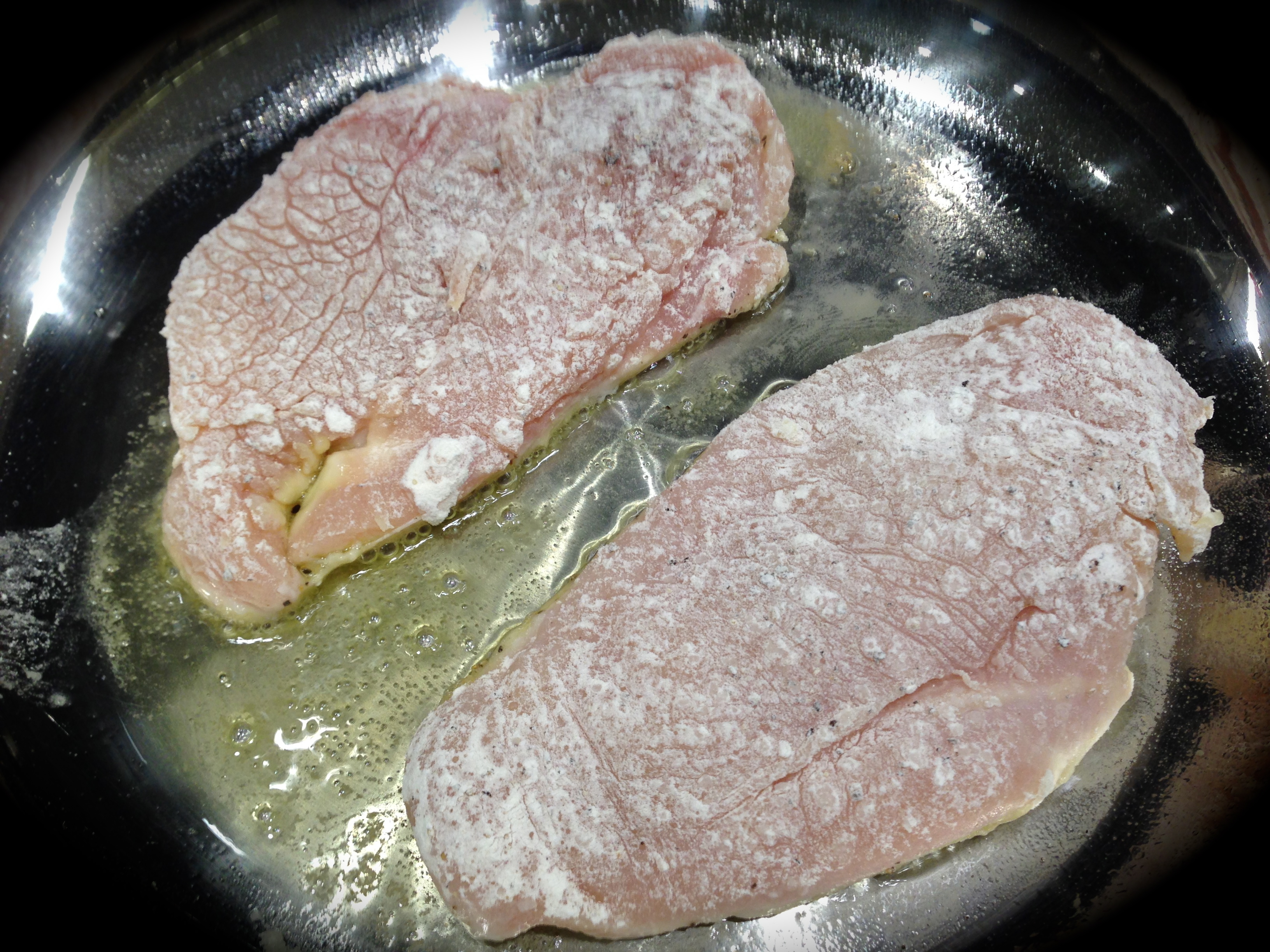
Lightly Dust With Flour and Cook In Olive Oil Until Almost Done

Lightly Dust With Flour and Cook In Olive Oil Until Almost Done

Lesson Learned 1: The time of this recipe was overestimated in my opinion. The recipe calls for halving boneless skinless chicken breasts, thus making a “cutlet”. So how do you define cutlet? I’m thinking about a quarter of an inch thick, right? When I halved a breast I wound up with 2 pieces that were a half inch thick. I decided to use that thickness instead of pounding them out based on the cooking time for the recipe, 43 minutes (how they came up with 43 versus 42 or 44 gives me a chuckle), taking into consideration I was not making as many “cutlets” as called for in the recipe so I was cooking a lesser amount of meat but at a greater thickness. My pieces of chicken were probably double the size of what I assume a cutlet should be (and that’s another thing that aggravated me, the recipe never defined the thickness of the cutlet – you just can’t assume every knows). I found that using that time as a guide for the rest of my meal wound up giving me slightly overdone chicken. I think one of the common errors most cooks make is overdone boneless skinless chicken breasts. Next time I make this I’ll reduce the cooking time by 7-10 minutes. Because I planned the rest of my meal around that 43 minute timeframe, I wound up keeping the dish on a very low simmer until everything else was ready and I think that lent to having slightly overdone chicken breasts. Mind you, they were not bad, but I do know the difference between a chicken breast that is juicy and tender and one that is overdone. (OK, I’ll get off of my soap box now).

Lesson Learned 2: Cooking with brandy did not wow me. I’m not sure what I expected the flavor to be, but it really did not supply the depth of flavor I thought it would. The recipe calls for cooking the brandy down until it’s almost evaporated (which I did) but the chicken stock that I added next seemed to overpower it. Next time I might leave a little more brandy in the pan or try this with either red or white wine. Most of the information I looked at regarding a substitute for brandy recommended using white wine, but I think red wine (like a good merlot) could also make this recipe interesting.

Lesson Learned 3: You also have to be careful cooking with brandy as it can produce a large amount of flame coming out of your pan. The recipe states that you should take the pan off the heat add the brandy and then put it back on the heat. I would highlight something like that in a recipe and even do a warning that if you don’t you could produce a large flame and injure yourself. Again, not everyone is a seasoned chef and I think a pointed warning would be helpful.

Cook Mushrooms Until Browned and Onions are Slightly Caramelized

Cook Mushrooms Until Browned and Onions are Slightly Caramelized

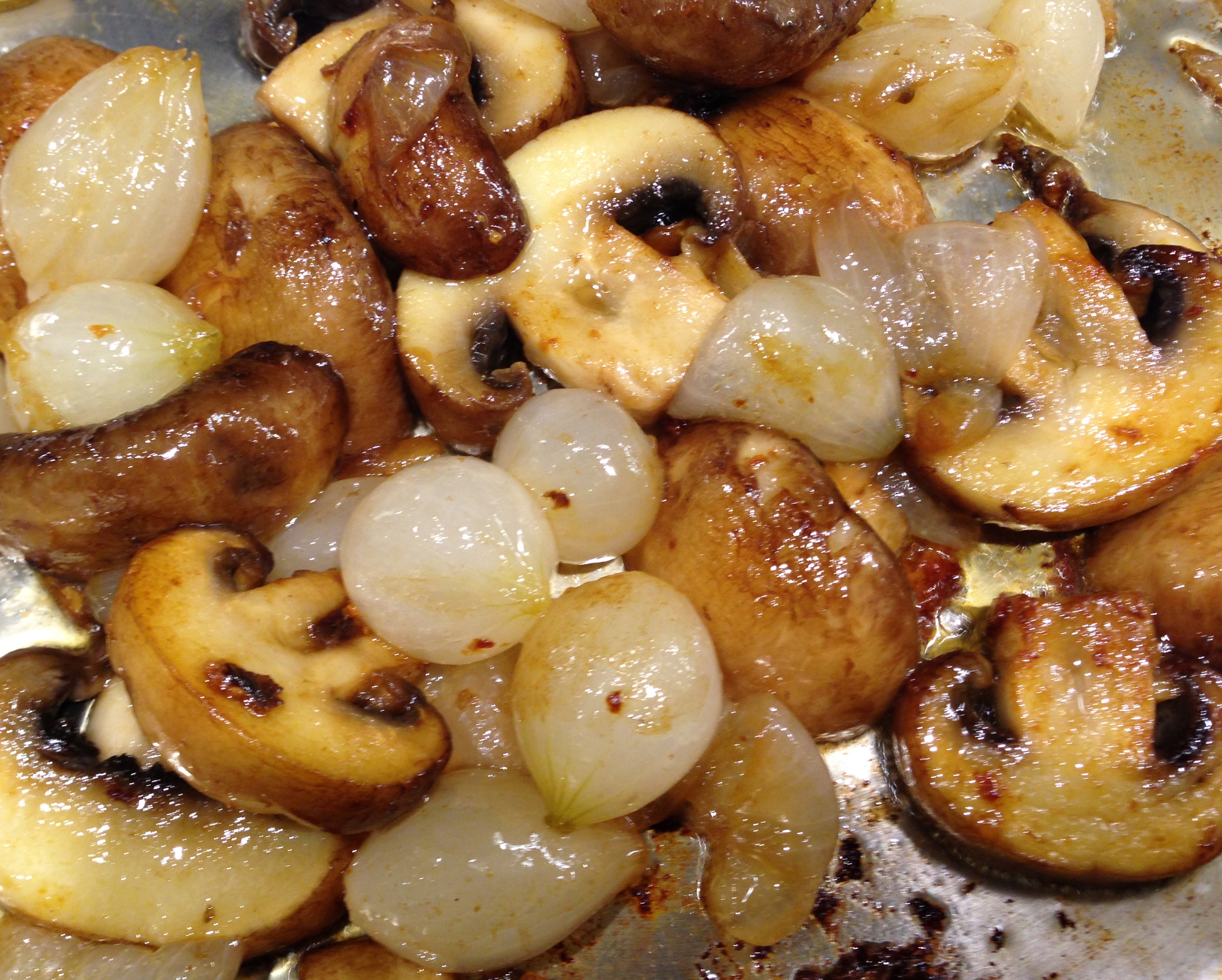
Lesson Learned 4: This recipe called for button mushrooms. I never use button mushrooms anymore now that baby portobello mushrooms are so easy to get. I think button mushrooms are virtually flavorless and baby bellas stand up to the cooking process better and have a much better texture. So I substituted baby portobello mushrooms for button mushrooms and I highly recommend it.

Lesson Learned 5: The original recipe cooked 8 cutlets and called for 1 teaspoon of fresh thyme leaves. One teaspoon was not enough even for my recipe for two people. I would recommend two teaspoons of fresh time for four servings. With one teaspoon I could barely see the thyme much less taste any flavor from it.

Lesson Learned 6: Adding the butter at the end gives a nice silkiness and shine to the sauce. Don’t skip that part.

Even with some of the issues, this recipe is a keeper and one I will continue to play with. What I also like about this recipe is the progressive cooking process allows you to do your clean up in stages, so by the time I served dinner the only prep dish that needed to be washed was the skillet. I liked that aspect a lot. So here is my version of that recipe:

Brandy Chicken With Mushrooms and Pearl Onions

  • Servings: 4
  • Difficulty: Medium
  • Print

INGREDIENTS:

2 boneless skinless chicken breasts halved (ideally 1/2 inch thick)

1 jar of pearl onions or 1 box of frozen pearl onions (thawed and drained)

6 – 8 ounces of baby portobello mushrooms sliced

2/3 cup of brandy

1 cup of chicken stock

2 tsps. cornstarch

1 TBS butter

2 teaspoons of fresh thyme

1/4  cup all purpose flour

Olive oil

salt and pepper

DIRECTIONS:

Halve the chicken breasts horizontally. Pat dry and season with salt and pepper. Dredge chicken breasts in flour and shake off the excess.

Heat skillet with just enough olive oil to lightly coat it. Cook chicken breast for 4 minutes on each side until almost cooked through. Remove them from the skillet and wrap them in foil to keep them warm.

Add some additional oil in the pan. Add mushrooms and cook for 2-3 minutes and then add the onions. Continue to cook until mushrooms are nicely browned and onions begin to caramelize. Remove from the pan and set aside.

TAKE THE PAN OFF THE HEAT AND ADD THE BRANDY (this is important so as not to produce a flame). Put the pan back on the heat and cook down the brandy by half. Whisk together the chicken stock and cornstarch until smooth and add it to the skillet. Continue to whisk the mixture for a couple of minutes until smooth and mixture begins to bubble.

Return chicken, mushrooms and onion to the pan, reduce heat and simmer for 3-5 minutes. Add salt, butter and thyme. Serve once the butter has melted.

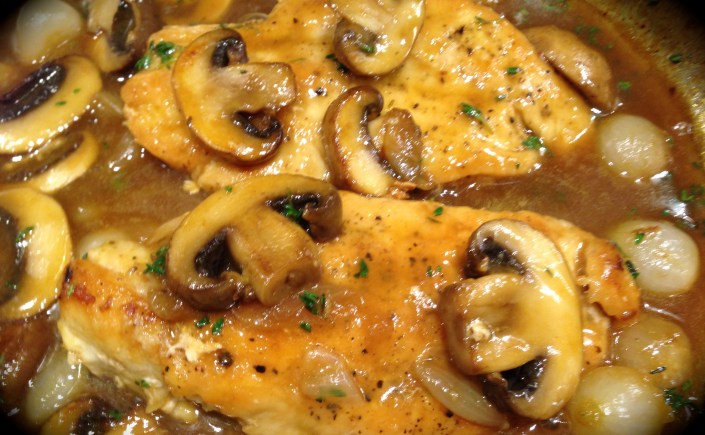
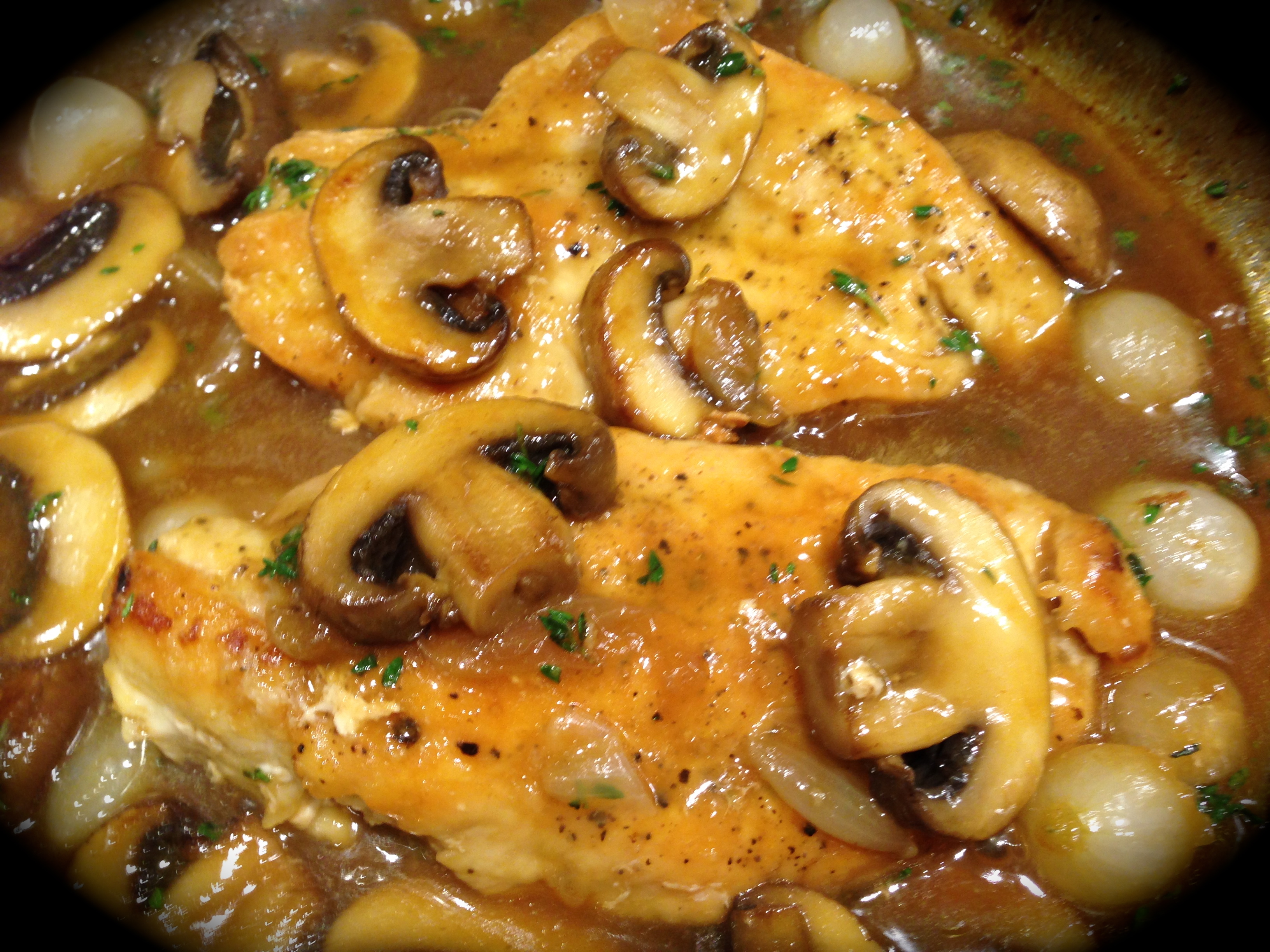
Brandy Chicken with Mushrooms and Pearl Onions

Brandy Chicken with Mushrooms and Pearl Onions

Chicken Roll Ups…

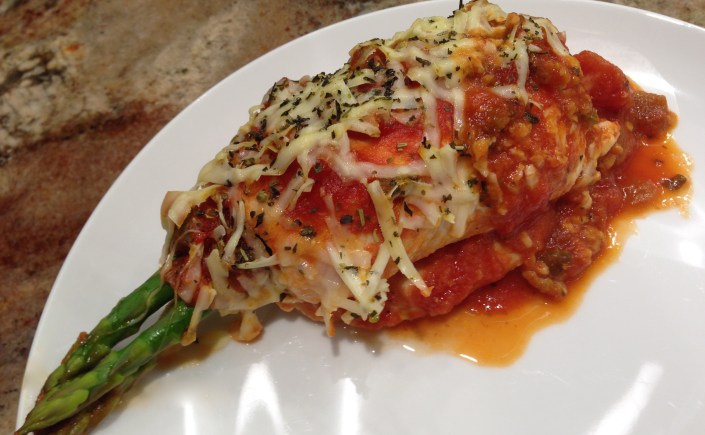
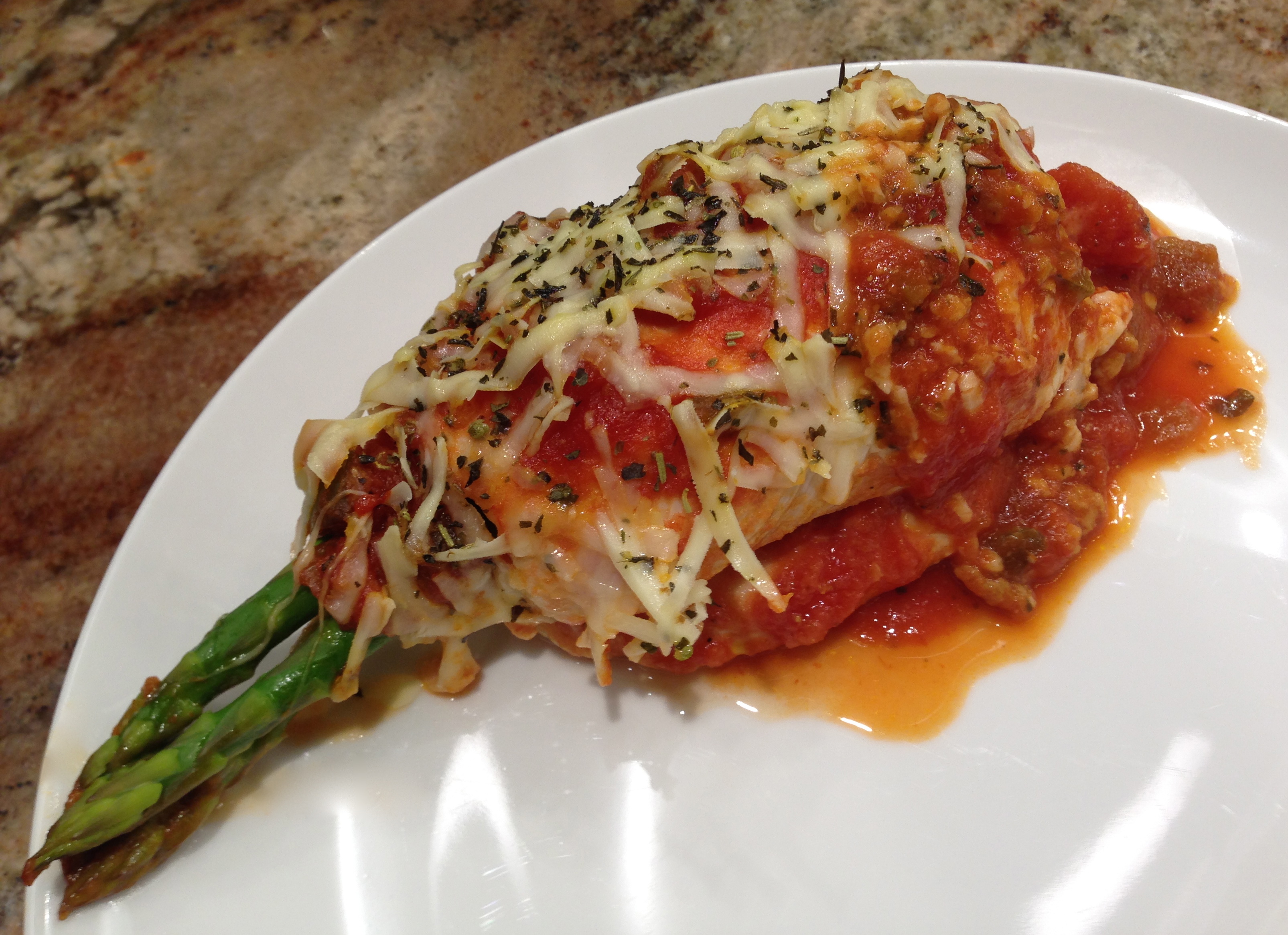
Chicken Roll Ups (right out of the oven)

Chicken Roll Ups (right out of the oven)

I think I may be related to Ina Garten’s husband Jeffrey, at least in the love of chicken department. Like him, anyway you prepare it I just love chicken. Ina makes it for him every Friday. I have it at least once a week and sometimes more. Because of that fact I’m always looking for new chicken recipes and especially the ones that are easy to prepare and super delicious.

This recipe is one of my husband’s favorites. Every time I make it he always comments on how much he enjoys it. I love it for its combination of ingredients – boneless chicken breasts, genoa salami, provolone cheese, asparagus and pasta sauce. In my mind it doesn’t get much better than that.

But I have to admit there is a catch to this recipe. Like any recipe for a roll up, the challenge is rolling it up. It took me a few tries to perfect the technique but hopefully through my lessons learned it will be easier for you. There are a few recipes that I’ve posted so far on this blog that are my go-to favorites. I put this one right up there with one of my all time favorites, my ravioli lasagna recipe. Once you master the art of the roll up you will make this recipe often as it is so simple and yet very flavorful.  So here’s my rating and lessons learned:

ru1Rating A+  The only thing difficult about this recipe is mastering the roll up technique so that all of the ingredients are covered by the chicken breast. Once you’ve got that, the rest is a breeze. You’ve basically got your meat and vegetable all in one. Serve with a simple salad and some crusty bread and you’ll have a dinner that will become a staple in your household! I’ve learned a lot of lessons making this recipe and hopefully these will help you be successful the very first time you make it.

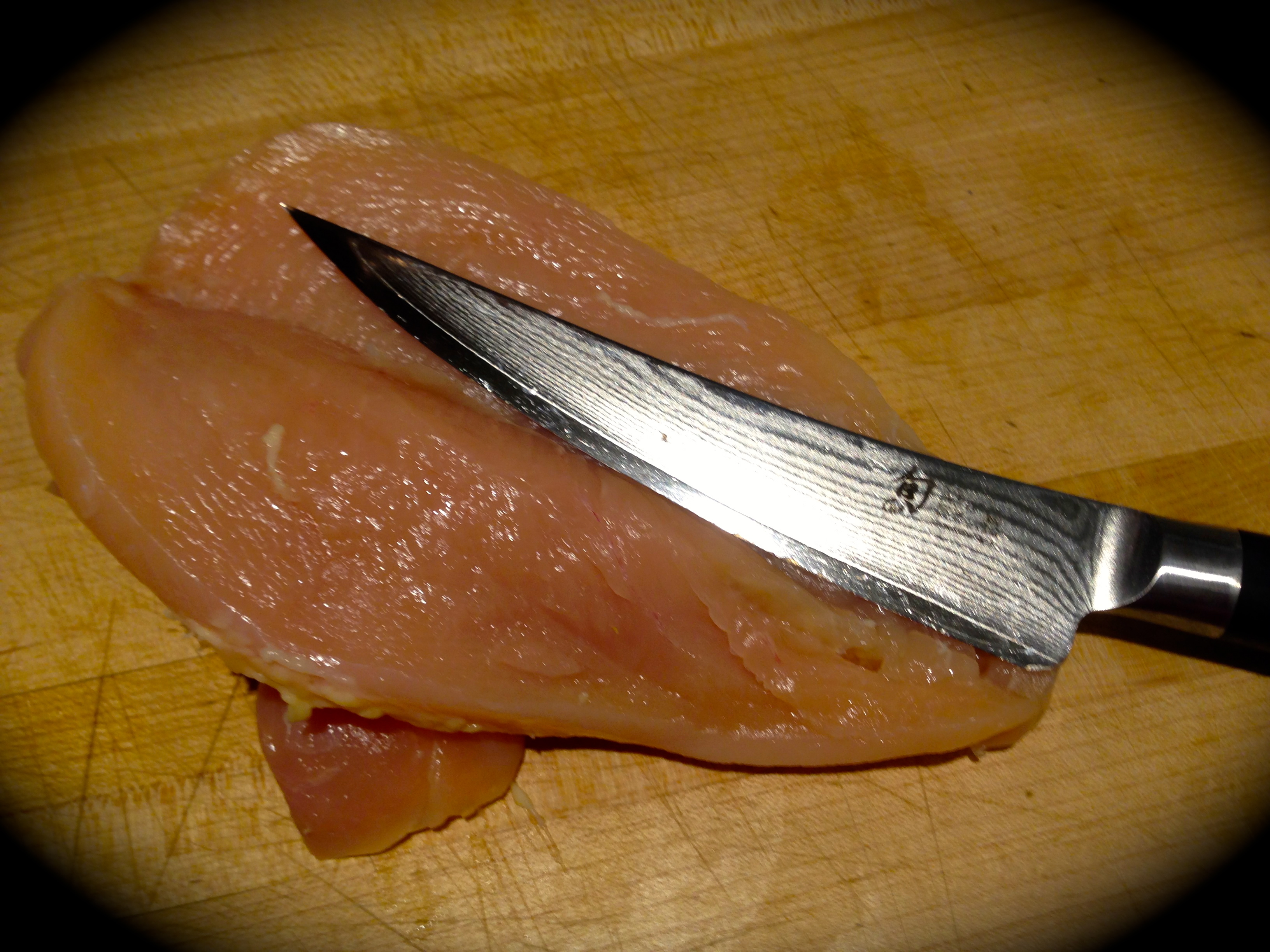
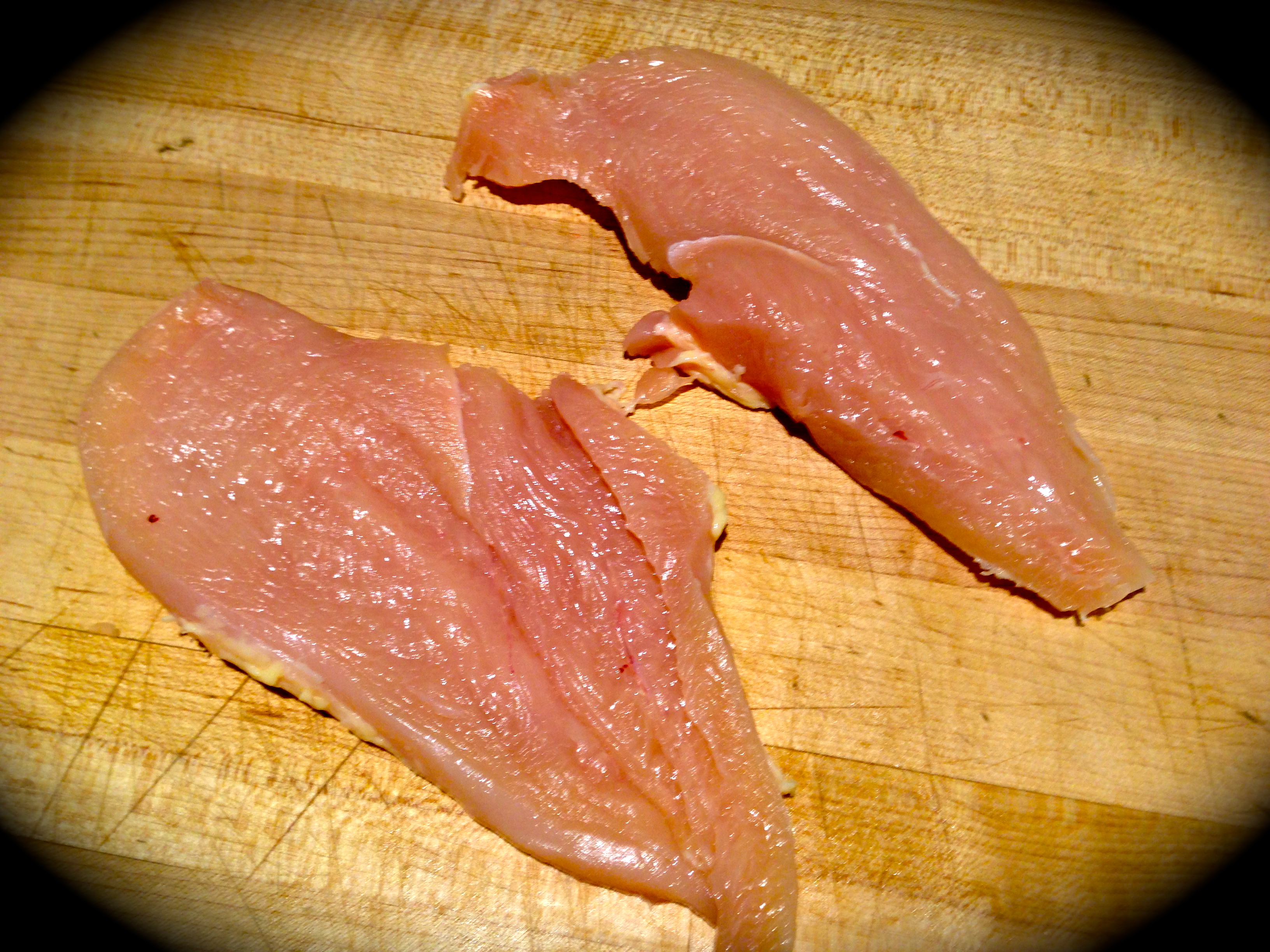
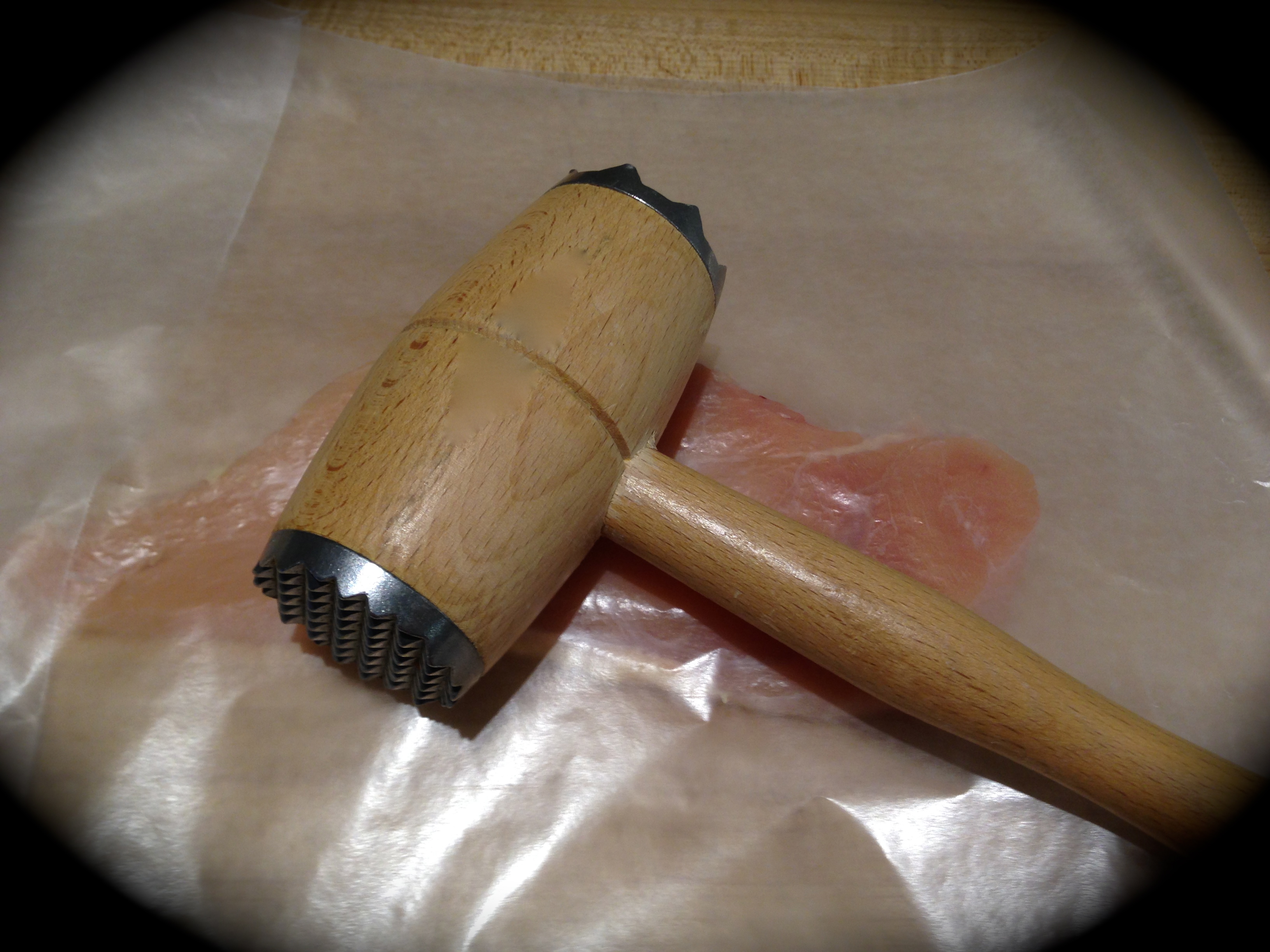
ru2Lesson Learned 1: It is so important to make sure the chicken breast is the right thickness. If it’s too thick you’ll never get it to roll up, if too thin all the provolone will ooze out.  I used to use one breast for each roll up but it seems like they are getting larger and larger and once you pound them out you are left with an enormous roll up. Now I take my boning knife and halve the chicken breast. From there I put them between two pieces of wax paper and pound each to a quarter of an inch thick. I found doing it this way makes for a much more reasonably sized portion and one breast now serves two.ru3

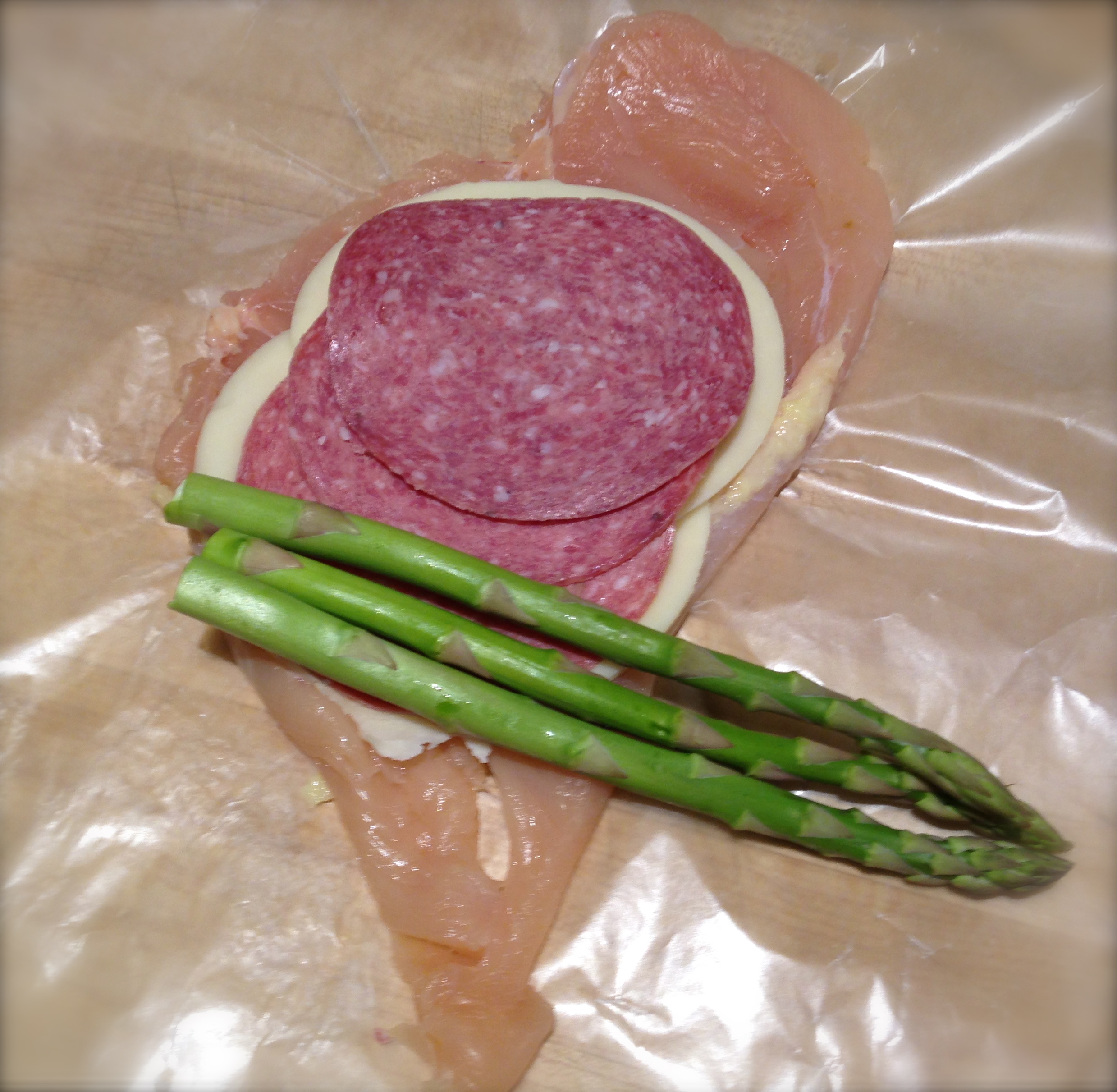
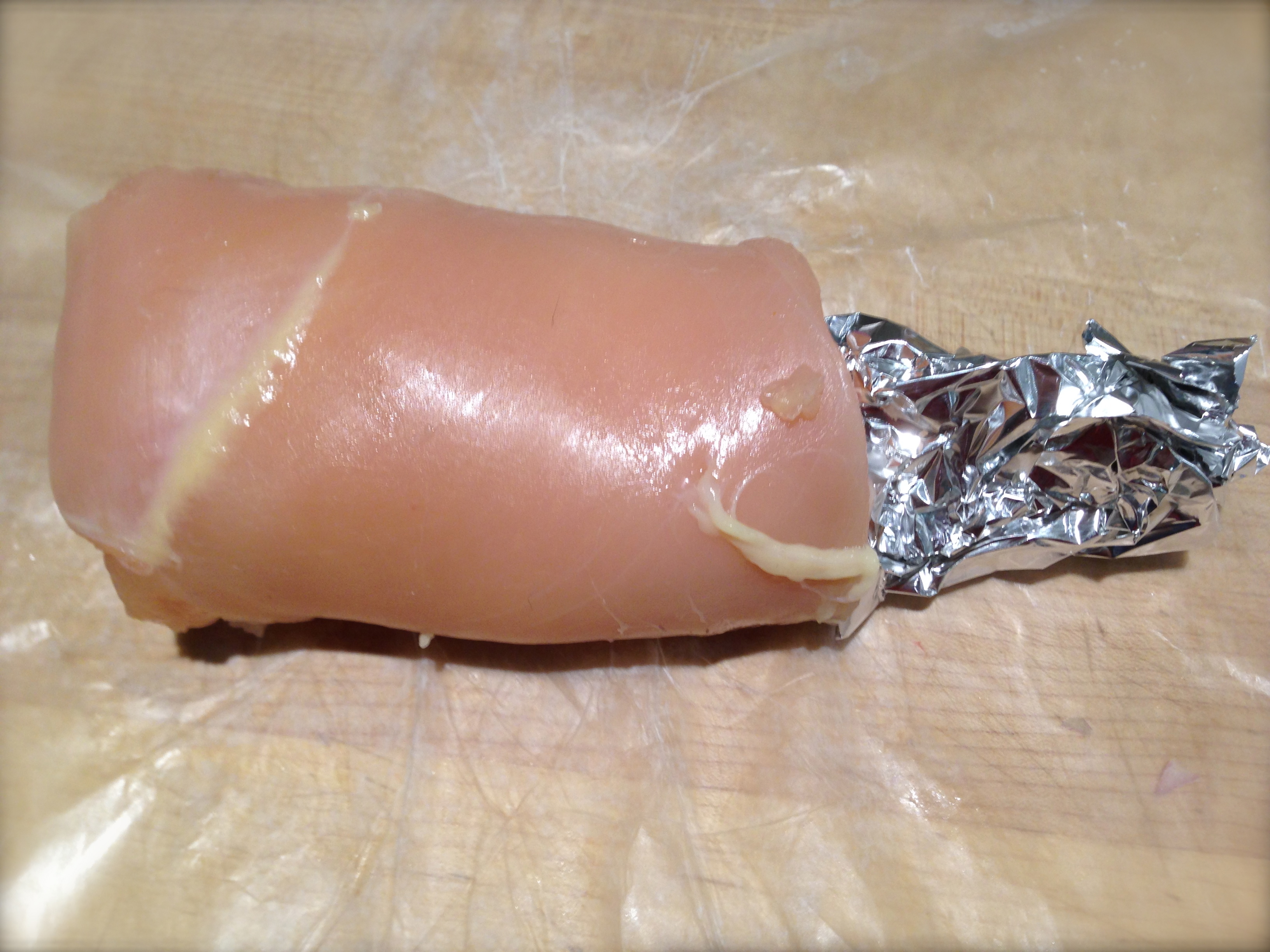
Lesson Learned 2: Figuring out the art of the roll up took a few tries on my part before I perfected it. What I learned is if you put the cheese, meat and asparagus closer to where you begin rolling and leave a little more just plain meat toward the end the process seems to work. As you are rolling the meat and cheese tend to move a little along with you. If you leave some “wiggle room” at the end you can get all of the insides covered with the chicken breast.

Place ingredients more toward the bottom before you roll the chicken

Place ingredients more toward the bottom before you roll the chicken

Lesson Learned 3: I have yet to find a toothpick that will hold the roll up in place without breaking off. Now I use a turkey skewer (the kind you use on your holiday turkey to keep the stuffing in place) and that seems to work well. I use the skewer to secure a flap on the bottom (opposite the asparagus tips) so that cheese does not ooze out and then weave it through the chicken flesh to hold the rest of the roll up in place. Just make sure you remember to tell people that you used a skewer. With the pasta sauce it is not always easily visible and whoever is eating it could be sawing away wondering why they can’t completely cut through the roll up. If I can I remove it before serving. If I can’t remove it, I make sure the person eating it knows it’s there.ru5

Lesson Learned 4: This is probably the biggest lesson I learned from making this – covering the asparagus tips with aluminum foil. You are baking this dish for 45-50 minutes at 350. If you don’t cover the asparagus tips they will turn to mush. If you do cover them they turn out beautifully as can be seen by the picture at the bottom of this blog.

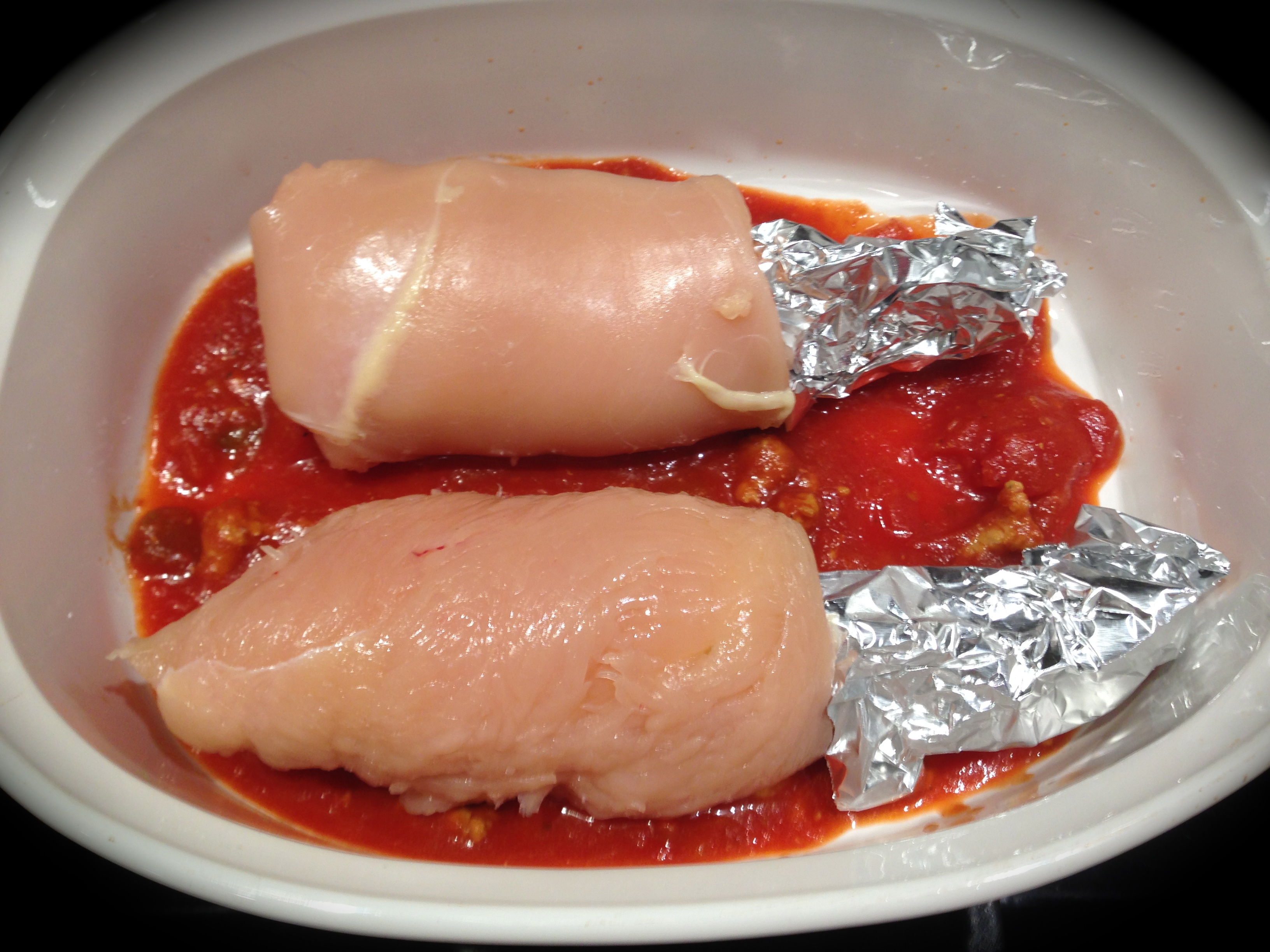
Lesson Learned 5: Put about a quarter of a cup of sauce on the bottom of the pan before you put the roll ups in. That way the roll ups won’t stick to the bottom of the pan.

Put sauce on the bottom of the dish before adding the roll ups

Put sauce on the bottom of the dish before adding the roll ups

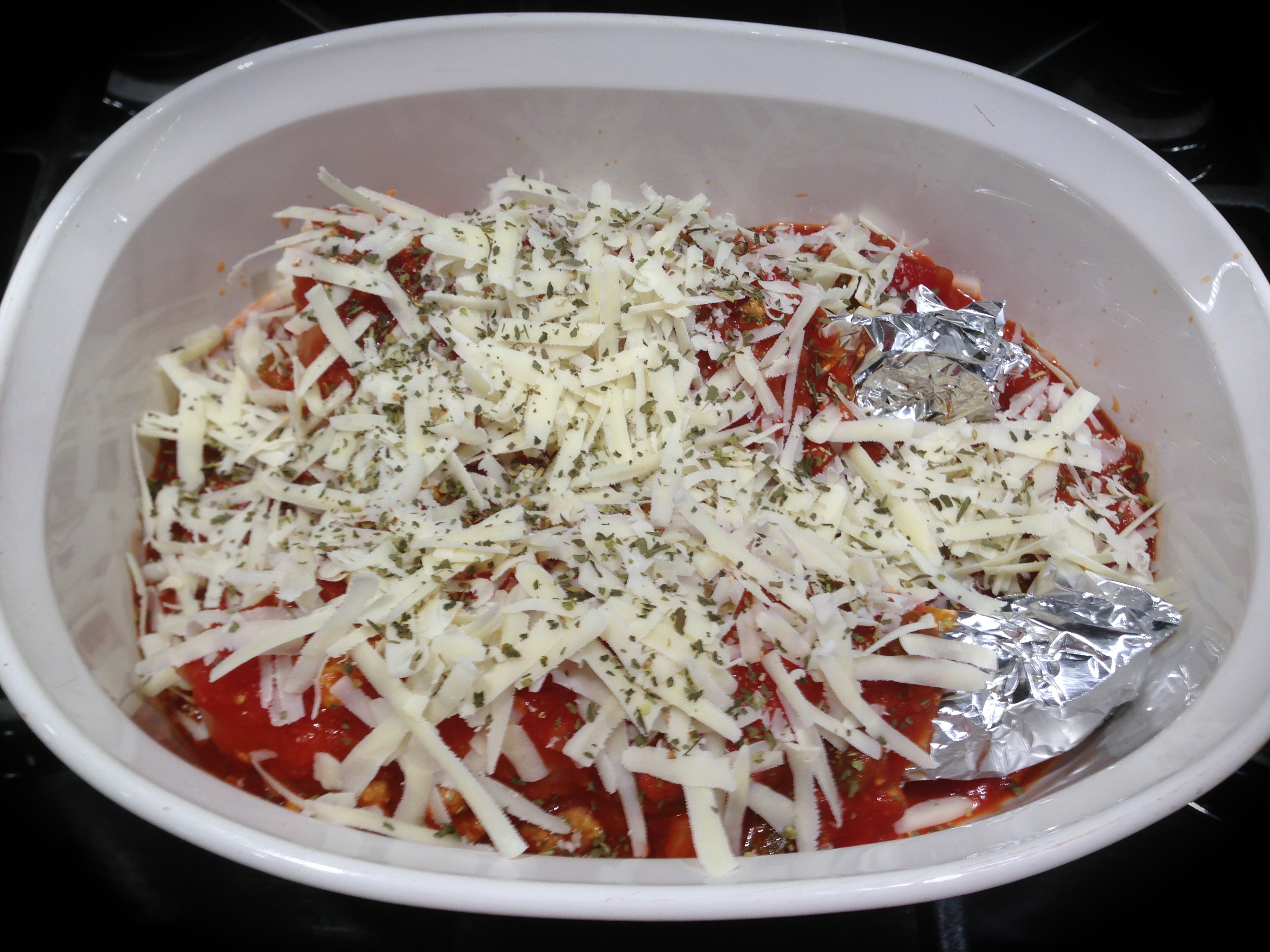
Lesson Learned 5: This recipe is a version that came from a Bertoli pasta sauce add I clipped from the newspaper. The beauty of this recipe is that you can basically use any red sauce that you like and top with any cheeses that you like. The original recipe called for topping the roll ups with the sauce and shredded romano cheese. I like that and so that’s what I do, but you could use a combination of parmesan and romano and you could even top it with some mozzarella for the last ten minutes of the baking process.

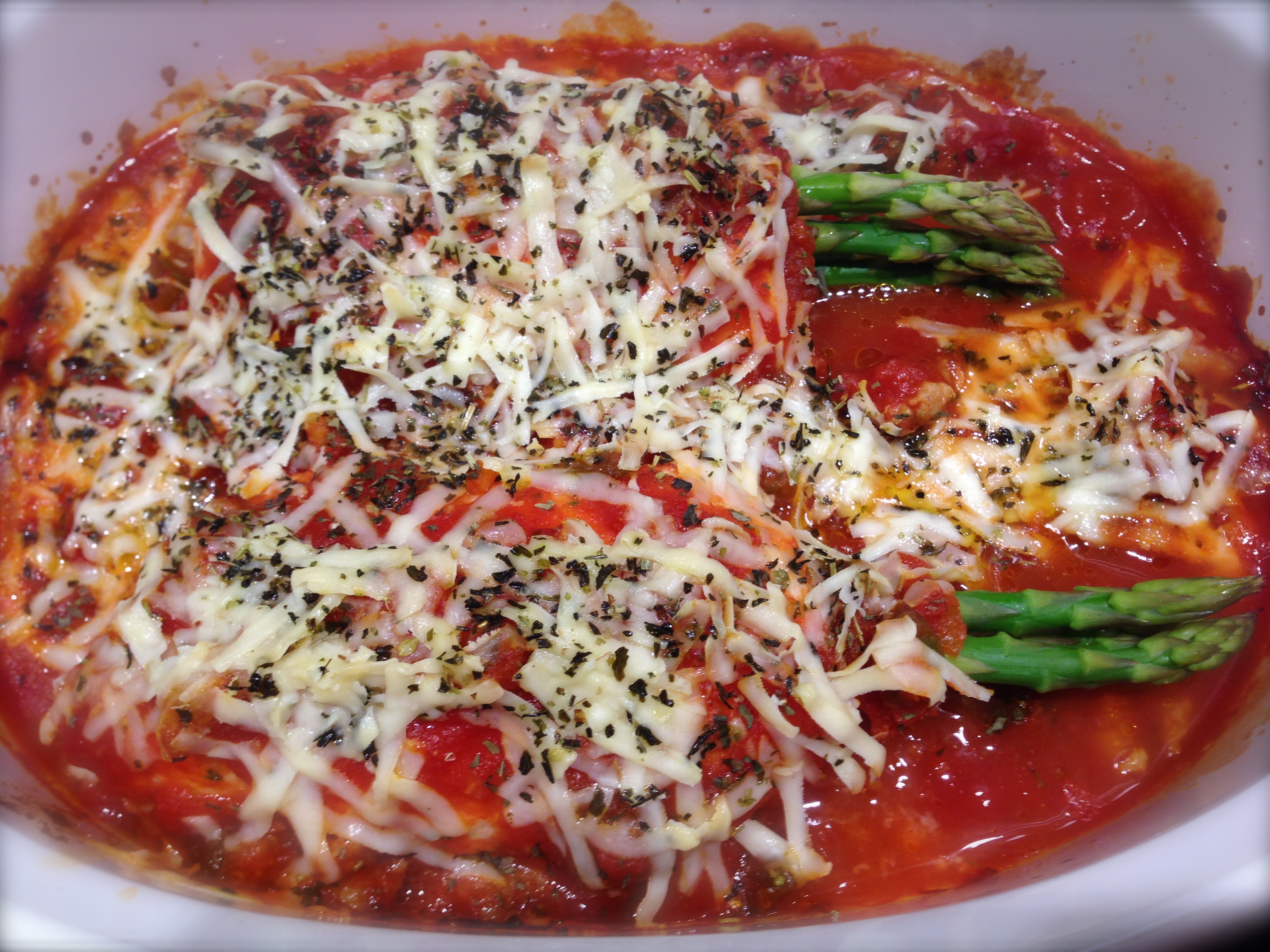
Ready To Go Into The Oven

Ready To Go Into The Oven

All the work in this recipe is up front. Once you get the prep work done it’s just a matter of baking and eating it. Serve this with a side salad and crusty bread and you have an easy, flavorful and fun meal.

Easy Chicken Roll Ups

  • Servings: 4
  • Difficulty: Medium
  • Print

INGREDIENTS:

2 Boneless Skinless Chicken Breasts (halved)

Genoa Salami (12 thin slices)

Provolone Cheese (4-8 slices)

12 Asparagus Spears

1 Jar Tomato-Based Pasta Sauce (15 oz. or larger)

Shredded Romano Cheese (at least 1 cup)

Italian Seasoning

DIRECTIONS:

Place your hand on the top of the chicken breast and using a boning knife start on one side and cut the breast in half (see pictures above). Place each breast between two pieces of wax paper and use a meat mallet or rolling pin and pound moving from the center out until the breast is 1/4 of an inch thick.

Beginning at the bottom of the breast, place one or two pieces of provolone cheese and three slices of salami on top of the cheese making sure to leave about an inch of just plain meat at the top of the breast (see picture above). Trim the woody bottoms off of the asparagus spears and place at the bottom of the breast. Roll the chicken breast so that the cheese, salami and asparagus (except for the tips) are all covered by the meat. Take a skewer and close off the flap a the bottom (the opposite end from the asparagus tips) and lace it through the roll up to secure it in place. Cover the asparagus tips with aluminum foil.

In a casserole dish, spread about 1/4 cup of the pasta sauce to cover the bottom. Place the roll ups in the casserole dish and cover with the remaining pasta sauce. Sprinkle with shredded romano cheese and italian seasoning.

Bake at 350 for 45-50 minutes. Remove skewer from roll ups and serve.

A Chicken Roll Up

A Chicken Roll Up

Slow Cooker Italian Chicken With A Twist…

Every once in a while, a friend will email or text me and asks about a recipe or shares one of theirs.  Such was the case  the other day when a former student messaged me on Facebook and asked if I “crock pot.” Do I crock pot? Heck yes. I love my crock pot. As a matter of fact I am probably a crock pot snob because I tend to call it a slow cooker. But call it what you will, it is a tremendous tool in the kitchen for busy families. Set it and forget it – I like that mantra.

But the slow cooker can also be a challenge. For all it’s benefits it has its downsides, mostly based in producing flavorless overcooked meals for the sake of convenience. That’s why it’s important to know your slow cooker and to understand its low and high temperatures. Not all slow cookers are created equal and it seems that over the years, at least in my experience, the temperature for the low setting has gotten higher and higher to the point that in some slow cookers it actually boils food – and that produces disaster.

IMG_5722I have an All Clad 6.5 slow cooker with a ceramic insert. Good Housekeeping reviews tend to consistently rate it as one of their top choices, especially from the standpoint of not drying out food (which tends to be the result of too high temperatures combined with too long of a cooking time). I’ll warn you now, it is an expensive piece of equipment averaging about $180 but to me it was worth the investment. Rarely do I dry out food in my slow cooker unless I cook it too long. There are other more reasonably priced top rated slow cookers out there. I would suggest doing a little research and reading reviews to determine which one fits your lifestyle and budget.

Here’s the ultimate slow cooker challenge – figuring out the correct cooking time for a specific recipe. Don’t you just love recipes that say “cook on low for 6-8 hours.” Well, what is it, six hours, seven hours, eight hours? There is a big difference between cooking something for six or eight hours. But unfortunately more often than not that is for the cook to figure out.

I’ve also found that cooking chicken is probably the biggest challenge, especially white meat chicken as it has much less fat than dark meat and can dry out faster. I’ve learned over the years that less tends to mean more when it comes to cooking white meat chicken in the slow cooker. I never cook it for eight hours, NEVER. And depending on the size and thickness of the pieces it tends to be between 5-6 that I get my best results. Normally I have to try a recipe once and from there I make an educated estimate for the next try in the slow cooker.

And so it happened with the recipe that I’m sharing today. It came from my former student Jenny who I referenced earlier in this blog. It is a traditional slow cooker recipe that uses soup as the base for its liquid but the combination of ingredients gives a sauce that is to die for. This is definitely not a low calorie recipe, but a great go-to comfort food recipe to keep in your repertoire. Jenny’s sister Shelly joined in our recipe conversation the other day and made a few suggestions that I found helpful and that added depth to the recipe. I’m calling this recipe “Slow Cooker Italian Chicken with a Twist” as it does not look or taste like a traditional Italian dish that tends to be tomato based. There are no tomatoes in this recipe but it has huge flavor. So here’s my rating and lessons learned:

Rating: A – a great comfort food recipe and the sauce is to die for!

Lesson Learned 1: I cooked boneless skin-on breasts for 5 1/2 hours. Next time I will only cook them for 5. They were just on the borderline of being a little dry, but they were not dried out.  If I had used dark meat 5 1/2 hours would have been fine.

Lesson Learned 2: Either spray or grease the crock for this recipe. The creaminess of the sauce can cause some browning especially around the edges. I used a slight brush of olive oil in my ceramic crock and it cleaned up beautifully. I’m not a big fan of cooking sprays but I am sure they work as well.

Lesson Learned 3: This is a lesson in progress as I haven’t figured it out yet. In the picture below you can see little flecks of the chive and onion cream cheese – I would have preferred it to be completely melted and am not sure why it didn’t. Maybe it was the fact that I used a reduced fat cream cheese, but I’m not sure. It certainly did not affect the flavor at all but I’m not sure why it didn’t melt completely. (we figured it out – the butter, cream cheese and soup need to be melted together in a pot over a low heat before combining with the wine and italian dressing mixture – thanks Shelly).

Lesson Learned 4: Shelly suggested serving this over rigatoni so that the creamy deliciousness of the sauce could permeate the inside and the outside of the pasta. I served it that way and I totally agree – use rigatoni.

Lesson Learned 5: I added some sliced baby portobello mushrooms during the last half hour of cooking. That way they cook but don’t disintegrate. I also served it with some sliced green onion on top for color, but you could use italian parsley as well. It needs a little color for serving.

ITALIAN CHICKEN WITH A TWIST RECIPE (courtesy of Jenny and Shelly)

Slow Cooker Italian Chicken With A Twist

  • Servings: 4-6
  • Difficulty: easy
  • Print

INGREDIENTS:

6 boneless chicken breasts

1 stick of butter at room temperature (I used a half stick and, in my opinion, it was more than enough)

2 packages of dry italian dressing mix

2 cans of GOLDEN mushroom soup

1 cup dry white wine

1 8 oz container of chive and onion cream cheese at room temperature

2 cups sliced baby portobello mushrooms

Cooked rigatoni pasta

Green onions or italian parsley for garnish

DIRECTIONS:

Mix together the wine and italian dressing mix. Combine butter, mushroom soup and cream cheese in a pot and heat slightly until melted. Add white wine and italian dressing mixture to soup mixture.  Lightly grease with olive oil or spray the crock with cooking spray before adding ingredients. Place the chicken breasts in the crock and cover with prepared sauce. Cover and cook on low for 5 hours. Add mushrooms and cook for an additional 30 minutes. Serve over rigatoni. Garnish with green onion or italian parsley.

NOTE: It’s best to cook this according to your slow cooker and its temperatures. The next time I make this recipe I will only cook it for 5 hours total. Each slow cooker can be different. And as always, resist the temptation to lift the lid. When you do that it slows down the cooking process and you need to add extra time to make up for your curiosity.

Slow Cooker Italian Chicken  With A Twist

Slow Cooker Italian Chicken With A Twist

Easy Orange Chicken…

I will never forget that conversation. I was sitting at lunch with a colleague and she was telling me how she was a Food Network junkie. I laughed at her. I could not believe someone would actually enjoy watching a television program of someone cooking. So one Saturday morning, just for a lark, I decided to watch the Food Network. I’ve not been the same since.

What I liked about the Food Network, and especially the shows of a few years past, is that it educated me on various types of foods, taught me technique and challenged me to try new recipes and to experiment in the kitchen. The Food Network made me an accidental “foodie” and there’s not turning back now.

What the chicken skin looks like after the initial browning...

What the chicken skin looks like after the initial browning…

I used to really like Robin Miller’s show, but it’s no longer on the network. I’m a big fan of Ina and Giada and I also like Melissa D’Arabian. And it is my testing of one of Melissa’s recipes that is the subject of the blog today. She called the recipe “Crispy Chicken a l’Orange” and it is from her book Ten Dollar Dinners. I first saw the recipe on one of her shows, and it is listed on the Food Network website for free, so I’m pretty sure I’m not breaking any copyright laws by sharing this with you. I am always looking for different ways to make chicken and this recipe intrigued me, so I thought I’d try it. Here is my rating and lessons learned from making it.

Rating A-  the main reason I give it a minus is that the sauce is tricky. By that I mean it is a combination of frozen orange juice concentrate and honey. The tricky part is cooking this in the oven and not getting a pan that has burnt-on honey all over it, making it a nightmare to clean. I haven’t quite figured out how to avoid that. I make this recipe in a well seasoned cast iron skillet and I still have a difficult time cleaning my pan. Maybe it’s my fault. The recipe calls to brown the meat in a skillet and then transfer it to a baking dish. By using the cast iron pan I tried to do this as a one-stop shop and brown the meat and cook it all in one pot. Maybe next time I’ll try what the recipe recommends and see if that makes a difference with the clean up.

Drizzle the chicken with the orange juice and honey mixture and put into the oven

Drizzle the chicken with the orange juice and honey mixture and put into the oven

Lesson Learned 1: Brown the chicken skin side down for at least five minutes. Resist the temptation to move it around. Just let it stay in one place. After 5 minutes on medium-high heat you should have nicely browned skin and will continue to brown in the oven. (see the picture above).

Lesson Learned 2: Make sure the chicken is patted very dry before you begin to brown it. If it is moist it won’t brown.

Lesson Learned 3: It is very important to let the chicken rest for at least 10 minutes after cooking as called for in the recipe. The chicken comes out very juicy if you do it that way. Other than that there are really no other tips I can give you about this recipe. It is relatively easy to make. You get great flavor without a lot of work. The only challenge for me so far is the clean up.

When I get a thumbs up from my husband I know a recipe is a keeper. This got two thumbs up on this one. I served this with parmesan oven roasted asparagus and my pesto orzo with roasted red peppers and olives (pictured at the bottom). So try it, I’m sure you’ll find this recipe to be a keeper as well.

IMG_5517

CRISPY CHICKEN A L’ORANGE (EASY ORANGE CHICKEN)

Easy Orange Chicken

  • Difficulty: Easy
  • Print

INGREDIENTS:

Skin on chicken breast (the recipe calls for bone-in but I did mine boneless and it was delicious)

1 1/2 tsp. kosher salt

1/2 tsp. ground black pepper

1 TBS. vegetable oil

1/2 cup thawed orange juice concentrate

1/4 cup honey

DIRECTIONS:

Preheat oven to 375. Season chicken with salt and pepper. Heat oil in a skillet over medium-high heat and seat the chicken skin side down until brown and beginning to crisp – about 5 minutes.

In a small saucepan bring the orange juice concentrate honey and a dash of salt and pepper to a boil. Cook until syrupy (about 3 minutes).

Transfer chicken skin side up to a baking dish and drizzle with half of the orange juice mixture. Bake for approximately 35 minutes or until the internal temperature is between 160 and 170. After the chicken has been in the oven for about 15 minutes, drizzle the remaining orange juice mixture on it. When cooked, remove the chicken from the oven and let rest for about 10 minutes.

Serving suggestion: parmesan roasted asparagus and pesto orzo with roasted red peppers and olives

Serving suggestion: parmesan roasted asparagus and pesto orzo with roasted red peppers and olives

Don’t Chicken Out On Roast Turkey…

My husband and I went out to dinner this past Thanksgiving and I made a rib roast for Christmas so I knew eventually I would feel like I was cheated out of a traditional Thanksgiving meal. Luckily for me my local grocery store had a great manager’s special over the Christmas holiday pricing every single fresh turkey breast, regardless of weight, at $7.00. OK, I said to myself, I can’t afford to pass this up even though turkey was not on the Christmas menu. So into the freezer it went just waiting for the right time to resurrect Thanksgiving.

I used to be intimidated by cooking a turkey – I could never seem to get it right making it either over-done or, mostly in my experience, under-done. To me there is nothing worse than a dry turkey especially if you are just cooking an all-white meat turkey breast. Overcooking it means you eat sandpaper and when you spend that amount of time preparing a meal nothing can be more frustrating.

I can tell you right now, cooking a turkey is about trial-and-error, a firm resolve that it really is no big deal and a belief that you can actually be good at it. I’ve had numerous disasters over the years and only through the school of hard knocks have I become adept at roasting turkey. I very seldom cook a whole bird anymore as even a small one is way too much for me and my husband. But I find that with the right prep and know-how a turkey breast, whether half or whole, is equally as good and lends itself to being on the dinner menu more than once a year. At other times I don’t make all the traditional sides as the caloric intake is far too great, but this time I just had to opt for tradition – I mean you just gotta do it once a year, right?

Normally I critique recipes from Pinterest, Facebook or other foodie-type websites, but this is solely my recipe adapted from years of experience and variations of several recipes I’ve tried. So here are my lessons learned and rating.

7 pound turkey breast

7 pound turkey breast

Rating: Finally A+ – I say finally because this took a lot of practice on my part. For some reason the perfect roast turkey took a few years of trial and error. Thanks goodness I love turkey so much that failure did not weaken my resolve. What is great about when you master this is that you feel confident to make it any time of year. One of our local grocery stores often stocks fresh bone-in half breasts and that is plenty for my husband and me for a great meal and leftovers.

Lesson Learned 1: If the turkey is frozen, make sure it is completely thawed. This may sound rudimentary, but I can’t tell you how many times I thought the bird was thawed only to find out at the last minute that it was still frozen in the middle. The turkey breast in the picture above was a little over 7 pounds. I planned to make it on Sunday so I took it out of the freezer and put it in the fridge the Tuesday before. In my experience turkeys thaw very slowly in the fridge and I finally figured out that if I add a day on to what I think will be the right amount of time to get a perfectly thawed bird I tend to get it right. Even with putting the bird in the fridge on Tuesday I still took out frozen matter from the cavity on Sunday. But I did that very early in the day, cleaned and dried the turkey breast and put the bird back in the fridge after that so that when it was time to begin prepping it, it was completely thawed inside and out. This was perhaps the biggest difference in ensuring even cooking and determining the appropriate cooking time.

Lesson Learned 2: Prepare a butter rub and rub it under the skin as well as all over the outside of the bird. The nice brown color that you see in the picture is achieved by doing that. I normally make a mixture of butter, fresh thyme, salt and pepper. The darker pieces in the picture are not burned skin but darkened thyme. You can scrape that right off.

Lesson Learned 3: Forget about putting a bread stuffing in the cavity, instead stuff it with aromatics. With this particular bird I jammed a thyme bundle, large garlic clove, two sweet onion quarters and a half of a lemon into the cavity. You’ll be amazed at how this helps to flavor the meat. You can discard all of it before you start to carve it. It’s work is done by then.

Lesson Learned 4: Put some white wine in the bottom of the pan before you begin the roasting process. This provides a nice steam bath for the bird and enhances the juices that you can use to make homemade gravy. I never worry about having basting juices or a solid basis for my gravy anymore. This is a great trick. The gravy in the picture below was made from the wine and drippings mixture from the turkey breast.

Lesson Learned 5: Know your oven. I’ve said this in a few other recipes, but for turkey I think it is very important. I roast turkey at 350/twenty minutes per pound. Some recipes call to roast the bird at 325. I live in high altitude and so, on average, cooking times are longer and cooking temperatures need to be a little higher. After much trial and error I have found this to be the perfect roasting guideline for my circumstance. Also get a good meat thermometer and use it. That is the only way to ensure you meat is cooked to the desired doneness.

Lesson Learned 6: Let the turkey rest for at least 20 minutes to half-an-hour after roasting. The internal temperature should be 185. I normally take it out when it reaches between 175-180 as carry over cooking will occur while it is resting. Keep it covered in foil but make sure you let it rest. It will be much easier to carve that way and you will retain the natural juices in the meat.

Lesson Learned 7: Be prepared for failure, especially if you’re new to roasting turkey. It’s all part of the learning process and you can always make a turkey pot pie or turkey salad with the spoils.

So go ahead, jump into the deep end of the pool and make a roast turkey more often than just on Thanksgiving. Once you get the hang of it you’ll be surprised at exactly how easy it really is. I’m including for you my basic recipe for both a roast turkey and homemade cranberry sauce, also pictured below (forget store bought, this is sooo easy and sooo worth it).

Turkey and all the trimmings...

Turkey and all the trimmings…

Perfect Roast Turkey With HomeMade Cranberry Sauce

  • Servings: Varied
  • Difficulty: Easy
  • Print

Ingredients:

I whole turkey or a whole or half turkey breast, 7-12 pounds (you may need to adjust the cavity ingredients for a larger bird)

6 TBS. salted butter

Fresh thyme (enough to chop and mix with the butter and to put a bundle in the turkey cavity); you can also use turkey fresh herb blends sold in the grocery store that usually include sage, thyme, and rosemary.

1 sweet onion

1 large garlic clove

1-2 small lemons

2 cups dry white wine

Salt and Pepper

DIRECTIONS:

Make sure the turkey is completely thawed to ensure even cooking. Remove the turkey from its packaging, clean anything out of the cavity, rinse with cold water and pat dry. Cover with plastic wrap and refrigerate for at least an hour. Bring butter to room temperature. Mince approximately 2-3 TBS. of fresh herbs and combine with softened butter, salt and pepper. One half hour before putting the turkey in the oven take it out of the refrigerator, rinse again with cold water and dry off completely with paper towels. Use your hands to create a pocket between the turkey meat and the skin. Massage some of the butter mixture under the skin. Use the remaining butter mixture and massage the entire outside of the bird. Pour 2 cups of dry white wine into the bottom of the roasting pan and place the bird on a roasting rack inside the pan. Salt and pepper the outside of the bird. Let stand for at least 15 minutes.

Roast uncovered at 350 degrees, 20 minutes per pound, basting occasionally. Halfway through the cooking process check on the color of the skin. Once the skin reaches the desired color, tent the bird with foil to prevent the skin from getting too dark. Near the end of your estimated time, check the internal temperature of the bird at the thickest part of the thigh or breast. Poultry should be cooked to 185 degrees.  While the turkey is resting you can put the finishing touches on the other parts of your meal or make your homemade gravy.

THE BEST EVER HOMEMADE CRANBERRY SAUCE: (pictured on plate above)

Ingredients:

2/3 cup sugar

1 large or two small naval oranges (zest and 1/2 cup juice)

1/4 tsp. cinnamon

1/8 tsp. kosher salt

1 bag of fresh cranberries

DIRECTIONS:

Put the cranberries in a saucepan. Zest a large naval orange (or two small naval oranges) and juice the orange(s) – this should give you about 1/2 cup of fresh juice but if it does not just augment with bottled juice. Add sugar, zest, juice, cinnamon and salt. Stir until well mixed. Bring to a boil and then simmer for 15 minutes. Let cool and refrigerate. Make the day before serving to ensure all ingredients have sufficient time to meld. This is so easy and flavorful, you will never served canned cranberry sauce again.

Polar Vortex = Pot Roast

A friend of mine on Facebook said it pretty clearly, when was the last time, if ever, that you heard of a polar vortex? This is the first time for me but these two little words connote a nasty large band of sub zero temperatures that is currently enveloping a large portion of the country. And although our temps in Colorado today will be in the 40’s my home town, Chicago, is experiencing arctic cold the likes of which have not been seen for years.

Outside my window about 5 inches of snow rests on my deck, the sun struggling but not succeeding to show its face. It’s one of those days that a hot cup of Jo, a good book and a nice thick down comforter beckons. And when it finally comes time to think of sustenance, the only fitting thing that comes to mind is pot roast.

Just about everyone has their own pot roast recipe, so I will share mine. I’ve been making pot roast for years – on the stove, in the slow cooker, in the oven – and I think I finally found the way that bests suits us and also produces the tenderest meat. Pot roast can be tricky. There is nothing more savory and delicious than a good pot roast and there is nothing worse than a tough, dry one. My mother, bless her soul, had the theory that you cooked meat until it begged for mercy. Our special Sunday meal would be a pork and beef roast cooked together in the same roasting pan. Of course it never worked, you’re talking two very different types of meat and two very different cooking times, but we didn’t know any better and we chomped on the dried-out hunks and enjoyed them as if they were filet of beef.

Now that I am older and have a more refined pallet, I could never imagine doing something like that but can appreciate the challenge for taking a tough cut of meat and making it tender. The cooking shows would make you think the process is simple – just throw it in a slow cooker or oven and cook for hours on a low temperature. Been there, done that. With my slow cooker, and I have one of the top-rated ones, if I am not careful I can still dry out the meat, especially if there is not enough liquid in the crock and I cook it too long. So I now opt for enameled cast iron and the oven to do the trick.

I prefer enameled cast iron because of its ability to hold a consistent temperature. It does take a little longer to heat up, but once you get to the desired temperature it maintains it evenly which, I think, is the key to a tender savory pot roast. I’ve basically given up on having a tender pot roast and crusty oven browned potatoes all in one pot – to achieve the latter you tend to dry out the former. So if crusty oven browned potatoes are what you want, I suggest cooking them separately. But for me, nothing is better than having the meat, potatoes, carrots and onions slowly simmering away all in one pot. The end result is fabulous. So here is how I achieve it, my rating and lessons learned.

Rating: A – if you do it correctly. Although it may seem easy, I think achieving a perfect pot roast takes trial and error. Figuring out the perfect temperature and roasting time is important and in my experience one size does not fit all. But make this meal a mission – once your perfect it, it’s more than worth it. I also have the challenge of living in high altitude and because the air is drier cooking times tend to be longer. If you are at sea level times can be shorter. It is something you will need to determine.

Lesson Learned 1: Brown the meat. Take the time, about 4-5 minutes per side and give the roast a good sear. Searing is important in trapping natural juices which is key to any type of tender meat especially the tough cuts.

Browned Chuck Roast

Browned Chuck Roast

Lesson Learned 2: Use red wine in your braising liquid. I use a combination of both red wine and beef stock. It produces a much more flavorful gravy and creates a heavenly smell while the pot roast is cooking – and that is part of the joy of pot roast – the smells it produces in the kitchen. Make sure the liquid comes at least half way up the side of the roast for the best braising. Then pile on all the ingredients. Once that is done baste everything with the braising liquid.

Pot Roast Ingredients

Pot Roast Ingredients

Lesson Learned 3: Put the lid on and leave it alone. Resist the temptation to open the lid and constantly check on it. If you must, check on it once half way through the cooking time, but then take the roast and flip it over at that time. That way each side will have the benefit of being submerged in the braising liquid. This is not a necessary step but one I recommend if you have to take a peak at how it looks.

Lesson Learned 4: Relax and let it do its thing. The beauty of this type of meal, similar to my ravioli lasagna, is that most of the work goes into the prep. After that your oven does all of the heavy lifting.

Pot Roast and Vegetables

Pot Roast and Vegetables

Lesson Learned 5: Use the braising liquid to make homemade gravy. It will be out of this world, I promise.

Pot Roast and Gravy

Pot Roast and Gravy

My recipe is a compilation from many sources so I guess this one is my own. I also serve this with a homemade horseradish sauce and that truly complements all the flavors. Try this – I am sure you will enjoy it as much as we do!

Jan's Pot Roast With Zesty Horseradish Sauce

  • Servings: 4-6 people
  • Difficulty: Easy
  • Print

INGREDIENTS:

1  4 pound chuck roast

All purpose flour for dusting and for the roux

3 TBS. extra virgin olive oil

I large onion, peeled

2-3 garlic cloves, peeled (optional)

3-4 large carrots, peeled

3-4 medium sized potatoes (I use red potatoes, but Yukon Gold  potatoes are good as well – peeling them is optional)

1 cup dry red wine (whatever you drink is fine as long as it is a dry and not sweet wine)

1/2 – 1 cup beef broth

2 TBS worcestershire sauce

Thyme – you can use fresh twigs, bundle them and drop in braising liquid or 1/2 tsp. dried for braising liquid and 1/4 tsp. for flour mixture

2 bay leaves

DIRECTIONS:

Preheat the oven to 300. (next time I make this, I may even try 275 and add a little extra time). Trim some of the excess fat off of the roast if necessary. Mix flour with salt, pepper and dried thyme. Dredge the roast in the flour mixture. Heat olive oil in a skillet and sear the roast, 4-5 minutes on each side. (I also take my tongs and sear the edges for about 20 seconds on each edge). Peel the onion, carrots and potatoes. Cut the onion into quarters and carrots and potatoes into large chunks.

Combine wine, beef broth and worcestershire sauce. Pour into cast iron pot and add the thyme and bay leaves. (You could even drop a couple of garlic cloves into the braising liquid if you desire). Rest the roast in the braising liquid. Place the carrots and potatoes around the roast and the onions on top. Baste the vegetables with the braising liquid.

Cook in the oven for 3 hours. Mid-way through the cooking process turn the roast over. (this is optional but do it if you are one of those who just has to take a peak at it).

Using a baster, syphon braising liquid out of the pan. Put the cover back over the roast and vegetables to keep them warm. In a large skillet under medium high heat make a roux (equal parts flour and water – I use two TBS. each). Cook for a minute whisking continuously so that the “floury” taste is removed. Add the liquid and continue whisk. Initially the mixture will be very “liquidy” but it will thicken as you continue to cook.

Once the gravy has thickened, carve the meat and serve with the carrots and potatoes and a loaf of crusty bread.

HORSERADISH SAUCE:

2-3 TBS. of prepared or fresh horseradish

1 cup sour cream

1 TBS. dijon mustard

Combine all ingredients. Let chill for several hours so the flavors can meld. Serve with the pot roast.

Ravioli Lasagna…

Ravioli Lasagna

My part-time job at Crate and Barrel requires me to work longer than normal hours over the holidays. No worries, I love the hustle and bustle of the holidays and there’s no better place to experience that than working retail. The challenge for me is how to plan dinners that don’t consist of take-out, pizza or soup and sandwiches. That menu faire gets boring rather quickly. I found one solution in a Costco cookbook – that’s right a Costco cookbook!

Ingredients

Ingredients

If you are a Costco shopper you know that every year they give away a pretty substantive cookbook. The recipes in the book are designed to use the products they sell, but all in all there are some pretty decent recipes included. Over the years they’ve even featured recipes by prominent celebrity chefs such as Ina Garten, Sandra Lee, Ree Drummond and Michael Symon. What I like about the cookbook is that every recipe has a picture of the finished product. I am not a big fan of recipe books that don’t have pictures. I need something visual to help me understand what I am trying to achieve. The books provide a myriad of recipes from appetizers, main courses, celebrity chef favorites, desserts and beverages. And the fact that it is free is just icing on the cake. They usually give the books away at holiday time, so be on the look out for them. This year they started giving them away on Black Friday and continued as long as quantities lasted. I made my husband make a special trip to get ours as every year I have been able to glean a couple of family favorites from each of them.

The recipe I’m going to share comes from a book they produced three years ago. The title of the book is always the same, “Creative Cooking the Costco Way,” and this recipe is called Baked Ravioli (Lasagna Style). I like this recipe because it is simple, it can be adapted in a variety of ways, and it’s one that can be made a day ahead so it’s perfect for those nights when you want something more for dinner without a lot of thought or effort. I’ve been making a version of this for over three years now so I’ve got this one down pat. Here is my rating and lessons learned:

Rating: A – a great go to recipe, can be adapted in a variety of ways, easy to prepare and definitely something your better half can start while you’re still at work (with my husband I write the directions on a post-it and put it on the door of the microwave so it’s there in plain view for him to see).

Lesson learned 1: Don’t be afraid to play with this recipe. You can basically use any type of ravioli you like. I first started out using Bertoli four cheese ravioli and then branched off into some of the more gourmet-type blends. The ravioli used in the pictures in this blog were half-moon mushroom and cheese ravioli, but you can use any kind you want. This time I also added some additional left over mushrooms that I partially sauteed as well as some partially cooked italian sausage that I crumbled, cooked and put in the layers. No need to cook your additional ingredients completely through as the dish will bake in the oven for at least an hour. Depending on the ingredients you use, this dish can also be meatless.

Before baking...

Before baking…

Lesson Learned 2: If you are making it the day before, make sure you take it out of the refrigerator and let it sit on your counter for at least an hour and a half before baking it. If you don’t it will take much longer to bake and will not cook evenly.

Lesson Learned 3: I like to make sure that my oven is not only preheated but at the desired temperature for at least 10-15 minutes. That way I feel I have a true temperature. My oven takes about 15 minutes to get to 400 so I usually plan on a preheat time of 25 minutes.

Lesson Learned 4: Don’t forget to use a little bit of cooking oil and sauce to cover the bottom of the pan before doing the layering. If you don’t you won’t be able to get the finished product cleanly out of the pan.

Lesson Learned 5: I like to make sure that the ravioli is positioned tightly together, even with a slight overlap. That way you have a nice firm layer when it’s cooked.

Lesson Learned 6: Make sure to tent the foil over the dish for at least the first 50 minutes of the cooking process. After that, remove the foil so that the cheese can become golden brown.

You can make this recipe as simple or as intricate as you want. All of the work goes in to putting it together. Once that is done it’s simply a matter of popping it in the oven, baking it and enjoying it. Serve this with some garlic bread and a salad and you’ve got a delicious and easy meal. Try this one – I guarantee you will use this as a go-to recipe just like I do!

Ravioli Lasagna...

  • Servings: 4-6
  • Difficulty: Easy
  • Print

THE INGREDIENTS:

Cooking oil (I use olive oil) – just enough to very lightly grease the bottom of your pan

1 – 29 ounce jar of a red sauce of your choice

1 large package of ravioli (again your choice, the ingredients and shape – square or half moon – do not matter)

Italian sausage or meatballs (again the amount your choice, depending on how much you want in the recipe. I normally take two sausage links, crumble and partially cook the meat, drain it on paper towels and then put it over the ravioli when I make the layers).

Other ingredients to taste – (I often add partially sauteed mushrooms or peppers. No need to cook them through, just give them a good start).

Mozzarella, Parmesan and Romano Cheeses

Italian seasoning

DIRECTIONS:

Preheat oven to 400 degrees. Grease the bottom of your pan (for the two of us I use an 8 inch square pan) and spread a layer of sauce over the bottom. (You don’t need a lot, just enough to lightly coat it). Put down a layer of ravioli flat side up on the sauce. Position the ravioli close together, even with a slight overlap. Add any additional ingredients you have prepared (I did mushrooms and italian sausage on this one). Put another layer of sauce on top and then add a layer of mozzarella, romano and parmesan. Sprinkle with italian seasoning and pat the layer down lightly. Repeat the layering. Pat down again and cover with tented aluminum foil. (If you are making ahead, just cover with foil and put in the refrigerator. Just don’t forget to tent the foil before putting it in the oven as you don’t want all the cheese to stick to the foil).

Bake for one hour or until completely heated through. For the last 10 minutes of the baking process, remove the foil so that the cheese can brown. Let stand for five minutes before serving.

Ravioli Lasagna

Ravioli Lasagna

Grilled Marinated Swordfish…

Probably the thing I dread cooking the most is fish. If you’re like me, you never know when it is done and because of that one of two things almost always happens – you undercook it or you overcook it. Undercooking fish, well lets not even go there, too scary to even think about the issues it can cause. And overcooking fish, well that’s even worse since normally you pay a pretty penny for the fish and eating dried out rubber is something no one savors.  But this week I hit the jackpot and actually cooked some swordfish steaks perfectly. What’s my trick… luck, total luck.

I find that at times cooking can be a waiting game, you wait and see how many times you can cook something before you get it right, that is if you don’t lose interest in it first. I’ve mastered the art of the juicy boneless chicken breast, the juicy and tender pork loin roast, the tender and crisp beef and pea pods stir  fry, but fish has always been the bane of my existence until just recently.

My saga began when I purchased a couple of swordfish steaks at Whole Foods (the pressure is already on because the wallet took a sizable hit on them). I began the process of pouring over recipes to determine the best way to cook them on my stove top grill pan. I found a great recipe at allrecipes.com (I will share below) for a simple marinade and started preparing the fish. The recipe was easy with clear cooking instructions. All you have to do is follow them, right? Wrong.

I have finally learned to trust my judgement when cooking and now have enough knowledge just to be dangerous. It occurred to me that the recipe was written for swordfish cooked on an outside grill with times of 5-6 minutes per side. Cooking it inside would take less time, how much to be exact I wasn’t sure. But gone are the days of just blindly following a recipe. I have arrived! After marinating them for an hour, I preheated my stove top grill and began grilling. I flipped them at 4 1/2 minutes and had fabulous grill marks. I cooked them for another 4 1/2 minutes and clear juices began to rise to the top of the steaks. Out of the pan they came and voila, perfect indoor grilled marinated swordfish steaks! The steaks were about an inch think and they were juicy, tender but not underdone.

So after many tries the formula for grilled swordfish steaks is emblazoned in my mind. Yahoo, one fish down, so many more to go. But I can tell you first hand that there is nothing as good as perfectly cooked grilled swordfish steaks. Enjoy the recipe!

Grilled Swordfish with pasta and parmesan roasted asparagus.

Grilled Swordfish with pasta and parmesan roasted asparagus.

Grilled Marinated Swordfish

  • Servings: 4
  • Difficulty: Medium
  • Print

INGREDIENTS:

4 cloves of garlic

1/3 cup of white wine

1/4 fresh squeezed lemon juice

2 TB soy sauce

2 TB olive oil

1/4 tsp salt

1/8 tsp pepper

1 TB poultry seasoning

4 swordfish steaks

1 TB chopped fresh parsley (optional)

lemon garnish (optional

DIRECTIONS:

In a glass baking dish combine the garlic, white wine, lemon juice, soy sauce, olive oil, poultry seasoning, salt and pepper. Mix just to blend. Place swordfish steaks into the marinade and refrigerate for 1 hour, turning frequently.

Preheat your stove top grill pan using medium high heat.

Place swordfish in grill pan and lower heat to medium. Grill 4 1/2 – 5 minutes on each side. Garnish with parsley and lemon wedges.

My First Venture into French Cooking (Easy Chicken Marsala)…

I don’t know about you but I just love Pinterest. I find it a great place to find recipes and to find recipe sites that I may never have found otherwise. Repinning has become one of my favorite pastimes. Last week as I was in the midst of doing some massive repinning, I came across a recipe for easy Chicken Marsala. Now I don’t know about you but I am always on the lookout for something different to do with chicken. Chicken is such a great staple, but after a while the same old tried and true recipes just don’t seem to cut it. So this one had me intrigued. The recipe came from the website savorysweetlife.com, a site I had never come across before. The picture on the pin looked pretty good so I thought, what the heck, give it the old college try.

Needless to say it was easy. The hardest part was making the sauce and that came together in about 10 minutes. One thing I’ve learned about cooking in Colorado is that when it comes to cooking everything takes longer. Maybe it’s the altitude, but after having lived here for 10 years I always add time to my recipe preparation plans because it always needs it. I will share the recipe as it is, but depending where you live, your stove and cooking utensils, be prepared to add an additional 10 minutes on to this. The only things I changed were that I added some flour to the sauce to thicken it, without it the sauce just looked too runny, and some dried thyme to the flour dredging mixture. Otherwise, I followed the recipe as is and it turned out great. This particular recipe is for 4 people so adjust accordingly.  I got a thumbs up from my husband on this one and he always has a little bit of trepidation when I tell him I am trying something new. So this one is definitely a keeper. Enjoy easy Chicken Marsala!

Easy Chicken Marsala

  • Servings: 2
  • Difficulty: Easy
  • Print

INGREDIENTS:

  • 2 boneless skinless chicken breasts
  • salt and freshly ground pepper
  • 1/2 cup of all purpose flour or corn starch for gluten free
  • up to 1/2 cup olive oil or vegetable oil (I used olive oil and needed close to the whole amount)
  • 8 ounce container of mushrooms cleaned and sliced (I used baby bellas)
  • 1/2 cup marsala wine
  • 1/4 cup chicken stock (I only had vegetable stock on hand and it worked just fine)
  • 1/4 sherry or dry white wine (I used white wine)
  • Optional: 2 tablespoons of heavy cream (I used this)
  • Garnish with fresh parsley or oregano

DIRECTIONS:

  1. Split each chicken breast through the middle to make 2 pieces. Place plastic wrap over them and pound them flat using a meat mallet until they are about 1/4 inch thick. Season with a good amount of salt and pepper on both sides. Place some flour on a plate and dredge each piece of chicken in it. (I added some dried thyme to the flour)
  2. Heat the oil over medium-high heat and when the oil is hot fry each piece of chicken for 3-4 minutes on each side until they are golden brown (this may require you do this in two batches). Remove chicken and place them on your serving platter covering them with foil. (I put my toaster oven on a low heat setting and kept them warm in there). Carefully soak up any remaining oil in the pan with a paper towel and discard.
  3. Reduce the heat to medium and add the butter and mushrooms. Saute the mushrooms for 4-5 minutes making sure to season them with lightly with salt and pepper. Add the marsala wine, white wine, cream and chicken stock allowing the liquid to reduce slightly, approx. 3 minutes. (This is where I added approx. a teaspoon of flour to thicken the sauce). Pour mushrooms and sauce over the chicken and serve.

Chicken Marsala

Chicken Marsala

Stir Fry Beef with Vegetables and Pea Pods…

I loved my my mother dearly, but let’s face it she was right up there when the world’s worst cook award was being passed out. I guess it simply was the fact that she did not have time, especially when she went back to work full time. My father was runner up for the award as he hardly cooked a day in his life, that was woman’s work you know. So I grew up with a bland palate consisting of meat (always overcooked), peas, corn and potatoes. Yep, that was about it.

During my career I too never had time to cook. Thank goodness my husband was adept in the kitchen. And boy did he have trouble moving me away from the staples I grew up with. And eating any type of ethnic food, well that was just not acceptable. So how did it all change.

Well, the Food Network for one – once I started watching it I was hooked. I learned so much watching those shows that no on ever taught me. Then once I retired, I finally had the time to explore cooking. I took cooking lessons, I experimented with various dishes, I started working at Crate and Barrel where a lot of their mainstay merchandising relates to dining and entertaining. And I became a student of the art.

Now I am not saying I am a master chef by any means, but I really enjoy the process. I enjoy learning about different foods, learning new techniques, experimenting with recipes. Who would ever believe that. It’s fun when you can accomplish something new and interesting in the kitchen. At least for me…

So, every once in a while in my blog I will be posting recipes. I hope that you try them and give me feedback about them. And if you have some you want to share, join the party – the more the merrier.

Today I posting my stir fry beef and pea pods recipe. It cooks up in 15 minutes or less and it is fabulous. Most of the work involved in the recipe is the chopping and dicing (which I like to do, I find it therapuetic).  Enjoy, and please let me know what you think.

Stir Fry Beef and Pea Pods

  • Servings: 4
  • Difficulty: Easy
  • Print

INGREDIENTS:

  • Flank steak or beef tenderloin
  • Beef broth
  • Soy Sauce
  • Vermouth
  • Baby Bella Mushrooms
  • Pepper (red or green)
  • Roma Tomatoes
  • Pea Pods (fresh or frozen, I prefer fresh)
  • Garlic (I-2 cloves)
  • Cornstarch, 3 TBS total
  • Olive Oil or Vegetable Oil

BEEF MARINADE:

Flank Steak or Beef Tenderloin (if beef tenderloin, marinate for only ½ hour, if flank steak the longer the better, I found 4 hrs. minimum to be the best)

  • 1TB cornstarch
  • 2 TB soy sauce
  • 4TB vermouth

DIRECTIONS:

Chop vegetables and garlic– a bigger chop for vegetables stands up better to stir frying (this can be done well in advance)

Heat wok. Add enough oil to lightly coat the bottom. (I use an electric wok so it heats up very quickly)

Add beef and stir fry until almost at desired doneness. (We most often use beef tenderloin so I like to have a little pink in the meat – with flank steak I would cook longer)

Remove beef and set aside, cover with foil to keep warm

Mix together:

  • 1 cup beef broth
  • 2TB soy sauce
  • 2TB cornstarch (make sure cornstarch is completely absorbed by the liquid)

Add mixture to wok and let simmer for a short time (1/2 minute to 1 minute)

Add peppers and mushrooms

Cook until almost crisp tender, 3-5 minutes

Add tomatoes and pea pods, cook for about 1 minute

Add garlic and cook until fragrant (30 seconds to minute)

Add beef back into the mixture and cook for an additional 30 seconds.

Serve over rice

Image

SaveSave